Key Technical Specifications
- Product Model: F3236
- Manufacturer: HIMA
- Product Type: 16-Channel Digital Input Module
- Safety Integrity Level: SIL 3 / Category 4 (IEC 61508)
- Channel Count: 16 Independent Digital Inputs
- Signal Type: 6 mA active signal or 24 V mechanical contacts
- Switching Time: Typical 8 ms
- Power Consumption: 120 mA @ 5 V DC / 200 mA @ 24 V DC
- Space Requirement: 4 TE (Terminal Elements)
- Diagnostic Features: Automatic comprehensive self-testing during operation
- Compatible Platforms: HIMA C300, C500, C700, H51q, HIQuad X
Product Introduction
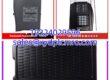
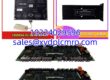
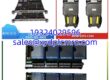
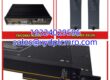
HIMA F3236 is a 16-channel safety-related digital input module engineered for critical Emergency Shutdown (ESD) and fire/gas detection systems. It processes discrete signals from field devices like emergency stop buttons, pressure switches, and valve position feedbacks.This module features dual synchronized microprocessors with independent memory and hardware comparators to detect internal faults instantly. Field experience shows that this 2oo4D diagnostic architecture forces the entire module to a safe state if a single channel fails, preventing undetected hazardous conditions.
Installation & Configuration Guide
- Preparation (10 min): Ensure the control panel is properly grounded. Verify the 5V DC and 24V DC power supplies are OFF. Review the system wiring diagram to confirm the correct front connector type (e.g., Z7116).
- Removal (5–10 min): Disconnect the front field wiring connector. Release the module’s retaining clips or screws. Carefully slide the F3236 straight out of the sub-rack to avoid bending backplane pins.
- Installation (10 min): Align the module with the 4 TE slot in the sub-rack. Apply firm, even pressure to seat the backplane connectors. Secure the retaining hardware. Reconnect the front wiring connector and verify pin alignment.
- Power-On & Test (10 min): Restore 5V DC and 24V DC power. Observe the module’s diagnostic LEDs for normal boot status. Use the engineering tool to verify the CU recognizes the module. Force individual inputs to confirm correct state changes on the HMI.
Troubleshooting Quick Reference
- Symptom: Module fails to power on. Probability: High. Action: Measure 5V DC and 24V DC at the backplane. Check upstream power supply modules (e.g., F7126).
- Symptom: Single channel shows permanent fault. Probability: Medium. Action: Check field wiring for shorts or open circuits. Verify the 6 mA / 24 V configuration matches the field device.
- Symptom: All channels read zero unexpectedly. Probability: Medium. Action: This is a fail-safe feature. If the module detects an internal fault, it forces all variables to zero. Check the CU for module-level alarms.
- Symptom: Intermittent signal bouncing. Probability: Low. Action: Verify the 8 ms switching time is sufficient for the mechanical field device. Check for EMI interference on the field cabling.
- Symptom: Module not recognized by CU. Probability: Low. Action: Reseat the module. Check the IO BUS connection and verify the hardware configuration matches the physical slot.
Dimensions, Mounting & Wiring Notes
- Dimensions: 4 TE Width (Standard HIMA sub-rack footprint)
- Mounting Method: Front-insertion into H51q / HIQuad sub-racks
- Terminal Notes: Uses front-mounted cable connectors (e.g., Z7116). L+ indicates +24VDC. Always use crimped ferrules for field wiring. Torque terminal screws to OEM specification to prevent thermal issues under high current loads.
FAQ
- Will this F3236 work in my older H41q rack? The F3236 is designed for H51q and HIQuad platforms. I always recommend verifying your exact sub-rack model and backplane generation before ordering.
- Can I get a bulk discount if I need 20 modules for a panel upgrade? Yes. We offer tiered pricing for multiple units. Reach out to our sales team with your exact quantity for a formal quote.
- Is there a risk of ESD damage during module replacement? Absolutely. The dual microprocessors are highly sensitive. Always wear a grounded wrist strap and handle the board by its edges.
- What happens if one channel shorts to ground? The module’s self-test will detect the fault and force all 16 channels to a safe zero state. The CU will generate an alarm. Replace the module to restore full functionality.
- How do I know the module hasn’t been improperly refurbished? We test every module on a dedicated H51q test rack. You receive a full power-on self-test report, I/O simulation log, and diagnostic verification record with your shipment.
- I lost the original wiring diagram. How do I know the pinout? The module typically uses a Z7116 front connector. For the complete pin assignment and wiring schematic, request the digital manual from our technical support team.