 Tel:
Tel:  Email:
  WhatsApp:
 Description
Product Introduction
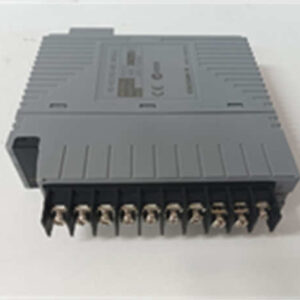
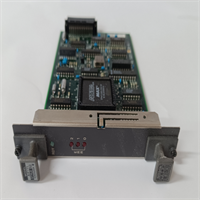
The YOKOGAWA SAI143-H53 is a specialized 8-channel analog input module designed for the CENTUM CS3000 and ProSafe-RS safety instrumented systems. This module serves as the critical bridge between field instruments and the control rack, converting analog signals into digital data for processing. It is engineered to handle a wide voltage range, making it versatile for various sensor types.Unlike standard I/O modules, the SAI143-H53 integrates HART communication capability, allowing you to access diagnostic data from smart field devices without additional hardware. Its 16-bit resolution ensures high-precision signal capture, which is vital for maintaining tight control loops in complex industrial processes. This specific H53 variant is tailored for safety-critical applications, providing the redundancy and diagnostics required to meet high safety integrity levels (SIL).

Key Technical Specifications
| Parameter | Value |
|---|---|
| Brand | YOKOGAWA |
| Model | SAI143-H53 |
| Series | CENTUM CS3000 / ProSafe-RS |
| Type | Analog Input Module |
| Channels | 8 Channels |
| Input Signal | 15-30 VDC |
| Resolution | 16-bit |
| Communication | HART Protocol Support |
| Isolation | Field/Logic Isolation |
| Status Indicators | RUN, ERR, RDY LEDs |
Application Scenarios & Pain Points
Installation Pitfalls Guide (“Lessons Learned” Voice)
Installing a YOKOGAWA SAI143-H53 isn’t just about plugging it in; if you rush the firmware check, you’re asking for a comms timeout at the worst possible moment. I remember a project where the system went down at 2 a.m. because the module firmware was one revision behind the rack controller.To save you that headache, here are the 5 risks you must mitigate:
- Firmware Version Mismatch: This is the silent killer. The SAI143-H53 must have firmware compatible with your specific CS3000 system version. Verify the firmware revision before installation—don’t assume the “new” module is the right version.
- Incorrect Terminal Wiring: The terminal block assignments for voltage input (15-30 VDC) are specific. Cross-wiring channels or mixing up the common terminals can send the wrong signal to the wrong process, potentially causing a loop to fail.
- HART Configuration Overlook: If you’re using HART instruments, ensure the module’s configuration matches the field device settings. A mismatch here means you’ll get the process value (PV) but lose all the diagnostic data from your smart transmitters.
- Power Supply Verification: While the module accepts 15-30 VDC, don’t just assume the backplane power is stable. Check the voltage at the terminal block under load. Voltage drops in older racks can cause the module to reset intermittently.
- Static Discharge (ESD): These high-density logic boards are sensitive. I’ve seen a $5,000 module killed instantly because the tech didn’t ground their wrist strap. Always wear an ESD strap when handling the SAI143-H53; the static from your clothes can fry the internal logic before you even power it on.