 Tel:
Tel:  Email:
  WhatsApp:
 Description
Key Technical Specifications
| Parameter | Details |
|---|---|
| Product Model | HONEYWELL 51454551-275 |
| Associated Part | CC-PCNT02 |
| Manufacturer | Honeywell |
| Product Type | C300 controller module |
| System Platform | Honeywell C300 / Experion PKS controller environment |
| Primary Function | Executes control strategy, logic, data acquisition, and calculation function blocks |
| Execution Style | Deterministic control execution environment for predictable process control |
| Supported I/O Families | C-series I/O and Process Manager I/O, subject to system configuration |
| Communication / Protocols | May include FOUNDATION Fieldbus, Profibus, DeviceNet, Modbus, HART — verify per project and nameplate |
| Documentation Required | Nameplate photo, C300 datasheet, firmware version record, controller configuration, rack drawing, I/O database |
Product Introduction
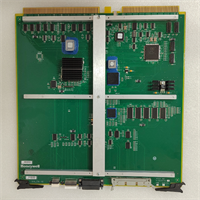
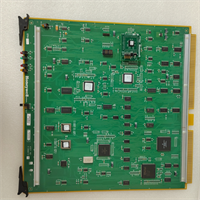
I’ve pulled enough C300 controller modules off hot racks to know the difference between a clean swap and a two-day headache. The HONEYWELL 51454551-275, commonly identified as CC-PCNT02, is not just another DCS card you plug in and forget. It sits at the center of a C300 controller environment and runs the actual control strategy — logic, regulation, data acquisition, and function-block execution. If this module is wrong, mismatched, or poorly seated, the controller will let you know, usually at the worst possible time.Engineers keep this part around because it replaces an existing C300 controller module without rewriting the whole control architecture. The real value is in matching the original hardware identity, firmware expectations, rack position, and project configuration. This module is only as good as its revision match. Get the firmware or hardware revision wrong, and you can end up with a module that powers up but still creates communication faults, failed module recognition, or unstable control execution.
Quality SOP & Tech Pitfalls
The Lab Report — Pre-Shipment SOP
A proper pre-shipment check for 51454551-275 / CC-PCNT02 should include:
- Visual and counterfeit check
- Confirm Honeywell branding, CC-PCNT02, and 51454551-275.
- Look for reprinted labels, uneven fonts, scratched markings, or mismatched date codes.
- Nameplate verification
- Record full part number, serial number, hardware revision, manufacturing date, and any compliance or safety markings.
- Compare the nameplate against the removed module and the purchase order.
- Physical inspection
- Check for bent pins, cracked housings, corroded connectors, burnt components, moisture damage, or damaged backplane contacts.
- Confirm the mechanical form factor matches the existing C300 chassis or carrier.
- Live functional test on a compatible test rack
- Power only after confirming supply voltage and module orientation.
- Check boot LEDs, controller recognition, diagnostics, and communication status if the test environment supports it.
- Do not assume “no fault LED” means the module is fully functional.
- Insulation and multimeter checks
- Use a calibrated multimeter such as a Fluke 115 or equivalent.
- Check for shorts, open circuits, abnormal leakage, or damaged isolation paths where applicable.
- Firmware and revision logging
- Record firmware version, hardware revision, and any configuration labels.
- Compare against the existing C300 system before approving installation.
- Anti-static sealing and shipping protection
- Pack in anti-static material.
- Protect connectors, contacts, and card edges from dust, moisture, and mechanical damage.
The Engineer’s Warning — Real Field Pitfalls
Pitfall 1: Treating 51454551-275 as a universal C300 controller module.
51454551-275 identifies the part, but it does not automatically guarantee compatibility. Firmware version, hardware revision, C300 chassis type, I/O configuration, and project database all matter. A mismatch can show up as controller faults, communication timeouts, failed module recognition, or unstable control execution.Pitfall 2: Forgetting to record the old module before removal.
Before pulling the old CC-PCNT02, record the firmware version, hardware revision, serial number, slot position, DIP switches, jumpers, and controller configuration references. I’ve seen sites spend hours chasing a “bad replacement” when the real problem was a missing revision check and a forgotten jumper setting.Pitfall 3: Ignoring ESD and backplane damage.
Controller modules are sensitive. A careless pull, a dropped card, or a static hit can damage backplane contacts or internal circuitry. If the module looks fine but fails recognition, do not assume the C300 chassis is good. Check the slot, the connector, and the backplane pins.
Installation & Configuration Guide
30-Minute Swap Guide
- Pre-Installation Safety ⚠️
- Confirm the correct isolation procedure for the C300 controller, rack, and field wiring.
- Lock out/tag out power where required.
- Wait for capacitors to discharge before touching terminals or backplane contacts.
- Verify the replacement module is HONEYWELL 51454551-275 / CC-PCNT02 and matches the removed unit.
- Document the Existing Setup ⚠️
- Take clear photos of:
- Module front and rear
- Nameplate
- Slot position
- Connectors and wiring
- DIP switches or jumpers, if present
- LED status before removal
- Record firmware version, hardware revision, serial number, and C300 configuration references.
- Take clear photos of:
- Removal
- Label connectors before disconnecting.
- Remove communication and I/O cables carefully to avoid damaging pins.
- Release the module according to the C300 chassis design.
- Do not force the card. If it resists, check for locking levers, backplane keys, or hidden fasteners.
- Installation
- Copy all jumper, address, DIP switch, and configuration settings from the old module before installing the new one.
- Seat the module fully and evenly into the correct slot.
- Reconnect communication cables exactly as labeled.
- Confirm connector orientation, shielding, grounding, and rack rules before closing the enclosure.
- Power-On & Testing
- Restore power only after a visual check.
- Verify supply voltage at the module and chassis.
- Watch the LED/boot sequence for normal indication.
- Check the C300 controller or engineering tool for module recognition.
- Confirm communication status, diagnostics, control execution, and system state.
- Perform a controlled function test before returning the process to full service.
Compatible Replacement Models
| Compatibility Level | Guidance |
|---|---|
| ✅ Drop-in Replacement | Only valid if the replacement has identical 51454551-275 / CC-PCNT02 identification, same hardware revision, same firmware compatibility, and matches the existing C300 system. |
| ⚠️ Software Compatible | May require firmware alignment, C300 controller re-recognition, project download, or configuration updates. Expect engineering labor before the module is accepted. |
| ❌ Hardware Mod Required | Different form factor, backplane interface, connector layout, or controller family means it is not a direct spare. Do not use unless the system is being upgraded with full engineering approval. |
Frequently Asked Questions
Can I hot-swap HONEYWELL 51454551-275?
Not unless the Honeywell documentation and your specific C300 configuration explicitly allow hot-swap for that controller slot. In most cases, pulling a live C300 controller module can disturb control execution, trigger diagnostics, or force the controller into a fault state. If you are not sure, plan a controlled shutdown.
Is any CC-PCNT02 interchangeable with 51454551-275?
No. CC-PCNT02 identifies the module family, and 51454551-275 identifies the specific part, but that still does not guarantee compatibility. Hardware revision, firmware version, serial number, and C300 project configuration all matter. Two modules that look identical can still behave differently in the field.
What happens if the firmware or hardware revision does not match?
You might get normal operation. You might also get controller faults, communication timeouts, failed module recognition, or unstable control execution. The worst case is a module that powers up but does not integrate correctly with the existing C300 project. Always verify revision and firmware before installation.
Can I use this module in a non-Honeywell C300 system?
Not as a direct replacement. 51454551-275 / CC-PCNT02 belongs to the Honeywell C300 controller environment. It is not a generic PLC or DCS controller module for arbitrary systems. If your platform is not a compatible Honeywell C300 system, this module is very likely not suitable.
What should I check before powering it up?
Check the slot position, module seating, connector condition, wiring labels, firmware/revision match, and C300 system state. Then verify that the controller recognizes the module and that diagnostics are normal before clearing alarms or returning the process to service.
Is a 1-year warranty enough to trust this spare?
A warranty helps, but it does not replace verification. Before installation, you still need nameplate confirmation, visual inspection, revision matching, functional testing, and C300 configuration validation. The warranty covers failure after delivery; proper QA prevents failure during commissioning.
What if the module looks new but has no documentation?
Treat it as unverified. Request the nameplate photo, datasheet, revision information, firmware details, and any test or inspection report. For a C300 controller module, missing documentation is a real problem — not a minor inconvenience.