 Tel:
 Email:
 WhatsApp:
Description
Key Technical Specifications
| Parameter | Specification |
|---|---|
| Manufacturer | GE Boards & Turbine Control |
| Part Number | DS200TCPDG1BEC |
| System Compatibility | Mark V Gas Turbine Control Systems |
| Primary Function | Analog Signal Scaling & Conditioning (TCQA) |
| Signal Types Handled | LVDT, Servo Valve, Thermocouple, mA, Vibration, Relay Drive |
| Output Current Ranges | mA or mA (Configured via J5/J6 jumpers) |
| Internal Bus Interfaces | PL (Power), PL (Data Bus), JE (Gen/Line Signals) |
| Test Port | RS232 via Jumper J7 |
| Oscillator Control | Jumper J8 |
| Operating Environment | Designed for harsh industrial turbine control cabinets |
Product Introduction
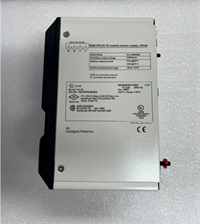
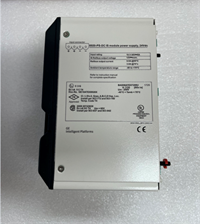
If you’ve spent any time around a GE Mark V control room, you know the TCQA board doesn’t get much respect until it fails. The DS200TCPDG1BEC is the workhorse analog I/O board sitting in the I/O core. It takes the raw, messy signals from the field—LVDT position feedback, compressor stall detection, fuel flow pressure, and thermocouple readings—and scales them into clean data the STCA can actually use. It’s not glamorous, but when this board drifts, your turbine control logic starts seeing ghosts.Engineers rely on this specific revision because of its mechanical and electrical isolation. It handles the dirty work of conditioning high-vibration inputs and servo valve outputs before passing them to the core bus. I’ve pulled these out of cabinets running around the clock for years, and the conformal coating usually holds up well against the oil mist and dust. Just don’t expect it to be forgiving. This board is notoriously picky about its jumper configurations. Get a single mA output range jumper wrong, and you’ll spend your weekend chasing phantom signal faults instead of going home.
Quality SOP & Tech Pitfalls
The Lab Report (SOP)
Before this board goes in a box to your site, it goes through my bench protocol:
- Visual & Counterfeit Check: Inspect the PCB traces for micro-fractures, especially around the heavy PL connectors. Verify the silkscreen matches GE OEM standards.
- Live Test on Rack: Powered up on a Mark V test rack. I verify the PL power distribution and check the PL data bus handshake.
- Insulation & Multimeter Checks: Fluke used to check continuity on the JE connector pins and verify isolation on the analog inputs.
- Jumper Verification: Physically check J1, J2, J5, J6, J7, and J8 against the standard factory default schema.
- Anti-static Sealing: Bagged with desiccant. No exceptions.
The Engineer’s Warning (Pitfalls)
Do not blindly swap this board. The DS200TCPDG1BEC relies entirely on physical hardware jumpers (J1, J2, J5, J6) to define its mA output circuits and current ranges. I once responded to a site where a tech swapped a failed TCQA board, didn’t copy the jumper block from the old board, and just dropped the new one in. The default jumpers were set for the higher mA range, but the logic expected the lower range. The result? The servo valve outputs saturated, the fuel stroke reference went wild, and they tripped the unit on a spurious overspeed during startup.Take a picture of the old jumper block before you pull a single wire. Also, watch the J7 RS232 test port. If someone left a test cable plugged into it, it can interfere with normal bus communication.
Installation & Configuration Guide
Phase 1: Pre-Installation
- ⚠️ Safety First: Follow your plant’s LOTO (Lockout/Tagout) procedures. The Mark V I/O core handles high-energy analog circuits. Wait for capacitors to discharge.
- ⚠️ Document Everything: Photograph the existing DS200TCPDG1BEC. I mean everything. The wiring, the PL/JE connector orientations, and especially the jumper block (J1, J2, J5, J6, J7, J8).
Phase 2: Removal
- Label all field wiring if not already tagged.
- Gently release the retention clips on the PL and JE connectors. Do not yank. These ribbon cables and pin headers are brittle after years in the field.
- Slide the old board straight out of the I/O core slot.
Phase 3: Installation
- Copy the Jumpers: Take your photo of the old board and set the jumpers on the new DS200TCPDG1BEC to match exactly. This single step prevents the vast majority of startup failures.
- Align the board with the card guides in the I/O core.
- Seat the board firmly until the connectors engage. Do not force it; if it binds, check the alignment.
Phase 4: Power-On & Testing
- Restore power to the I/O core.
- Check the front panel LEDs. You are looking for a healthy “OK” state. If you get a fault LED, immediately check your jumper settings and the PL data bus connection.
- Use the Mark V service aids to verify the analog inputs (LVDT, mA) are reading plausible values.
Compatible Replacement Models
| Model / Part Number | Compatibility Tier | Notes |
|---|
| Model / Part Number | Compatibility Tier | Notes |
|---|---|---|
| DS200TCPDG1B | ✅ Drop-in Replacement | Base part number without the EC suffix. Usually identical hardware, verify regional compliance markings. |
| DS200TCPDG1A | ⚠️ Software Compatible | Older revision. May require a firmware flash or logic recompile in the STCA to recognize the board properly. Budget engineering validation time. |
| IS200TCPDG1B | ❌ Hardware Mod Required | Mark VIe equivalent. The Mark VIe uses a completely different I/O pack architecture. Do not attempt to mix these without a full system upgrade. |
Frequently Asked Questions (FAQ)
Can I hot-swap the DS200TCPDG1BEC while the turbine is running?
Technically, the Mark V I/O cores are designed with some redundancy, but hot-swapping an analog I/O board is a massive risk. You will introduce transient spikes on the PL data bus. If you aren’t in a triple-redundant configuration, you will trip the unit. Shut it down properly.What happens if I leave the J7 jumper installed?
J7 is the RS232 port used for board-level testing. If you leave it enabled or have a cable attached during normal operation, it can cause communication timeouts on the core bus. Remove test connections before returning the board to service.I have a mA signal fault. Is it definitely the TCQA board?
Not necessarily. The TCQA scales the signal, but the TBQC terminal board handles the physical connection. Check your field wiring and the TBQC jumpers first. The TCQA is usually the last place I look for a simple mA loop fault.Do these boards come with a warranty?
Yes, typically covered for functional performance on new surplus or refurbished units. However, if you fry the input channels by wiring high AC voltage into a low DC analog input, that’s on you. The warranty covers manufacturing defects and component aging, not field wiring errors.Can I use a DS200TCPDG1BEC in a Mark VIe system?
No. The Mark VIe uses the IS200 series I/O packs (like the IS200TCPDG1B). The physical footprint, backplane connectors, and communication protocols (Ethernet-based vs. the older Mark V core bus) are entirely different.