 Tel:
Tel:  Email:
  WhatsApp:
 Description
Key Technical Specifications
| Parameter | Specification |
|---|---|
| Rated Operating Current | 300A (at AC-3 utilization category) |
| Rated Operating Voltage | 690V AC (Maximum) |
| Insulation Voltage (Ui) | 1000V |
| Pole Configuration | 3 Poles (3NO Main Contacts) |
| Control Coil Voltage | 24V / 110V / 220V AC or DC (varies by specific sub-model) |
| Mechanical Life | ≥ 10,000,000 operations |
| Electrical Life | ≥ 1,000,000 operations (AC-3) |
| Utilization Category | AC-3 (Squirrel cage motors), AC-1 (Resistive loads) |
| Mounting Method | Screw fixing / Base or DIN Rail mount |
| Compliance Standards | IEC 60947-4-1, GB 14048.4 |
Product Introduction
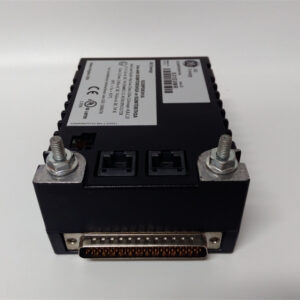
In any heavy industrial plant, the last thing you want is a contactor welding its contacts shut during a critical pump cycle. The GE CK11CE300 is a beast of a contactor built specifically to handle the punishing inrush currents of 3-phase asynchronous motors and heavy resistive loads. Rated for a solid 300A under AC-3 conditions, this unit is a staple in motor control centers (MCCs) and main power distribution cabinets where standard contactors just burn out.What makes the CK11CE300 a favorite among maintenance crews is its sheer durability. We are talking about a mechanical life of over 10 million operations and an electrical life of 1 million cycles. It handles up to 690V AC with a 1000V insulation rating, meaning it won’t arc over even when the grid gets a little dirty. Whether you are controlling a massive HVAC compressor or a bank of electric heaters, this contactor provides the reliable, high-current switching capability that keeps production lines moving.
Quality SOP & Tech Pitfalls (The Reality Check)
The Lab Report (SOP)
We don’t just ship these blindly. Every CK11CE300 goes through a visual and mechanical inspection first—we check the housing for stress cracks and ensure the terminal blocks aren’t stripped. We then manually actuate the contactor to verify smooth mechanical movement without sticking. Finally, we use a multimeter to confirm continuity across the 3 main normally open (NO) contacts when closed, and infinite resistance when open, before vacuum-sealing it in anti-static packaging.The Engineer’s Warning (Pitfalls)
Here is the number one reason this contactor fails prematurely: loose wiring. At 300A, even a slightly loose terminal creates massive resistance, which leads to heat, which melts your terminal block. Torque your main power lugs to the OEM spec (usually between 275-375 lb-in for this frame size). Also, double-check your control coil voltage before wiring it up. These come in 24V, 110V, and 220V variants, and hooking a 24V coil up to 220V will blow the coil instantly.
Installation & Configuration Guide
Installing a 300A contactor isn’t like swapping a small relay. Take your time and follow these steps:
- Pre-Installation & Safety: ⚠️ Warning: Lock out and tag out (LOTO) the main power supply. Verify with a multimeter that there is zero voltage at the installation point.
- Removal: If replacing an old unit, label every single wire (L1, L2, L3, T1, T2, T3, and coil wires) before disconnecting. Loosen the mounting screws and carefully remove the old contactor.
- Installation: Mount the new CK11CE300 securely to the base plate or DIN rail. CRITICAL STEP: Strip your power cables to the correct length and insert them fully into the terminals. Tighten the main power screws to the specified torque (check the label on the side of the contactor). A loose connection here is a fire hazard.
- Power-On & Testing: Reconnect your control circuit. Momentarily energize the coil to verify the contactor pulls in smoothly with a solid “clunk” and no chatter. Check the voltage at the output terminals (T1, T2, T3) to ensure all three phases are present.
Compatible Replacement Models
| Compatibility | Model | Notes |
|---|---|---|
| ✅ Drop-in Replacement | CK11CE300 | Exact match. Ensure the coil voltage matches your control circuit. |
| ⚠️ Software Compatible | CK11CE311N | A closely related GE variant. Verify physical dimensions and auxiliary contact layout before installing. |
| ⚠️ Hardware Mod Required | Competitor 300A Contactors | Brands like Siemens or ABB have equivalents, but you will likely need to modify the mounting plate and re-terminate cables. |
Frequently Asked Questions (FAQ)
1. What is the difference between AC-1 and AC-3 ratings on this contactor?
AC-3 is the rating for starting and stopping squirrel cage motors (which have high inrush current), which is rated at 300A for this model. AC-1 is for non-inductive or slightly inductive loads like heaters, where the contactor can typically handle a higher current. Always size your contactor based on the AC-3 rating if you are controlling motors.2. Can I add auxiliary contacts to the CK11CE300?
Yes. This contactor is designed with modular auxiliary contact blocks. You can usually snap on NO (Normally Open) or NC (Normally Closed) auxiliary blocks on the side for interlocks, pilot lights, or PLC feedback signals.3. My coil burned out. Can I just replace the coil?
On many industrial contactors of this frame size, the coil is a replaceable component. However, you must order the exact coil voltage and part number compatible with the CK11CE300 chassis. If the contactor is very old, it’s often safer to replace the whole unit.4. Is this contactor suitable for DC applications?
This is primarily an AC contactor (IEC 60947-4-1). While the main contacts might physically switch DC, the arc suppression is designed for AC zero-crossings. Using it for high-voltage DC loads is not recommended unless explicitly stated in the specific DC datasheet for this model.5. What torque should I use for the main terminals?
While you should always check the specific label on your unit, the standard terminal torque for this class of contactor is typically between 275 and 375 lb-in (pound-inches). Using a calibrated torque wrench is highly recommended to prevent overheating.