 Tel:
 Email:
 WhatsApp:
Description
Key Technical Specifications
| Parameter | Specification |
|---|---|
| Full Model | 3500/33-01-00 |
| Front Part Number | 149986-01 |
| Rear I/O Part Number | 149992-01 |
| Relay Type | SPDT, epoxy-sealed |
| Channels | 16 independent programmable relays |
| Contact Rating | 5 A @ 24 Vdc or 240 Vac |
| Contact Life | 100,000 cycles @ 5 A, 24 Vdc/240 Vac |
| Arc Suppression | 250 Vrms standard |
| Max Switching Power | 1200 VA |
| Logic | AND/OR alarm-drive per relay |
| Power Consumption | Typical 5.8 W |
| Operating Temperature | -30 °C to +65 °C |
| Storage Temperature | -40 °C to +85 °C |
| Humidity | 95% non-condensing |
| Software Required | Rack Config ≥3.3; Data Acquisition ≥2.40; Data Display ≥1.40 |
| Rack Compatibility | 3500/05 with 3500/20 or 3500/22 TDI |
Product Introduction
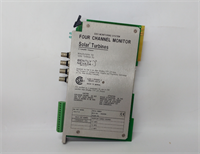
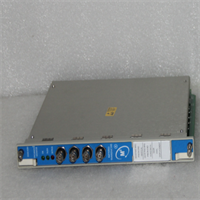
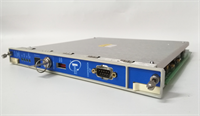
The 3500/33 149986-01 shows up when a turbine or compressor rack runs out of trip points. It does not read probes. It does not replace a 3500/42M or 3500/45. Its job is simpler and more dangerous if done wrong: take alarm/danger/not-OK states from the monitor channels and turn them into hard relay contacts that go to the ESD, DCS, annunciator, or trip solenoid.Engineers keep this module in the spare cabinet because it gives you 16 SPDT relays in one full-height slot, each with AND/OR alarm-drive logic. That matters when you need radial vibration danger, axial displacement danger, and keyphasor loss separated into different trip buses. I have pulled these out of frames where someone assumed “same family, same behavior” and learned the hard way that the -01-00 suffix, rear I/O number, and software version all matter. This specific revision is not fussy if you respect the backplane, but it will punish sloppy configuration.
Quality SOP & Tech Pitfalls
The Lab Report (SOP)
- Visual and counterfeit check: confirm 3500/33-01-00, 149986-01 front, 149992-01 rear, serial number, and label quality.
- Connector inspection: check backplane pins, DIN latches, and front-panel LEDs for damage.
- Live rack test: insert into a compatible 3500/05 frame with 3500/22 or 3500/20 RIM; verify OK LED and TX/RX communication.
- Relay channel spot check: force selected channels into alarm and confirm SPDT contact movement with a Fluke 115 or equivalent.
- Configuration readback: verify the module is recognized by Rack Config software and that relay assignments load without fault.
- Power and insulation check: confirm typical 5.8 W draw and no abnormal heating.
- Firmware/software logging: record Rack Config, Data Acquisition, and Data Display versions.
- Anti-static sealing: bag, tag, and pack with test records.
The Engineer’s Warning (Pitfalls)
- Do not use a 3500/33 for TMR trips. That is what the 3500/34 is for. I have seen a compressor rack patched with a 3500/33 because “it has relays too.” It worked until the audit asked for TMR voting. Then the paperwork failed before the machine did.
- The ND/NE switch kills people who skip it. Each group of four channels can be set to Normally De-energized or Normally Energized. If the replacement module is set differently from the old one, a healthy machine can look tripped, or a tripped machine can look healthy.
- Software version is not optional. The 3500/33 needs Rack Config 3.3+, Data Acquisition 2.40+, and Data Display 1.40+. Older laptops in the plant room will see the module but refuse to talk to it properly.
- The -02 multi-certification option reduces allowable voltage spacing. Do not assume 240 Vac is valid on every suffix.
Installation & Configuration Guide
- Pre-Installation: Place the machine protection logic in maintenance mode. Photograph every relay assignment, ND/NE switch position, channel mapping, and rack slot. ⚠️ Do not rely on memory.
- Removal: Label the rear I/O wiring. Release the DIN latches carefully. Pull the module straight out; do not rock it.
- Installation: Copy the ND/NE switch settings before inserting the new module. This single step prevents most startup alarms. Seat the module firmly and confirm the rear I/O 149992-01 is properly engaged.
- Power-On & Testing: Apply rack power. Verify the OK LED is steady. Check TX/RX flashing. Download or verify the existing configuration. Force-test critical trip relays one at a time and confirm external contact behavior.
Compatible Replacement Models
| Compatibility | Model | Notes |
|---|---|---|
| ✅ Drop-in | 3500/33-01-00, 149986-01 / 149992-01 | Lowest risk if suffixes match |
| ⚠️ Verify Suffix | 3500/33 with -02 or other options | May have reduced voltage ratings or certification limits |
| ⚠️ Lower Density | 3500/32 / 3500/32M | 4-channel relay; needs multiple modules for equivalent I/O |
| ⚠️ TMR Applications | 3500/34 | Required for triple-modular-redundant trip logic |
| ❌ Not Compatible | Non-3500 relay modules | Cannot use 3500 alarm-drive backplane logic |
Frequently Asked Questions (FAQ)
Can I hot-swap a 3500/33?
Yes, the 3500 system supports hot insertion/removal of modules, but only if the rack power is stable and the replacement module carries the same configuration or the rack already holds a valid config. I still prefer a planned maintenance window for trip-critical relays.Is 149986-01 the full model?
No. 149986-01 is the front assembly number. The full model is typically 3500/33-01-00, and the rear I/O is usually 149992-01. Match all three before ordering.Will this work with my old 3500/20 RIM?
It can, but only if the RIM firmware and Rack Config software meet the minimum versions: Rack Config 3.3+, Data Acquisition 2.40+, Data Display 1.40+.Can I use it for TMR protection?
No. Use a 3500/34 TMR Relay Module for TMR applications.Does it connect directly to vibration probes?
No. Probes go into monitor modules such as 3500/40M, 3500/42M, or 3500/45. The 3500/33 only outputs relay states.What condition do you supply?
New surplus, factory-sealed, or tested original used stock, depending on availability. Every unit is verified for model, power-up, communication, and relay operation before shipment.What is the warranty?
Typically 12 months for non-human damage. Final terms depend on the order confirmation and unit condition.