 Tel:
 Email:
 WhatsApp:
Description
Key Technical Specifications
| Parameter | Specification |
|---|---|
| Part Number | 149369-01 |
| Module Type | Enhanced Keyphasor Module, half-height, 2-channel |
| System Compatibility | Bently Nevada 3500 rack with compatible I/O module |
| Sensor Inputs | Proximity probe or magnetic pickup |
| Input Range (Non-Isolated I/O) | +0.8 V to −21.0 V |
| Input Range (Isolated I/O) | +5 V to −11 V |
| Input Impedance | Minimum 21.8 kΩ |
| Auto Threshold | Minimum 2 Vpp, minimum 120 rpm (2 Hz) |
| Manual Threshold | 0 to −20 Vdc selectable, minimum 500 mVpp |
| Hysteresis | 0.2 to 2.5 V selectable |
| Transducer Supply | −24 Vdc, maximum 40 mA per channel |
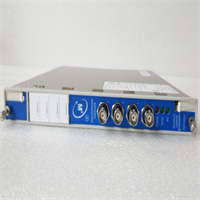
| Buffered Outputs | 2 front-panel coaxial, 2 rear European-style connectors |
| Output Impedance | Maximum 504 Ω |
| Typical Power | 3.2 W |
| Operating Temperature | −30°C to +65°C with non-barrier I/O; 0°C to +65°C with internal barrier I/O |
| Storage Temperature | −40°C to +85°C |
| Dimensions | 119.9 × 24.4 × 256.5 mm |
| Replacement | Fully replaces PWA 125792-01 |
Product Introduction
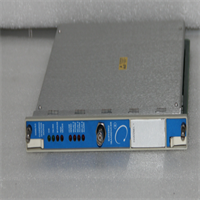
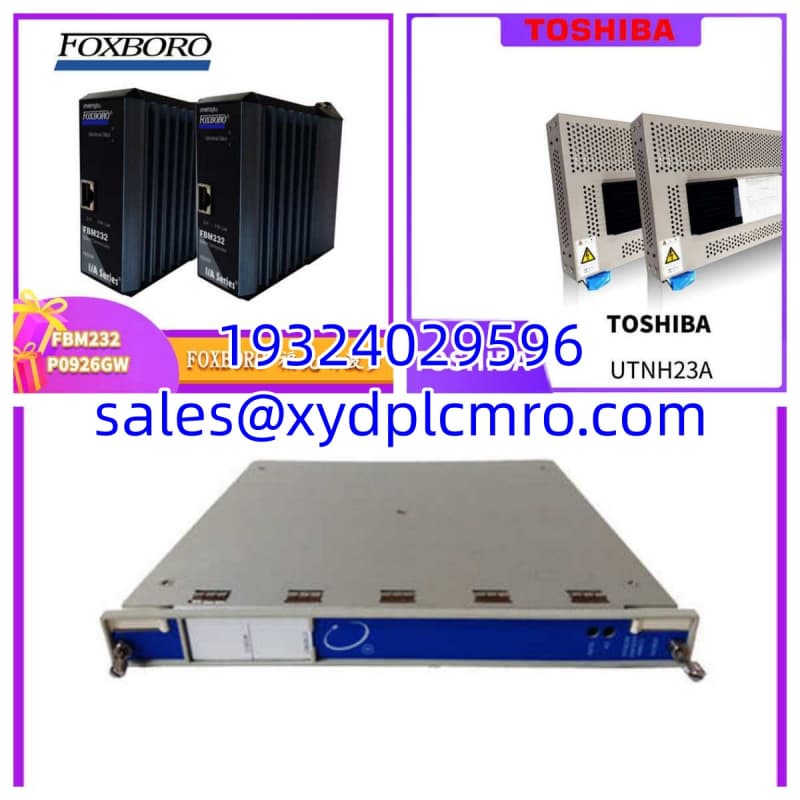
If a turbine’s phase readings start jumping during startup, the vibration engineer’s first suspect is rarely the vibration card itself. It is usually the Keyphasor. The Bently Nevada 3500/25 with PWA 149369-01 is the half-height dual-channel Keyphasor card that feeds timing pulses into the 3500 rack so monitor modules can calculate 1X amplitude, phase lag, and shaft speed.Engineers keep this card on the spares shelf because a bad Keyphasor does not always trip the machine. It quietly kills diagnostic value. Bode plots wobble. Polar plots scatter. The unit keeps running, but you lose the ability to separate unbalance from misalignment with confidence. The 149369-01 replaced the older 125792-01 and kept form, fit, and function compatibility while adding better signal processing and field-upgradeable firmware. I have seen it run for years without drama. The only catch is the rear I/O module. Swap the wrong I/O type and the threshold window shifts.
Quality SOP & Tech Pitfalls
The Lab Report (SOP):
- Visual and counterfeit check: verify 149369-01 label, serial number, and PCB revision.
- Mechanical inspection: check front coaxial connectors, rear I/O interface, and mounting hardware.
- Insulation check: measure terminal-to-chassis resistance with a Fluke 115 or equivalent.
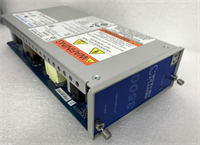
- I/O module match: confirm whether the rear module is non-isolated, isolated, internal termination, external termination, or internal barrier.
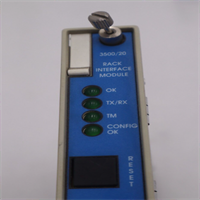
- Live rack test: seat the card in a compatible 3500 rack and verify OK and TX/RX LEDs.
- Buffered output check: verify Keyphasor pulse presence when a valid sensor signal is applied.
- Anti-static sealing and photo documentation before dispatch.
The Engineer’s Warning (Pitfalls):
Do not assume “3500/25” is enough. The 149369-01 front card must match the rear I/O module. I once saw a compressor train lose stable phase after a rushed outage swap. The replacement card was correct, but the I/O module had been changed from non-isolated to isolated. The threshold and phase shift moved just enough to make the diagnostic plots unreliable. Also, never ignore the buffered output. If the front-panel pulse looks ragged, do not blame the DCS first. Check probe gap, cable shielding, and threshold settings.
Installation & Configuration Guide
- Pre-Installation: Shut down per site safety rules. Photograph the existing 3500/25 front card, rear I/O module, channel assignments, and rack slot position. ⚠️
- Removal: Label all sensor cables. Remove the rear I/O module if required by site procedure. Release the front card retaining clips and withdraw the module.
- Installation: Copy the original I/O module type, slot position, and channel configuration before touching anything. Install the rear I/O module first, then seat the 149369-01 front card firmly.
- Power-On & Testing: Verify rack power. Confirm OK LED behavior. Check buffered Keyphasor output with an oscilloscope or portable tester. Validate speed, phase, and alarm behavior against the existing 3500 configuration. Do not change thresholds during a hot swap unless the original settings are documented.

Compatible Replacement Models
| Compatibility | Model / Option | Notes |
|---|
| Compatibility | Model / Option | Notes |
|---|---|---|
| ✅ Drop-in Replacement | 149369-01 | Direct replacement for PWA 125792-01. |
| ✅ Compatible I/O Match | 125800-01, 126648-01, 125800-02, 135473-01 | Must match original termination, isolation, and barrier requirements. |
| ⚠️ Software Compatible | 3500/25 different order codes | Channel count and approval options may differ; configuration must be verified. |
| ❌ Not Directly Compatible | Non-3500 Keyphasor cards | Will not fit or communicate with the 3500 rack backplane. |
Frequently Asked Questions (FAQ)
Can I replace 125792-01 with 149369-01?
Yes. The 149369-01 fully replaces PWA 125792-01. Keep the same I/O module and rack configuration.Is this module hot-swappable?
The 3500 system supports hot swapping for many modules, but I still prefer a planned change window for Keyphasor cards. Phase references affect diagnostics, and a wrong move can confuse operators during startup.Why does phase look unstable after replacement?
Check the I/O module type first. Isolated and non-isolated I/O modules do not behave the same. Then verify probe gap, cable integrity, threshold, hysteresis, and sensor supply.Does 149369-01 include the rear I/O module?
Not necessarily. The front card and rear I/O module are separate items. Confirm the exact parts before shipping.Can I use it with both proximity probes and magnetic pickups?
Yes. It accepts both, but the input range and I/O module selection must match the sensor type.Is new original stock still available?
Some suppliers still list factory-sealed units, but availability varies. Many units in circulation are new surplus or verified used. Ask for label photos and test records.What should I send before ordering?
Send the rack model, existing front card label, rear I/O module part number, channel configuration, and any known alarm or phase issues. That cuts the back-and-forth in half.