Key Technical Specifications
| Parameter | Value |
|---|---|
| Product Type | Machinery Protection Card (Processing Card) |
| Dynamic Signal Channels | 4 (programmable: acceleration, velocity, displacement/proximity) |
| Tachometer Channels | 2 (proximity probe, magnetic pickup, or TTL input) |
| Dynamic Input DC Range | 0 to +20 V or 0 to -20 V |
| Dynamic Input AC Range | ±10 V max |
| Input Impedance | 200 kΩ |
| CMRR | >60 dB at 50 Hz |
| Frequency Range (Vibration) | 0.1 Hz to 10 kHz |
| Amplitude Accuracy | ±1% of full scale |
| Analog Output | 0–10 V / 4–20 mA (via IOC4T card) |
| Alarm Outputs | Programmable Alert, Danger, and OK setpoints with time delay and hysteresis |
| Power Supply | 24 VDC (supplied via VM600 rack backplane) |
| Operating Temperature | -20°C to +60°C |
| Form Factor | 19-inch rack card (6U height, approx. 20 mm slot width) |
| Hot-Swap | Supported |
| Safety Versions | Standard, Independent Circuit, SIL (IEC 61508 SIL 1) |
| Compliance | API 670 |
Product Introduction
The Vibro-Meter VM600 MPC4 is a machinery protection processing card that serves as the core measurement and trip-decision element within the VM600 Machinery Protection System. It accepts up to four dynamic vibration signals and two tachometer inputs, processes them through onboard DSP, and generates programmable alarm and trip outputs for critical rotating equipment such as gas turbines, steam turbines, compressors, and large fans.What sets this card apart is its ability to run continuous online protection without requiring an external PC or separate signal conditioner. Each dynamic channel is independently programmable for acceleration, velocity, or displacement measurement, with configurable bandpass filters, order tracking, and adaptive alarm thresholds. The card pairs with an IOC4T input/output card to provide relay trip outputs and analog retransmission (0–10 V or 4–20 mA) to a DCS or SCADA system.

Installation & Configuration Guide
Phase 1 — Preparation (10 min)
- Confirm the VM600 rack model (ABE040 or ABE042) and verify available slot positions.
- Identify the target slot assignment in the VM600 MPSx or VibroSight configuration software.
- Verify the 24 VDC rack supply is within tolerance (±15%) and stable.
- Confirm the paired IOC4T card is installed and recognized by the rack controller (CPUR/IOCR).
- Wear an ESD wrist strap. The card edge connector is sensitive to static discharge.
Phase 2 — Removal of Existing Card (5–10 min)
- If replacing a faulty MPC4, confirm the replacement card matches the same version (Standard, Independent Circuit, or SIL).
- Open VibroSight or VM600 MPSx software and note the current channel configuration, alarm setpoints, and filter settings.
- Loosen the front-panel captive screws.
- Pull the card straight out of the rack slot — do not rock or tilt.
- Inspect the backplane edge connector for bent pins or debris.
Phase 3 — Installation (10 min)
- Align the replacement MPC4 card with the target slot. The card is mechanically keyed.
- Push the card firmly and evenly until it seats fully against the backplane.
- Tighten the front-panel captive screws.
- Verify the paired IOC4T card remains seated and connected.
Phase 4 — Power-On & Test (10 min)
- Observe the front-panel LEDs. The card should pass its power-on self-test within seconds.
- Check the six channel LEDs — each should indicate OK status (no fault detected).
- Open VibroSight or VM600 MPSx and confirm the card is recognized in the hardware tree.
- Apply a known test signal to one dynamic channel via the front-panel BNC connector and verify the reading appears correctly in the software.
- Verify alarm setpoints trigger at the configured thresholds.
Troubleshooting Quick Reference
| Symptom | Most Likely Cause | First Check |
|---|---|---|
| Front-panel fault LED lit | Hardware error or card self-test failure | Read diagnostic register in VibroSight; reseat card |
| Channel LED shows fault | Sensor open circuit or signal out of range | Measure signal at front-panel BNC; check sensor cable continuity |
| No alarm trip at setpoint | Alarm output not mapped to IOC4T relay | Verify alarm-to-relay mapping in MPSx configuration |
| Card not recognized by rack | Backplane communication failure or wrong slot | Reseat card; verify slot assignment in CPUR configuration |
| Intermittent readings | Loose BNC connection or damaged sensor cable | Check BNC connector torque; swap sensor cable |
| Analog output reads zero | IOC4T card not paired or output not configured | Confirm IOC4T pairing; verify output channel assignment in software |
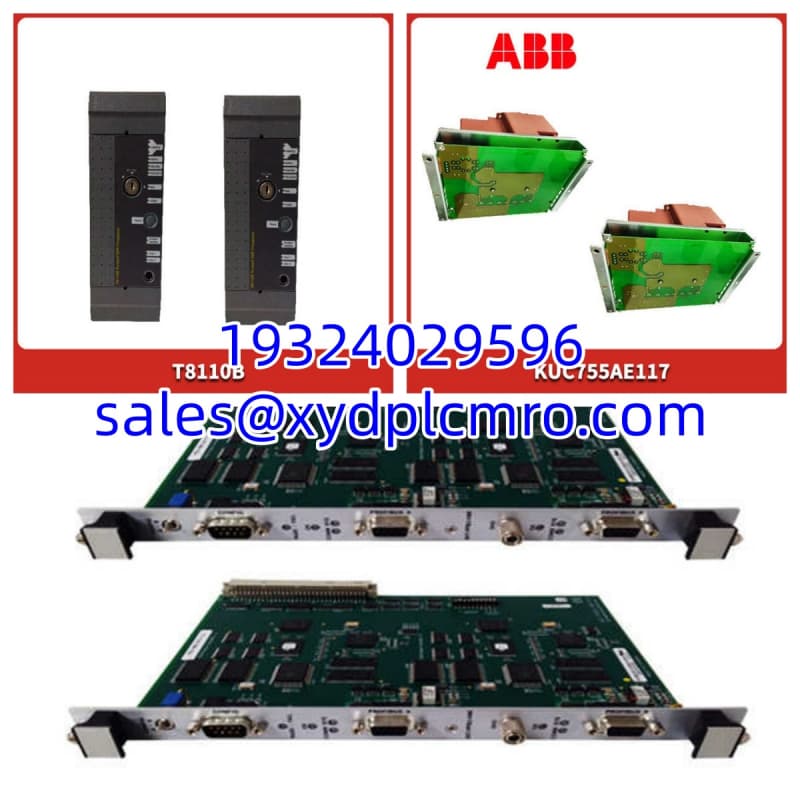
Dimensions, Mounting & Wiring Notes
- Form Factor: 19-inch rack-mount processing card (6U height, single slot width, approx. 20 mm)
- Mounting: Inserts into VM600 rack backplane (ABE040 or ABE042); mechanically keyed
- Front-Panel Connectors: BNC connectors for dynamic signal input access (buffered raw sensor signals)
- Rear Connection: Edge connector to rack backplane — no direct field wiring to the MPC4 card itself
- Paired I/O Card: IOC4T provides field-side terminals, relay outputs, and analog retransmission
- Weight: Approx. 0.40 kg (card only)
FAQ
Can I use a Standard version MPC4 in a SIL-rated protection system?
No. If your safety case requires SIL certification, you must use the MPC4 SIL version. The Standard and Independent Circuit versions do not carry the IEC 61508 SIL 1 rating. Mixing versions within the same safety function is not permitted.I swapped the card and now VibroSight shows a configuration mismatch. What happened?
The replacement card likely has a different firmware revision or a different hardware revision code than the original. VibroSight stores the expected card identity in the project file. You will need to update the hardware configuration in the software to match the replacement card, then re-download the configuration.Do I need the IOC4T card for the MPC4 to function?
Yes. The MPC4 handles signal processing and alarm logic, but it does not provide field-side relay outputs or analog retransmission directly. The IOC4T card is required as the I/O interface pair. Without it, you have no trip relay outputs and no 4–20 mA signals to the DCS.Is the MPC4 hot-swappable during live operation?
Yes, the card supports hot-swap. However, during the brief moment of removal, the channels on that card are not providing protection. If the machine is in a critical state, schedule the swap during a controlled window.What sensor types does the MPC4 accept?
The four dynamic channels accept IEPE accelerometers, velocity sensors, and eddy-current proximity probes. The two tachometer channels accept proximity probes, magnetic pulse pickups, or TTL signals. All channel types are software-configurable.I’m buying a replacement from a third-party supplier. What should I verify?
Check the full part number (200-510-076-114 or 200-510-111-034), confirm the version (Standard, Independent Circuit, or SIL), and request a photo of the actual card label showing the firmware revision. Counterfeit or mismatched cards may have incorrect relay behavior or fail the rack self-test.