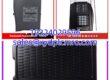
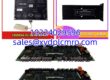
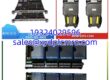
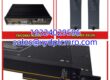
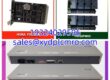
Key Technical Specifications
- Product Model: M8000R-SUP
- Manufacturer: AVAYA
- Module Type: Routing Switch Supervisor Module
- Switching Capacity: Up to 768 Gbps
- Forwarding Performance: Supports up to 6 ports of 10GbE and 100GbE wire-rate forwarding
- Protocol Support: Multiple routing protocols and IPv6
- Optical Support: Compatible with infrared and optical pulse modules
- Hardware Architecture: Advanced high-speed routing architecture with flexible line card combinations
- Target Applications: Enterprise Networks, Data Centers, Service Provider Networks
- Chassis Compatibility: Avaya Cajun P880 and 882 Routing Switches
Product Introduction
When a core network starts dropping packets during peak traffic, the bottleneck is almost always the supervisor engine struggling to keep up with the backplane. The AVAYA M8000R-SUP was built to handle that exact pressure in the Cajun P880 and 882 chassis. It serves as the central brain, managing line-rate forwarding for up to six 10GbE/100GbE ports while pushing a massive 768Gbps of switching capacity across the backplane.I’ve always respected this board because it doesn’t just move data; it handles complex IPv6 routing and optical pulse modules without choking. It’s a beast for its era. That said, this is legacy hardware. If you are running it in a modern data center, treat it with respect and ensure your cooling is adequate, because pushing 768Gbps through an older chassis generates serious heat.

Quality SOP & Tech Pitfalls
We don’t trust factory seals on 15-year-old hardware. Every M8000R-SUP goes through our live test rack. We start with a visual inspection of the BGA components and backplane connectors. Then, we boot it in a Cajun chassis to verify it successfully negotiates with the line cards and passes 10GbE wire-rate traffic. We also check the optical ports for clean light output. Finally, it gets sealed in anti-static packaging.Here is where guys get burned: The M8000R-SUP is incredibly sensitive to backplane seating. If you don’t push it in perfectly straight and torque the ejector screws evenly, you will bend the high-density pins. I once watched a tech force a card in at a slight angle, boot the chassis, and fry three line cards because of a shorted backplane pin. Also, never mix different hardware revisions of this supervisor in the same chassis unless the OEM manual explicitly says it’s supported.
Installation & Configuration Guide
- Pre-Installation: ⚠️ SAFETY FIRST. Power down the Cajun chassis completely and wait 5 minutes for the internal power supplies to discharge. Take photos of the existing supervisor’s DIP switches and fiber connections.
- Removal: Disconnect all fiber and optical pulse modules. Unscrew the ejector mechanisms and slide the old module out smoothly.
- Installation: Inspect the backplane pins with a flashlight before inserting the new M8000R-SUP. Align the card perfectly with the guides and push evenly. Tighten the ejector screws securely to guarantee backplane contact.
- Power-On & Testing: Reconnect your optical modules. Power on the chassis and monitor the console output. Verify that the supervisor successfully boots, recognizes all installed line cards, and establishes line-rate forwarding.

Compatible Replacement Models
- ✅ Drop-in Replacement: M8000R-SUP – The exact same supervisor engine. Ensure the hardware revision matches your existing chassis requirements.
- ⚠️ Software Compatible: M8000R-SUP (Rev B/C) – Later hardware revisions may drop into the same chassis but often require a specific firmware version on the line cards. Budget ~4 hours of engineering time for firmware alignment.
- ❌ Hardware Mod Required: Standard P880 Line Cards – Do not confuse the supervisor engine with standard line cards. They are physically incompatible with the supervisor slot.
Frequently Asked Questions (FAQ)
Can I hot-swap this supervisor module?
Absolutely not. This is a core control plane device. Pulling it while the chassis is powered on will crash the entire switch and likely damage the backplane. Always schedule a maintenance window and power down.Is this a genuine Avaya part or a third-party clone?
These are genuine Avaya-Lucent New Surplus units. We test them extensively because clones of this specific supervisor are notorious for failing under heavy 10GbE loads.My chassis is booting but the line cards aren’t coming up. Is the supervisor bad?
Maybe, but check the basics first. Reseat the supervisor, check your console logs for backplane errors, and verify your power supplies are delivering enough wattage. Pushing 768Gbps requires serious power; a degraded PSU will cause the supervisor to throttle the line cards.Does this support modern 100GbE optics?
It supports 100GbE line-rate forwarding, but you must verify the specific optical module compatibility matrix in the Avaya Cajun documentation. Older transceivers may not be recognized by the supervisor’s firmware.What happens if I lose power during a firmware upgrade on this module?
You will brick the supervisor. Always ensure you have a redundant power supply and a stable console connection before initiating any firmware flash. If it happens, you’ll need a TFTP recovery setup to unbrick it.