Key Technical Specifications
| Parameter | Specification |
|---|---|
| Product Model | UBC717AE01 HIEE300927R0101 |
| Manufacturer | ABB |
| Operating Voltage | 24 V DC (Tolerance: 19.2–28.8 V DC) |
| Static Power Consumption | ≤5 W |
| Digital I/O Capacity | 16x DI/DO or mixed configuration |
| Communication Protocol | Profibus DP-V1 (Slave mode, up to 12 Mbps) |
| Digital Input Isolation | Optocoupler isolated, Surge resistance ≥1 kV |
| Digital Output Type | Relay (5 A/250 V AC) or Transistor (0.5 A/24 V DC) |
| Response Time | <10 ms (Transistor), <15 ms (Relay) |
| Operating Temperature | -40°C to +70°C |
| Protection Rating | IP20 (Cabinet mount only) |
| EMC Immunity | IEC 61000-4 (ESD ±8 kV, Surge ±2 kV) |
Product Introduction
Control cabinets in continuous process plants get hot, dirty, and electrically noisy. You need hardware that doesn’t flinch when a 500V AC motor starter kicks on right next to the rack. The ABB UBC717AE01 HIEE300927R0101 is built exactly for this environment. It acts as a localized brain for the S800 I/O system, managing Profibus DP traffic while directly driving relays or reading high-voltage digital inputs.Engineers stick with this specific board because it actually delivers on its specs. It offers a guaranteed 1 kV surge resistance on its digital inputs, which saves your PLC from frying during ground faults. The response time stays strictly under 10 ms for transistor outputs, keeping high-speed interlocks tight. Just be aware that this specific revision can be sensitive to poor grounding; make sure your DIN rail is bonded properly, and it will run for decades without a hitch.
Quality SOP & Tech Pitfalls
I don’t trust a board until I’ve tortured it on a test bench. Every UBC717AE01 HIEE300927R0101 we ship goes through a strict lab protocol. We start with a visual inspection under magnification to catch counterfeit chips or cold solder joints. Next, it goes on a live test rack for a 24-hour burn-in to verify the static power draw stays under 5W. We pull out a Fluke 115 to check insulation resistance and verify the 24VDC rails. Finally, we log the firmware version, pack it in anti-static shielding, and seal it.Here is the brutal reality of swapping these out: firmware mismatches will ruin your day. If you drop a newer revision board into an old AC 800M chassis running outdated firmware, the controller will throw a configuration fault and refuse to talk to it. I once watched a maintenance crew spend six hours at 2 AM trying to figure out why a brand-new module was dead, only to realize they forgot to copy the DIP switch settings from the old board. Always take a photo of the jumpers before you pull the old card.
Installation & Configuration Guide
- Pre-Installation: ⚠️ SAFETY FIRST. Power down the 24V DC supply to the S800 rack. Wait 60 seconds for the internal capacitors to discharge. Take a clear photo of the old module’s DIP switches, jumpers, and wiring layout.
- Removal: Label every wire with a sharpie. Depress the DIN rail clip carefully using a flathead screwdriver. Do not pry against the PCB; you will crack the board.
- Installation: Copy the DIP/Jumper settings exactly. This single step prevents 90% of startup communication failures. Slide the new UBC717AE01 HIEE300927R0101 onto the backplane until you hear a solid click. Reconnect the wires according to your photo.
- Power-On & Testing: Restore the 24V DC power. Watch the LED boot sequence. You should see the Power LED solid green and the Profibus DP LED flashing. Open Control Builder M Professional, verify the hardware configuration matches, and download the program. Force a few test outputs to confirm the relay click.
Compatible Replacement Models
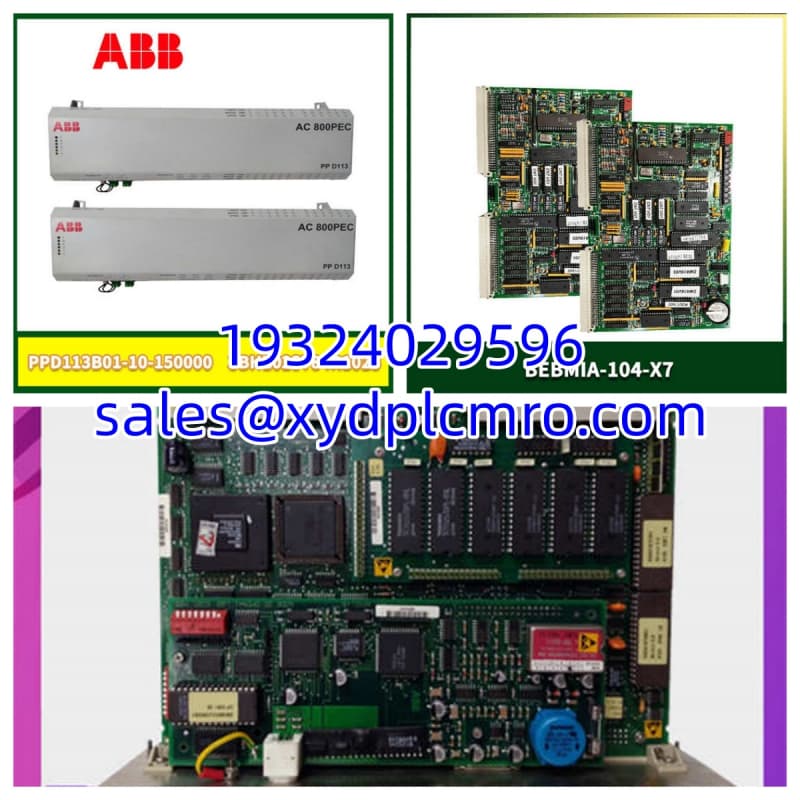
| Model | Compatibility Tier | Field Notes |
|---|---|---|
| UBC717AE01 | ✅ Drop-in Replacement | 100% hardware and software match. Same price, same specs. |
| UBC717BE01 | ⚠️ Software Compatible | Enhanced communication version. Requires Control Builder hardware catalog update and potential logic recompile. Budget 2 hours of engineering time. |
| AIB717 | ❌ Hardware Mod Required | This is an analog I/O module. Do not buy this unless you are intentionally changing your process control architecture. |
Frequently Asked Questions (FAQ)
Can I hot-swap this module safely?
Yes, but only if the system configuration explicitly allows it. You must force the slot to “disabled” in Control Builder before pulling the card. Yanking it out while the backplane is energized will fry the traces.Do I need to change my PLC program if I replace this?
No. As long as the base model number matches, the I/O addressing and GSD file remain identical. It’s a direct hardware swap.How do I know if the board is actually new and not refurbished?
Look at the PCB. Refurbished boards usually smell faintly of solvent from the washing process, and the solder joints look dull or reflowed. We sell factory-sealed new surplus, and we will provide test logs proving the board passed our 24-hour burn-in.What happens if my 24V power supply is sagging?
This module requires a solid 19.2 to 28.8 V DC. If your power supply is degraded and dropping to 18V under load, the Profibus chip will brown out, causing intermittent network faults. Check your power supply health before blaming the module.Does this support Modbus RTU out of the box?
It supports Modbus RTU, but usually as an optional configuration via RS485. Verify the specific sub-model suffix against your OEM datasheet, as base configurations vary.What is the warranty on this part?
We back it with a 1-year warranty. If it fails under normal operating conditions, we replace it. But honestly, if you keep it clean, dry, and properly grounded, this board will likely outlast the process unit it’s controlling.