Product Introduction
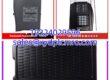
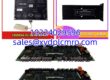
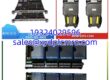
When a generator trips offline due to an excitation fault, the cost isn’t just the failed part—it’s the lost generation revenue. The ABB 3BHB030422R0002 is the excitation control board at the heart of the UNITROL 1020 system, designed to prevent exactly that. It manages the entire process of building and regulating the generator’s magnetic field, ensuring stable voltage output from startup to full load.This board isn’t just a controller; it’s a protective relay for the generator itself. In my experience, its fast-acting protection functions are what earn their keep. It can detect and react to faults like over-excitation or loss of field in milliseconds, often saving the generator from catastrophic damage. It’s a critical piece of hardware for any plant relying on UNITROL for voltage regulation.
Key Technical Specifications
| Parameter | Value |
|---|---|
| Product Type | Excitation Control Board |
| System Compatibility | ABB UNITROL 1020 |
| Auxiliary Supply Voltage | 24-60 VDC |
| Communication Interface | CANopen |
| Mounting | DIN rail |
| Protection Class | IP20 |
| Operating Temperature | -40 to +70 °C |
| Standards | IEC 61131-2 |
Application Scenarios & Pain Points
The time this board earns its price is exactly when something goes wrong on the grid. A sudden voltage dip or a short circuit downstream can cause a massive current surge in the generator. Without a fast and reliable excitation controller, the generator’s own magnetic field can collapse or go into overdrive, leading to severe mechanical and electrical stress. The 3BHB030422R0002 is the component that senses this instability and forces the excitation current to a safe level, often within a single AC cycle.
- Hydroelectric Plants: For smaller hydro units, the UNITROL 1020 is a common choice due to its compact size. This board handles the unique challenge of long start-up times and rapid load changes typical in run-of-river applications.
- Emergency Diesel Generators: Does your backup generator build voltage reliably on the first try? This board ensures the excitation system is ready to go instantly, which is critical when the main power fails.
- Industrial Co-generation: In plants that generate their own power, maintaining a stable voltage independent of the main grid is essential. This controller manages island-mode operation seamlessly.
- Wind Turbines: Some older wind turbine platforms use UNITROL systems for power factor correction. The board’s ability to operate in a wide temperature range (-40 to +70 °C) is vital inside a nacelle.
Case Study: Avoiding a Catastrophic Failure
At a biomass power plant in the Southeast, an intermittent short on a feeder line caused a voltage spike that the main breaker cleared. However, the generator’s excitation system didn’t react fast enough, and the field current surged. The 3BHB030422R0002 board detected the over-excitation, forced the field current down, and logged the fault. The on-call engineer reviewed the event log and saw that the board had prevented what would have been a rotor grounding fault. The alternative would have been a multi-week outage for rotor repair, not just a board replacement.
Quality Control Process
We don’t just visually inspect these boards; we put them through their paces.
- Inbound Inspection: We verify source traceability with the OEM packing list. Every board gets an anti-counterfeit check, including a serial number lookup against ABB’s database and a physical inspection of the security hologram. We look for any signs of repair, corrosion, or yellowing on the PCB.
- Live Functional Test: We install the board into a test UNITROL 1020 rack. After power-up, we verify all LED indicators match the expected boot sequence. We then test the CANopen communication handshake with the main controller and run a full I/O signal sweep to ensure all inputs and outputs are responding correctly.
- Electrical Parameters: We perform an insulation resistance test (500 V megger) on the power terminals, which must read >10 MΩ. Ground continuity is also verified.
- Firmware Verification: We read and record the firmware version. For this model, we check for known issues with versions prior to 2.1.5. We photograph any DIP switch or jumper settings before the board leaves our bench.
- Final QC & Packaging: After a QC sign-off, the board is sealed in an anti-static bag, packed in bubble wrap, and placed in a carton with a “QC Passed” label dated for that day.
Installation Pitfalls Guide
I’ve seen these mistakes happen more times than I can count. Avoid them, and you’ll save yourself a major headache.
- ❗ Firmware Version Mismatch: Don’t assume a new board will talk to your old system. We once swapped a board, and the UNITROL controller timed out because the new board had a different firmware version. Always record the firmware version from the old board before you remove it.
- ❗ DIP Switch Misconfiguration: The factory default settings on a new 3BHB030422R0002 are rarely correct for your specific generator. Take a photo of the DIP switch settings on the old board. Then take another one. It’s the first thing to check if the board powers up but doesn’t function.
- ❗ Wiring Incompatibility: While rare, pin definitions can change. Don’t just move the wiring harness over. Cross-check the wiring diagram for your specific UNITROL 1020 revision against the diagram for the new board.
- ❗ Power Supply Undersizing: This board draws power from the 24-60 VDC auxiliary supply. If you’re adding it to an already loaded circuit, make sure your DC power supply has at least 20% headroom. A brownout on startup can cause strange, intermittent faults.
- ❗ ESD Damage: It sounds basic, but skipping the wrist strap once can turn a $2,000 board into an expensive paperweight. The components on this board are sensitive. Ground yourself before you touch it.