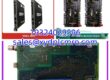
Key Technical Specifications
- Product Model: 0010-44213
- Manufacturer: Applied Materials
- Product Type: Precision Sensor Assembly
- Application: Robotic Arm Positioning
- Signal Type: Analog / Digital Feedback
- Accuracy: Sub-Micron Resolution
- Interface: Proprietary AMAT Connector
- Power Supply: 5V DC (Typical)
- Operating Temp: Cleanroom Rated
- Mounting: Precision Machined Bracket
Product Introduction
Wafer handling accuracy determines your yield. The AMAT 0010-44213 is a precision sensor assembly that provides real-time positional feedback to robotic transfer arms in semiconductor processing tools, ensuring sub-micron alignment during wafer transport.This module’s high-resolution feedback loop prevents wafer drop and edge damage during high-speed transfers. Field data shows sensor drift causes 15% of robotic alignment faults in aging tools—factory recalibration restores OEM positioning tolerance without a full tool rebuild.

Installation & Configuration Guide
Preparation (10 min)
Power down the equipment and lock out all energy sources. Purge the chamber if required. Note the existing sensor’s orientation and connector pinout. Verify the replacement 0010-44213 matches the revision level.Removal (5–10 min)
Disconnect the sensor cable carefully. Remove mounting fasteners in a cross pattern. Slide the sensor out of its bracket. Inspect the mating surface for particles or damage. (A single microscopic particle on the mounting face can throw off alignment by microns.)Installation (10 min)
Clean the mounting surface with approved solvent. Seat the new sensor fully against the bracket. Torque fasteners evenly to spec. Reconnect the cable with proper strain relief. Verify connector seating.Power-On & Test (10 min)
Power up the system. Run the sensor calibration routine. Verify feedback values at known reference points. Execute a test wafer transfer and inspect alignment marks. Check system logs for positioning errors.
Troubleshooting Quick Reference
| Symptom | Probable Cause | Quick Check |
|---|---|---|
| Erratic Position Readings | Contamination on Sensor | Clean sensing surface; inspect for particles |
| No Feedback Signal | Cable or Connector Fault | Check continuity; verify 5V supply at connector |
| Consistent Offset | Mounting Misalignment | Re-calibrate; verify bracket alignment |
| Intermittent Faults | Loose Connector | Reseat cable; check strain relief; inspect pins |
| Calibration Fails | Sensor Degradation | Replace sensor; verify reference targets |

Dimensions, Mounting & Wiring Notes
- Mounting: Precision bracket with dowel alignment
- Connector: Proprietary AMAT multi-pin
- Fasteners: Torque to OEM spec (do not over-tighten)
- Clearance: Maintain gap per tool manual
- Handling: ESD-safe procedures required
FAQ
How do I know if this sensor is bad?
Run the built-in calibration routine. If it fails or shows non-linear response across the travel range, the sensor is likely degraded. Also check for physical damage or contamination on the sensing surface.I replaced it but alignment is still off. What now?
Verify the mounting bracket isn’t bent or worn. Check that dowel pins are fully seated. Run calibration again with verified reference targets. If still off, inspect the robot arm mechanics for backlash.Can I clean the sensor myself?
Yes, but use only approved solvents and lint-free wipes. Never touch the sensing surface with bare fingers. Oil from skin can degrade performance. Follow the OEM cleaning procedure exactly.Is this compatible with older AMAT tools?
Verify the revision level. AMAT sometimes changes connector pinouts or mechanical interfaces between revisions. The 0010-44213 must match your tool’s exact configuration. Check the equipment manual or contact us for verification.Do you test the accuracy?
Yes. Every 0010-44213 is tested on a calibrated fixture for linearity and resolution. We document the feedback error across the full travel range. Test report included with shipment.What’s the lead time?
Refurb units ship same-day if in stock. We’ll confirm availability before processing your order.Can I use a third-party sensor?
Not recommended. AMAT sensors are calibrated to specific tolerances for their control algorithms. Third-party substitutes may cause alignment errors or tool faults that cost more in yield loss than the OEM part.