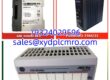
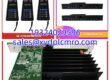
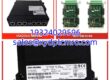
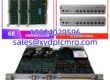
Key Technical Specifications
| Parameter Name | Parameter Value |
|---|---|
| Product Model | CP-9200SH/CPU |
| Manufacturer | YASKAWA |
| Product Type | Machine Controller CPU Module |
| CPU Capacity | Up to 2 modules per system |
| Execution Mode | Independent User Program Execution |
| Max Base Units | Up to 4 installation bases |
| Communication | Memobus (19200 bps, Even Parity) |
| Memory Mapping | Word Device, Input Register, Link Register |
| Target Modules | SVA Servo Controllers, UO Modules |
| Configuration Tool | CP-717 Programming Software |
| Operating Voltage | Supports 24V, 100V, 200V Power Modules |
| Installation Method | Rack Mount / DIN Rail Base |
Product Introduction
When a legacy packaging line stops, the bottleneck is usually the controller waiting on servo data. The YASKAWA CP-9200SH/CPU was built specifically to eliminate that lag. It acts as the brain of the CP-9200SH machine controller, executing user logic independently while batch-transferring motion parameters to SVA modules at the start of every high-speed scan. I have seen these keep 15-year-old assembly lines running perfectly because they handle the timing math that modern PLCs often overcomplicate.Engineers value this CPU because it allows true distributed intelligence within a single chassis. You can run two independent programs simultaneously, keeping safety logic completely separate from high-speed motion control. The Memobus integration is rock-solid, but you have to respect its limits. Keep your baud rate at 19200 bps and ensure your parity settings match exactly, or the CPU will drop communication with the I/O racks. It is a highly capable machine, but it demands exact configuration.
Quality SOP & Tech Pitfalls
The Lab Report: We do not ship untested legacy boards. Every CP-9200SH/CPU undergoes a strict visual inspection for blown capacitors or corroded backplane pins. We then mount it on a live CP-9200SH test rack, load a dummy motion program, and verify that it successfully batch-transfers parameters to an SVA module. After passing, we verify the Memobus port integrity, log the firmware, and seal it in anti-static packaging.The Engineer’s Warning: Never assume a CPU swap is plug-and-play. I once saw a technician swap a failed CPU without copying the module configuration from the CP-717 software. The system booted, but the SVA modules sat idle because the new CPU had no assigned module numbers. Also, watch out for ESD. These older CMOS chips are incredibly sensitive. If you touch the backplane pins without grounding yourself, you will brick the board instantly. Always photograph the DIP switches and jumper settings before pulling the old unit.
Installation & Configuration Guide
- Pre-Installation: ⚠️ Shut down all power (24V, 100V, or 200V) to the CP-9200SH base. Wait 60 seconds for the power supply capacitors to discharge. Take clear photos of the old CPU’s jumper blocks and the CP-717 module configuration screen.
- Removal: Label all communication cables connected to the Memobus ports. Release the DIN clips or rack screws carefully and pull the module straight out. Never pry against the backplane.
- Installation: Transfer the exact jumper and DIP switch settings from the old CPU to the new CP-9200SH/CPU. Align the module with the base and press evenly until it seats fully. Verify the Memobus cable connections match your photos.
- Power-On & Testing: Restore power to the power module first. Watch the CPU status LEDs. Open CP-717, verify the module configuration definition screen recognizes the CPU, and run a test scan to confirm SVA parameter transfers are successful.
Compatible Replacement Models
| Compatibility | Model | Notes |
|---|---|---|
| ✅ Drop-in Replacement | CP-9200SH/CPU (Rev B) | Exact hardware match. Later revision with identical pinout and memory mapping. Zero logic changes required. |
| ⚠️ Software Compatible | CP-9200/CPU | The predecessor model. Hardware fits, but requires verifying CP-717 project compatibility and potentially recompiling the motion sequence. |
| ❌ Hardware Mod Required | MP900 Series Controller | Completely different architecture. Requires rewriting all motion logic, rewiring Memobus, and replacing all SVA modules. Not a direct swap. |
Frequently Asked Questions
Can I run two CPUs in the same base unit?
Yes. The CP-9200SH system supports up to two CPU modules per installation base. Each CPU executes its own user program independently, which is perfect for separating high-speed motion control from slower sequential logic.What happens if I lose Memobus communication?
The CPU has built-in error checking (CRC fixed). If the link drops, the CPU will flag a communication fault and halt the affected motion axes safely. Check your baud rate (must be 19200 bps) and ensure your parity is set to Even.Do I need the CP-717 software to configure this?
Yes. You must use CP-717 to access the “Module Configuration Definition Screen” to assign module numbers to your SVA and UO modules. Without this step, the CPU will not know how to transfer servo parameters.Is this module sensitive to power spikes?
Very. The CP-9200SH supports 24V, 100V, and 200V power modules. Ensure your power supply is properly regulated and that your signal lines are physically separated from heavy motor cables. Noise on the power rail will cause random CPU faults.Can I hot-swap this CPU?
No. The CP-9200SH/CPU does not support hot-swapping. You must power down the entire rack, replace the module, and power back up. Plan your maintenance window accordingly.What memory types does this CPU use for macros?
When assigning indirect memory for macro programs, use the [TYPE] setting. Word devices are Type 0, Input Registers are Type 1, Link Registers are Type 2, and Coils are Type 4. Always set bit numbers in hexadecimal notation.