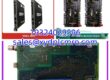
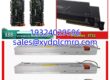
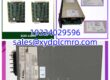
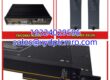
Key Technical Specifications
| Parameter Name | Parameter Value |
|---|---|
| Product Model | MA2211-100S2 |
| Manufacturer | Triconex (Schneider Electric) |
| Product Type | Remote Extender Module (RXM) |
| Communication Rate | 375 Kilobits per Second |
| Max Distance | 7.5 Miles (12 Kilometers) |
| Media Type | Fiber Optic Point-to-Point |
| Channels Supported | 3 Channels per RXM Set |
| Electrical Isolation | Ground Loop Isolation |
| Operating Temp | -40°C to 70°C |
| Dimensions | 6.81″ x 4.06″ x 1.65″ |
| Power Consumption | 20 Watts |
| Humidity Tolerance | 5% to 95% Non-Condensing |
Product Introduction
You don’t run copper wire across a refinery just to save a few bucks on modules. When your main Tricon rack sits in a control room but your emergency shutdown valves are half a mile away in a pump house, electromagnetic interference will chew up standard signals. The Triconex MA2211-100S2 Remote Extender Module (RXM) solves this exact headache. It acts as a repeater and bus extender, translating the Tricon I/O bus signals into optical pulses that travel over fiber. This keeps your safety logic completely immune to the massive electrical noise generated by heavy motors and variable frequency drives.Engineers rely on this specific module because it preserves the integrity of the TMR (Triple Modular Redundancy) architecture over long distances. You get three independent channels, each carrying data at 375 Kbps, with built-in ground loop isolation to prevent potential differences from frying your cards. I’ve installed these in power plants where the ambient temp swings wildly; the -40°C to 70°C rating isn’t just marketing, it actually holds up. One warning though: this module is notoriously picky about fiber cleanliness. A single speck of dust in the connector will cause intermittent bus faults that will drive you crazy during commissioning.
Quality SOP & Tech Pitfalls
The Lab Report: We don’t just ship these in a box and hope. Every MA2211-100S2 goes through a strict pre-shipment protocol. First, a visual and counterfeit check under magnification to ensure no bent pins or board damage. Then, it goes on a live Tricon test rack for a 24-hour burn-in to verify continuous communication. We use a Fluke 115 multimeter to check insulation resistance and verify the ground loop isolation. Finally, we log the firmware version and seal it in anti-static packaging.The Engineer’s Warning: Do not underestimate the cabling requirements. I once saw a technician wire a single fiber strand thinking it was bidirectional. The MA2211-100S2 requires dedicated transmit and receive fibers for each of the three channels—that means six fiber strands per remote location. Also, always photograph the DIP switches and jumper settings on the old module before pulling it. Swapping a new one in with default jumpers when your system expects a specific node ID will lock out your remote I/O rack instantly. ESD is another silent killer; always strap up before touching the optical ports.
Installation & Configuration Guide
- Pre-Installation: ⚠️ SAFETY FIRST. Lock out and tag out the power to the remote chassis. Wait at least 5 minutes for internal capacitors to fully discharge. Before touching anything, take high-resolution photos of the existing module’s DIP switches, jumpers, and fiber routing.
- Removal: Label every fiber cable clearly with its corresponding channel (TX/RX). Gently release the DIN rail clips or mounting screws. Never yank the fiber cables by the cord; pull by the connector housing to avoid internal damage.
- Installation: CRITICAL STEP: Copy all DIP switch and jumper settings from the old module to the new MA2211-100S2 exactly. This prevents 90% of startup failures. Align the module carefully with the backplane and seat it firmly. Tighten the retractable fasteners to exactly 10 inch-pounds.
- Power-On & Testing: Restore power and verify a clean 24V DC input at the terminal block. Watch the LED boot sequence; a solid green indicates healthy bus communication. Download your Tricon configuration and verify that all remote I/O points are responding without timeout errors.

Compatible Replacement Models
| Compatibility Tier | Model | Notes |
|---|---|---|
| ✅ Drop-in Replacement | MA2211-100 | Base model. Hardware and software identical to the S2 revision. Verify firmware matches your main chassis. |
| ✅ Drop-in Replacement | MA2211-100S1 | Previous revision. Fully compatible, but confirm your TriStation software version supports it. |
| ⚠️ Software Compatible | MA2211-100S3 | Newer revision. May require a Tricon controller firmware upgrade and TriStation logic recompile. Estimate 2-4 hours of engineering labor. |
Frequently Asked Questions (FAQ)
Can I hot-swap the MA2211-100S2 while the Tricon system is running?
Yes, but only if your system is configured for online module replacement and you have redundant RXM sets. If it’s a single non-redundant setup, pulling it will drop all remote I/O and likely trigger a safety trip. Check your SIS cause-and-effect matrix first.Why does my remote rack show intermittent communication faults after installing this?
Nine times out of ten, it’s a dirty fiber connector. Optical transceivers on these modules are highly sensitive. Clean the fiber ends with a proper optical wipe and inspect with a fiber scope. If it’s still dropping, check your fiber bend radius; sharp 90-degree bends will attenuate the signal past the 375 Kbps threshold.Is this module compatible with older Tricon V8 processors?
Generally, yes, but you must verify the exact firmware revision on your main processor. Older V8 processors sometimes have bus timing limitations with newer RXM revisions. Always cross-reference the MA2211-100S2 revision against your Triconex compatibility matrix before ordering.Does this module provide redundant communication paths?
The MA2211-100S2 itself supports dual fiber link redundancy, but you must explicitly configure it in TriStation. If you only wire one fiber path and that cable gets cut, your remote I/O goes dark. For critical safety applications, always run the redundant fiber pair.What happens if the ground loop isolation fails?
If the isolation barrier is compromised, you risk introducing ground currents that can corrupt bus signals or damage the main Tricon processor. If you suspect isolation failure due to a lightning strike or severe electrical fault, replace the module immediately. Do not attempt to troubleshoot a damaged isolation barrier in the field.