Key Technical Specifications
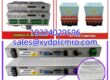
- Product Model: AVR10D-Q22020
- Manufacturer: YOKOGAWA
- Product Type: Dual V-Net Bus Converter / Router
- Vnet/IP Comm Speed: 100 Mbps, Full Duplex
- Vnet/VL Comm Speed: 10 Mbps
- Vnet/IP Interface: RJ45 (100Base-TX compliant, CAT5e or better)
- Vnet/VL Interface: BNC Type Coaxial Cable
- Max Cable Distance: 100 meters (AVR10D to Layer 2 switch)
- Redundancy Support: Dual-redundant or single configuration
- Power & Ground Terminals: M4 Screw Terminals
- Required Software: LHS4450 / LHS5450 Multi-Project Packages
Product Introduction
Migrating a legacy DCS to a modern IP-based architecture without ripping out the entire plant is a nightmare. The YOKOGAWA AVR10D-Q22020 is the exact hardware bridge designed to solve this. It sits right at the intersection of the new Vnet/IP and the older Vnet/VL coaxial networks, allowing modern Human Interface Stations (HISes) to talk seamlessly to legacy CENTUM CS 3000 and CS 1000 field stations.I’ve wired up plenty of these during plant upgrades. The real value of the YOKOGAWA AVR10D-Q22020 is that it maintains that 10 Mbps coaxial link while pushing 100 Mbps full-duplex over standard CAT5e Ethernet to the upper-level switches. Just be warned: this hardware is useless without the proper software licenses. You absolutely need the LHS4450 Multiple Project Connection Package and LHS5450 Builder to get this thing talking to the CS 3000 system.
Quality SOP & Tech Pitfalls
Before this YOKOGAWA AVR10D-Q22020 ships, we run a strict QA protocol. We visually inspect the BNC connectors and M4 terminal blocks for corrosion. It then goes on a live test rack to verify the 100Base-TX link lights up and passes data without packet loss. We check the insulation resistance on the power terminals and log the firmware revision before sealing it in anti-static packaging. I can provide the test video if your PM system requires it.Here is a brutal field warning: Do not ignore the network topology. I once saw a tech plug a standard Ethernet switch into the Vnet/IP port and daisy-chain it to another node, exceeding the 100-meter limit. The result was a total network blackout. Also, never forget the T-connector BNC terminators on the coaxial side. Missing terminators cause signal reflections that will silently corrupt your DCS data.
Installation & Configuration Guide
- Pre-Installation: Lock out the cabinet power. ⚠️ Take clear photos of the existing coaxial T-connectors and M4 wiring before pulling any cables.
- Removal: Label the Vnet/IP UTP cables and the Vnet/VL coaxial lines. Carefully unscrew the M4 power and ground terminals, then release the module from the 19-inch rack.
- Installation: Copy the DIP switch or jumper settings from the old unit to the new one. This step prevents 90% of startup network errors. Seat the YOKOGAWA AVR10D-Q22020 securely in the rack and tighten the 4 M5 mounting screws.
- Power-On & Testing: Restore 24V DC power via the M4 terminals. Check the Vnet/IP RJ45 link LEDs and verify the Vnet/VL BNC connections are tight. Download the network configuration and verify station communication.
Compatible Replacement Models
- ✅ Drop-in Replacement: AVR10D-A22020. Same physical footprint and network bridging capabilities, but verify the exact suffix to ensure matching firmware revisions.
- ✅ Drop-in Replacement: AVR10D-A11021. Direct mechanical fit for Vnet/VL bridging, but always confirm the specific network node requirements with the OEM manual before swapping.
- ❌ Hardware Mod Required: AVR10D-Q11021. Do not use this as a direct swap without verifying the Vnet/IP port specifications. It requires different cabling and potential chassis rewiring.
Frequently Asked Questions (FAQ)
- Can I use standard CAT5 cable for the Vnet/IP side?
No. The spec strictly requires CAT5e or better for the 100 Mbps full-duplex connection. Standard CAT5 will cause intermittent packet loss and DCS communication faults. - What happens if I lose power to this module?
The Vnet/VL coaxial network is physically daisy-chained, but losing this node will isolate any stations downstream on the IP side. Always ensure redundant power supplies are wired to the M4 terminals. - Do I need special software to configure this?
Yes. Hardware alone won’t work. You must have the LHS4450 Multiple Project Connection Package and LHS5450 Builder installed on your engineering workstation to configure the routing. - Is this module hot-swappable?
Absolutely not. You must schedule a plant shutdown or maintenance window. Pulling this while the network is active will cause a massive broadcast storm and crash the DCS. - How do I know if the coaxial side is failing?
Check the DCS diagnostic screen for Vnet/VL communication errors. If you suspect a bad BNC connector, use a TDR (Time Domain Reflectometer) to check for signal reflections on the coaxial cable run.