 Tel:
Tel:  Email:
  WhatsApp:
 Description
Technical Specifications (For Spare Part Verification)
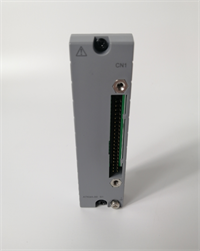
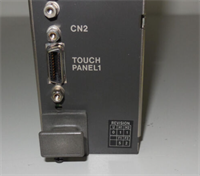
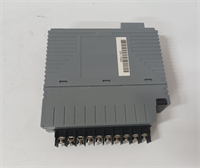
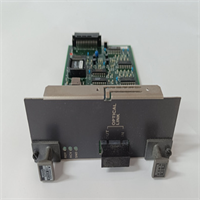
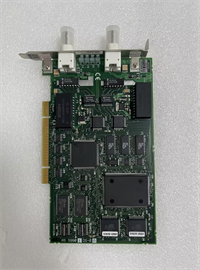
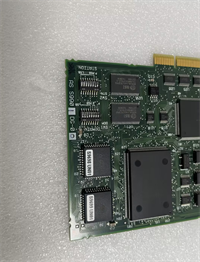
- Product Model: VF701
- Manufacturer: YOKOGAWA Electric Corporation
- System Platform: CENTUM VP / CENTUM CS 3000
- Module Type: Field Control Unit (FCU) base unit
- Processor: Proprietary RISC-based CPU (YOKOGAWA specific architecture)
- Memory: Integrated program and data memory (non-user-expandable)
- Communication Interface: Dual-redundant Vnet/IP or Vnet (depending on system version)
- Power Requirement: +5 V DC supplied via backplane from power supply module (e.g., VM701)
- Mounting: DIN rail or rack-mounted within FCU enclosure (e.g., VP601 cabinet)
- Diagnostic Indicators: Multiple front-panel LEDs for POWER, RUN, COMM, and ERROR status
- Firmware Dependency: Requires matching firmware version with engineering station (EXAquantum/CS3000 Builder)
- Redundancy Support: Supports 1:1 hot standby when paired with a second VF701 in redundant configuration
System Role and Downtime Impact
The YOKOGAWA VF701 is the computational heart of a Field Control Unit (FCU) station in CENTUM VP and CS 3000 systems, typically deployed in oil & gas, chemical, and power generation facilities. It resides in remote marshalling cabinets near process units and executes all regulatory and safety-related control logic for its assigned I/O—such as PID loops, interlocks, and sequence controls. The VF701 communicates with the central Human Interface Station (HIS) and Engineering Station (ENG) over Vnet/IP. If this module fails and no redundant unit is present, all associated field instruments (valves, transmitters, motors) become uncontrolled, often triggering a plant-wide process shutdown or forcing manual intervention. In critical applications like reactor temperature control or compressor surge protection, such a failure could lead to safety incidents or extended production loss.
Reliability Analysis and Common Failure Modes
Although designed for industrial environments, the VF701 is vulnerable to component aging due to its embedded design and lack of field-serviceable parts. The most frequent failure points are the onboard electrolytic capacitors, which degrade over time—especially in high-temperature control rooms—leading to power instability, spontaneous reboots, or complete boot failure. Another common issue is corruption of the internal flash memory, often triggered by improper power cycling or voltage sags, resulting in “NO LOAD” or “FATAL ERROR” states. The module’s reliance on a stable +5 V backplane supply also makes it sensitive to failing power modules (e.g., VM701). For preventive maintenance, technicians should monitor system event logs for unexpected restarts, ensure adequate cabinet ventilation, and avoid hot-plugging. Regular backup of FCU configuration files via the engineering station is essential to enable rapid recovery.
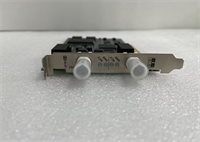
YOKOGAWA VF701
Lifecycle Status and Migration Strategy
YOKOGAWA has officially discontinued the VF701 as part of the broader phase-out of the CENTUM CS 3000 and early CENTUM VP hardware lines. No direct replacement exists, and official technical support is now limited to legacy documentation. Continuing to operate systems with VF701 modules carries increasing risk: spare units are scarce, prices are volatile, and firmware updates are no longer issued—raising cybersecurity concerns. As a short-term measure, users may acquire tested, refurbished units or implement strict environmental controls to extend service life. However, the only sustainable path is migration to CENTUM VP R6.x or CENTUM VP R7 with modern FCUs such as the VF707 or VF717, which offer enhanced processing, cybersecurity features (IEC 62443 compliance), and long-term support. This migration requires recompiling control logic, updating I/O wiring diagrams, and potentially replacing terminal blocks—but it eliminates obsolescence risk and aligns the system with current operational technology standards. Planning should begin well before the next major turnaround.