 Tel:
Tel:  Email:
  WhatsApp:
 Description
Technical Specifications (For Spare Part Verification)
- Product Model: SDV144-S13
- Manufacturer: Yokogawa Electric Corporation
- Product Family: SDV100 Series Analog Valve Positioners
- Input Signal: 4–20 mA DC (two-wire)
- Output Pressure Range: Typically 20–100 kPa (adjustable)
- Action Type: Single-acting (spring return), direct or reverse acting (configurable via cam)
- Air Supply Pressure: 140–500 kPa
- Mounting: NAMUR standard (VDI/VDE 3845)
- Enclosure Rating: IP65 (dust and water resistant)
- Zero/Range Adjustment: Manual mechanical screws
- Feedback Mechanism: Mechanical linkage with rotary cam
- Diagnostic Capability: None (purely analog, no digital communication)
System Role and Downtime Impact
The Yokogawa SDV144-S13 is commonly installed on control valves in legacy process plants—particularly in oil & gas, power, and chemical facilities—where it interfaces between the DCS analog output card and the pneumatic actuator. As an analog-only device, it lacks self-diagnostics or remote calibration features. If the positioner fails due to internal leakage, clogged nozzles, or linkage wear, the valve may stick, drift, or respond sluggishly, directly impacting loop stability. In critical applications such as boiler feedwater control or reactor cooling, this can trigger alarms, force manual intervention, or escalate to a process trip. Because these positioners are often deployed without redundancy, a single failure can compromise an entire control loop.
Reliability Analysis and Common Failure Modes
Despite its simple design, the SDV144-S13 is prone to mechanical and environmental degradation over time. Common failure modes include:
- Clogging of the flapper-nozzle assembly due to dirty instrument air, causing sluggish or oscillatory response
- Diaphragm rupture or O-ring hardening from prolonged exposure to moisture or extreme temperatures
- Mechanical wear in the feedback linkage or cam mechanism, leading to hysteresis or inaccurate positioning
- Corrosion of zero/span adjustment screws, making field calibration difficult or impossible
Preventive maintenance recommendations include:
- Installing high-quality air filters and dryers upstream of positioners to ensure clean, dry supply air
- Performing periodic stroke tests to verify linearity and response time
- Inspecting linkages and fasteners for looseness or corrosion during routine rounds
- Replacing units proactively in critical service after 10–15 years of operation
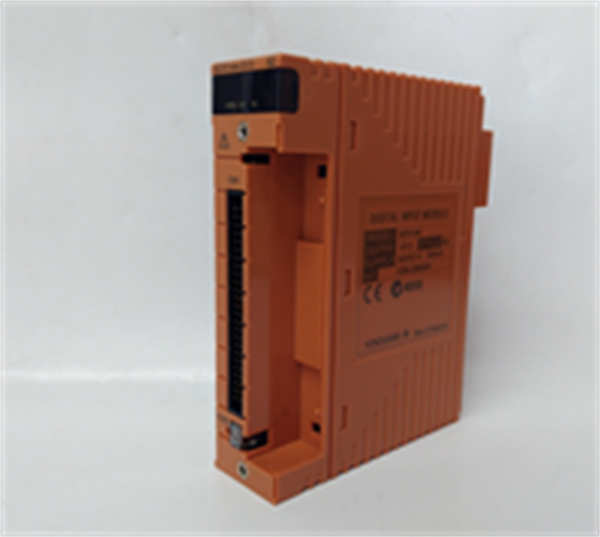
SDV144-S13 YOKOGAWA
Lifecycle Status and Migration Strategy
Yokogawa has phased out the SDV100 analog series in favor of the YVP (Yokogawa Valve Positioner) family—digital, HART-enabled SMART positioners with advanced diagnostics, partial-stroke testing, and remote configuration. The SDV144-S13 is no longer listed in active catalogs, and technical documentation is archived. Continued use increases operational risk due to lack of performance visibility and growing scarcity of genuine spares.
Short-term mitigation includes:
- Securing verified used or refurbished SDV144-S13 units from trusted industrial suppliers
- Stocking critical spares (diaphragms, nozzles, linkages) for in-house repair
- Adding external valve monitoring (e.g., limit switches, position sensors) to detect malfunctions
For long-term reliability, migration to the YVP100 or YVP200 series is strongly advised. This upgrade offers:
- Drop-in NAMUR compatibility with minimal mechanical modification
- HART communication for remote diagnostics via AMS or PRM asset management systems
- Automatic calibration and valve signature analysis to predict failures
Migration requires re-commissioning but delivers significant gains in maintainability, compliance, and process uptime—making it a strategic investment for any facility modernizing its valve infrastructure.