 Tel:
Tel:  Email:
  WhatsApp:
 Description
Key Technical Specifications (For Spare Part Verification)
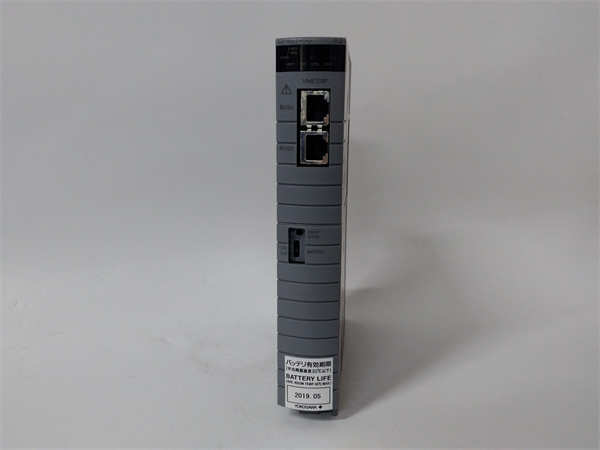
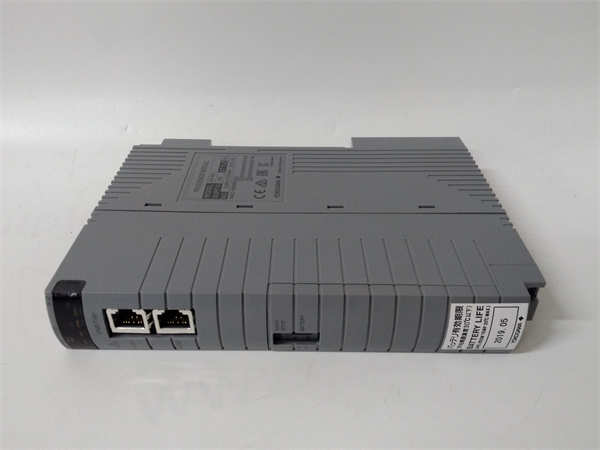
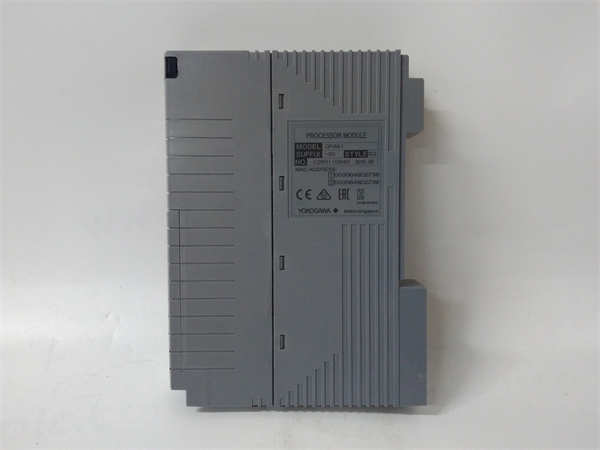
- Product Model: CP461-50
- Manufacturer: Yokogawa Electric Corporation
- System Platform: CENTUM CS 3000 R3 (Field Control Station – FCS)
- Module Type: Dual-redundant capable CPU module
- Processor: Proprietary RISC architecture
- Memory: Integrated program and data memory (non-user-expandable)
- Redundancy Support: Hot-standby with paired CP461-50 in same FCS
- Communication: Dual Vnet/IP interfaces (for peer FCS and HIS communication)
- Power Consumption: Approx. 15 W (varies with load)
- Mounting: DIN-rail mounted within FCS cabinet (requires specific backplane slot)
- Firmware Compatibility: Must match existing FCS firmware version (e.g., R3.02.xx or R3.03.xx); mismatch prevents synchronization
- Diagnostic LEDs: STATUS, DUPLEX, ERROR, and Vnet indicators for operational status
-

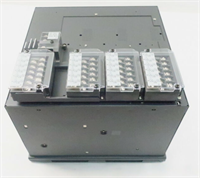
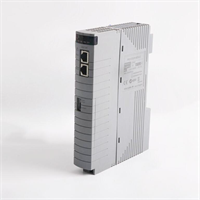
Yokogawa CP461-50
System Role and Downtime Impact
The CP461-50 serves as the central processing unit within a CENTUM CS 3000 Field Control Station, responsible for executing all regulatory control strategies (PID, sequence logic, batch phases) and managing communication with I/O modules and operator stations. In redundant configurations—common in refineries, chemical plants, and power facilities—it operates in synchronized duplex mode to ensure continuous operation during hardware faults.
If the active CP461-50 fails and the standby unit is unavailable, degraded, or unable to take over (due to firmware mismatch or latent fault), the entire FCS enters a fail-safe state. This typically results in forced output holds or trips, causing partial or total plant shutdown depending on the FCS scope. Given the deep integration of CS 3000 systems in continuous processes, such an event can trigger safety interlocks, production losses, and regulatory reporting obligations.
Reliability Analysis and Common Failure Modes
Although designed for high reliability, the CP461-50 is now well beyond its intended service life (typically 10–15 years). Common failure modes include flash memory corruption, power supply regulator drift, and solder joint fatigue due to thermal cycling in control rooms without strict environmental control. The module’s internal backup capacitors may also degrade, leading to configuration loss during brief power interruptions.
A notable vulnerability is its dependency on precise firmware version alignment between redundant pairs and the rest of the FCS. Even minor version discrepancies—often introduced during past partial upgrades—can prevent proper switchover. Additionally, the Vnet/IP communication ASICs are sensitive to electrical noise on older network cabling, occasionally causing unexplained link drops.
Preventive maintenance recommendations include:
- Verifying redundancy synchronization status monthly via Engineering Station
- Archiving full FCS configuration (including firmware images) in offline, version-controlled storage
- Conducting periodic “failover drills” to validate standby unit readiness
- Monitoring module temperature and ensuring adequate cabinet ventilation
- Keeping at least one matched, tested spare pair (same firmware and hardware revision) on-site
-
Yokogawa CP461-50
Lifecycle Status and Migration Strategy
Yokogawa officially ended sales and standard support for CENTUM CS 3000 several years ago, with the CP461 series fully discontinued. Extended support is available only under costly custom agreements and does not include hardware replacement. Continuing operation carries significant risk: spare modules are aging, counterfeit units have appeared on the gray market, and compatibility with modern cybersecurity requirements (e.g., TLS 1.2, secure remote access) is nonexistent.
As a short-term measure, end users may engage certified third-party vendors for board-level repair or firmware recovery. Some facilities maintain “warm spare” FCS cabinets to reduce recovery time.
For long-term sustainability, Yokogawa strongly recommends migration to CENTUM VP, its current DCS platform. The CP461-50 maps functionally to the FCP50 or FCP70 processors in VP, which offer higher performance, native cybersecurity features, and virtualization support. Migration paths include:
- Staged replacement: Swap FCS units one-by-one while retaining existing I/O (using AAI143/AAI543 analog I/O adapters for backward compatibility)
- Full system upgrade: Replace FCS, HIS, and engineering stations concurrently for maximum benefit