 Tel:
Tel:  Email:
  WhatsApp:
 Description
Technical Specifications (For Spare Part Verification)
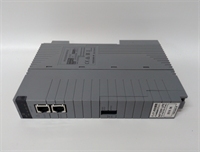
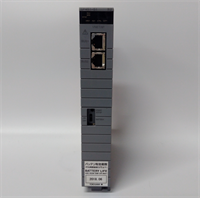
- Product Model: CP451-51
- Manufacturer: YOKOGAWA Electric Corporation
- Product Family: CENTUM CS 3000 Field Control Station (FCS)
- Module Type: Primary control processor (CPU) with integrated I/O bus controller
- Redundancy Support: Hot-standby dual configuration (requires paired CP451-51 units)
- Memory: Onboard RAM and flash for control application storage (typically 16–32 MB range)
- Processing Architecture: Proprietary RISC-based real-time engine optimized for IEC 61131-3 logic
- Communication Interfaces: Dual Vnet/IP (YOKOGAWA’s deterministic Ethernet) for controller-to-controller and HMI links
- I/O Capacity: Supports up to 512 I/O points per FCS (depending on module mix)
- Diagnostic Features: Built-in self-test, watchdog timer, and status LEDs for power, CPU, and redundancy sync
- Power Supply: +5 V and ±12 V via backplane from FCS power supply modules
- Operating Temperature: 0°C to +50°C (for standard indoor installation)
- Compliance: CE, UL, IEC 61508 (SIL2 capable when configured in certified architecture)

System Role and Downtime Impact
The YOKOGAWA CP451-51 is the computational heart of a CENTUM CS 3000 Field Control Station, commonly deployed in refineries, chemical plants, and LNG facilities. It runs all PID loops, sequence logic, and interlocks for its assigned process area—such as a crude distillation unit or reactor train. In a non-redundant configuration (still common in older installations), a single CP451-51 failure results in immediate loss of automatic control, forcing operators into manual mode or triggering a full unit shutdown if critical loops are affected. Even in redundant setups, a failed primary unit increases risk exposure during the window before repair. Recovery requires not only hardware replacement but also verification of application integrity and synchronization with the engineering station. Given the central role of this module, its unavailability can halt production for days, with financial impact often exceeding $ 1 million per day in large-scale continuous processes.
Reliability Analysis and Common Failure Modes
Although designed for industrial reliability, the CP451-51 is now operating well beyond its intended service life (typically 10–15 years). The most frequent failure mode is memory corruption due to aging flash chips or capacitor degradation on the power regulation circuitry, leading to boot failures or spontaneous reboots. The onboard real-time clock battery—used to maintain time during power loss—often depletes after 8–12 years, causing time-stamp errors that disrupt sequence logic. Heat buildup inside densely packed FCS cabinets accelerates semiconductor wear, particularly in the CPU and Ethernet PHY chips. Additionally, repeated thermal cycling can cause micro-cracks in BGA (ball grid array) solder joints beneath the main processor, resulting in intermittent faults that are difficult to reproduce. As part of preventive maintenance, operators should monitor system logs for “watchdog reset” events, verify backup battery voltage annually, and ensure cabinet cooling fans are functional. Units held in reserve should be powered every 6–12 months to refresh capacitors and prevent firmware bit rot.
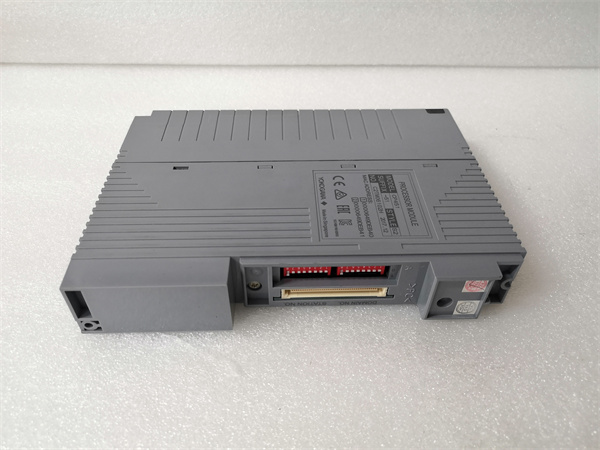
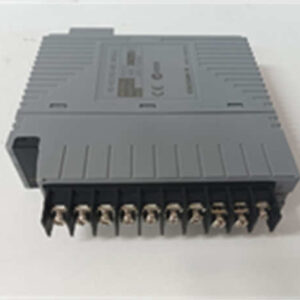
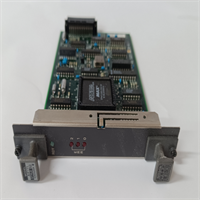
YOKOGAWA CP451-51
Lifecycle Status and Migration Strategy
YOKOGAWA has officially transitioned customers from CENTUM CS 3000 to the CENTUM VP platform, and the CP451-51 is no longer produced. While limited technical support remains available, new firmware updates have ceased, and compatibility with modern cybersecurity standards (e.g., TLS 1.2, secure remote access) is absent. Continuing to operate with this module exposes plants to increasing obsolescence risk. Short-term mitigation includes strategic stockpiling of tested spares, implementing external monitoring of FCS health, and enforcing strict change control to avoid unnecessary re-downloads that stress aging memory. For long-term sustainability, YOKOGAWA recommends migrating to CENTUM VP with FCS-V processors, which offer higher performance, enhanced cybersecurity, and backward-compatible function block libraries. This migration typically involves a “lift-and-shift” approach: retaining existing field wiring and I/O modules while replacing only the controller chassis and updating the engineering database. A phased migration during turnarounds minimizes disruption. Third-party emulation or virtualization is not supported due to the proprietary real-time architecture. A formal lifecycle assessment with YOKOGAWA or an authorized partner is essential to define scope, cost, and timeline for a compliant, future-proof control system.