Tel:
Tel:  Email:
  WhatsApp:
 Description
Key Technical Specifications (For Spare Parts Verification)
- Product Model: CP451-51
- Manufacturer: Yokogawa Electric Corporation
- System Family: CENTUM CS 3000 Distributed Control System
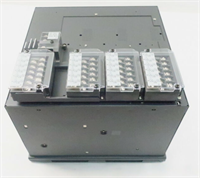
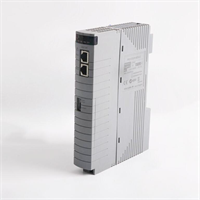
- Form Factor: Rack-mounted industrial PC module (typically installed in HIS cabinet)
- Processor Type: Intel Pentium-class (exact variant depends on manufacturing date)
- Operating System: Windows NT 4.0 Embedded or Windows 2000 (Yokogawa-customized)
- Memory: Typically 256 MB to 512 MB RAM (non-expandable in most configurations)
- Storage: IDE-based hard disk drive (20–40 GB), often with battery-backed CMOS
- Network Interfaces: Dual 10/100 Mbps Ethernet ports for V-net and E-net communication
- Power Requirements: 24 VDC or 100–240 VAC (depending on power supply unit in chassis)
System Role and Impact of Failure
The CP451-51 functions as the central processing unit for a Human Interface Station (HIS) within the CENTUM CS 3000 architecture. It hosts the operator graphics, trend displays, alarm summary, and engineering tools. If this module fails, the associated workstation becomes completely inoperable—operators lose real-time visibility into process variables, cannot acknowledge alarms, and are unable to execute manual overrides or sequence operations. In facilities where only one or two HIS units exist, failure of a CP451-51 can lead to partial or full plant shutdown, especially if redundant workstations are not deployed or are also aging.
Reliability Analysis and Common Failure Modes
Many CP451-51 units remain in service due to the long operational life of process plants and the high cost of full DCS migration. However, their reliability is increasingly compromised by age-related degradation.
Common failure modes include:
- Hard disk drive mechanical failure or bad sectors, leading to OS corruption or boot loops.
- CMOS battery depletion causing BIOS settings loss, date reset, or boot failure.
- Electrolytic capacitor aging on the motherboard or power supply, resulting in voltage instability or sudden shutdowns.
- Thermal stress from prolonged operation in non-climate-controlled environments, accelerating component wear.
Design weaknesses include reliance on legacy Windows OS with known security and stability limitations, lack of solid-state storage options in original design, and limited diagnostic LEDs—making fault isolation difficult without specialized tools.
Preventive maintenance recommendations:
- Replace the internal CMOS battery every 3–5 years, even if the system appears functional.
- Perform annual disk health checks using offline diagnostics; consider cloning the HDD to a modern SSD (with compatibility validation).
- Ensure adequate cooling and dust filtration around the HIS cabinet to reduce thermal load.
- Maintain at least one cold spare CP451-51 that has been powered and tested within the last 12 months.
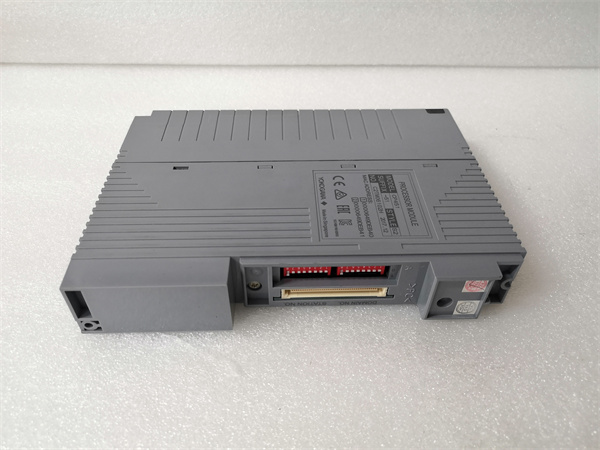
YOKOGAWA CP451-51
Lifecycle Status and Migration Strategy
Yokogawa officially discontinued the CP451 series as part of the broader phase-out of CENTUM CS 3000. The company now offers extended support only through custom service agreements, and no new hardware is produced. Continued use carries significant risks: diminishing spare parts availability, escalating costs, inability to obtain replacement licenses, and growing cybersecurity exposure due to unsupported operating systems.
As a temporary measure, facilities can source tested surplus units from certified resellers or engage in board-level repair services for critical failures. However, these are stopgap solutions with uncertain long-term viability.
Yokogawa’s recommended migration path is to upgrade to the CENTUM VP platform. This involves replacing CP451-based HIS units with VP-compatible workstations (e.g., AAI143 or newer industrial PCs running Windows 10 IoT Enterprise). The migration typically requires:
- Rehosting or recompiling existing graphics and configuration databases using Yokogawa’s VP conversion tools.
- Updating network infrastructure to support modern Ethernet standards.
- Retraining operators on the updated interface (though VP maintains strong UI continuity with CS 3000).
For sites not ready for full migration, a hybrid approach—running VP alongside legacy CS 3000 via gateway integration—is also supported, allowing phased retirement of CP451-51 units while preserving operational continuity.