 Tel:
Tel:  Email:
  WhatsApp:
 Description
Technical Specifications (For Spare Parts Verification)
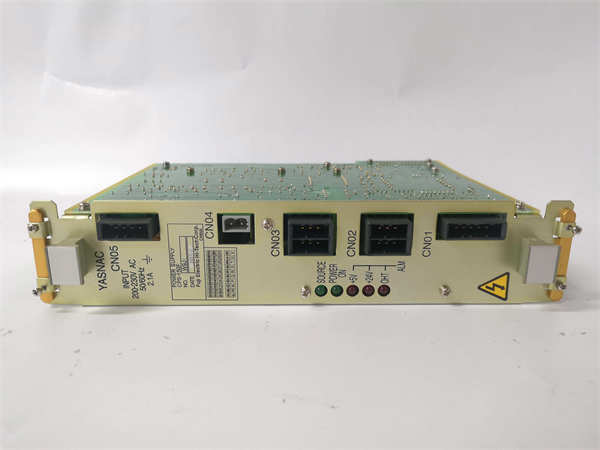
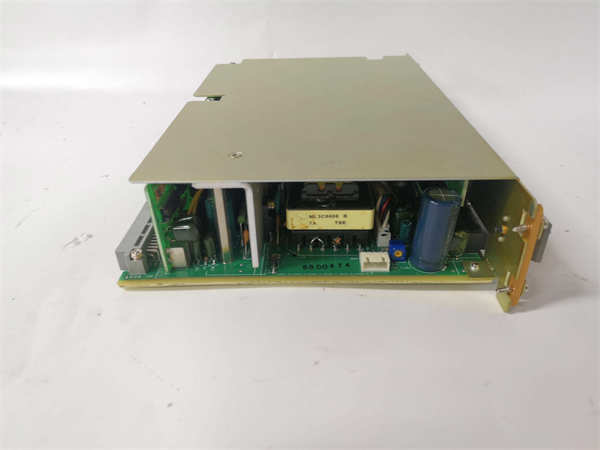
- Product Model: CPS-150F
- Manufacturer: Yaskawa
- Output Power: 150 W continuous
- Input Voltage: 85–264 VAC (universal input), 47–63 Hz
- Output Voltage: 24 VDC ±5%
- Output Current: Up to 6.3 A
- Efficiency: ~85% (typical for era)
- Mounting: DIN rail (TS-35/7.5 or 15)
- Protections: Overload, overvoltage, short-circuit, and thermal shutdown
- Cooling: Convection-cooled (no fan)
- Status Indication: Green LED for “Power OK”
- Dimensions: Approx. 125 mm (H) × 40 mm (W) × 125 mm (D)
- Certifications: UL, CSA, CE (per original labeling)
- Typical Applications: MP920, MP930, MP2000-series motion controllers; Sigma II/III servo systems; robotic workcells
System Role and Downtime Impact
The CPS-150F is not just a generic power supply—it is an integral part of Yaskawa’s motion control architecture. It powers:
- The CPU module of MP-series controllers
- Digital and analog I/O modules
- Safety input circuits (e.g., emergency stop chains)
- Communication interfaces (MECHATROLINK, Ethernet)
Because many Yaskawa systems do not include redundant power, a single CPS-150F failure results in immediate machine shutdown. Unlike standard industrial PSUs, this unit is often tightly integrated into the control cabinet layout with specific wiring harnesses and backplane connections. Replacement with a non-Yaskawa unit may require rewiring and verification of inrush current compatibility, especially when powering capacitive loads like multiple servo amplifier logic supplies.
In high-uptime environments (e.g., automotive assembly, semiconductor handling), such a failure can halt production lines for hours—making this module a high-consequence single point of failure.
Reliability Analysis and Common Failure Modes
Despite its robust design, the CPS-150F is vulnerable due to age and component technology:
- Electrolytic capacitor degradation: The most common failure—dried-out capacitors cause output ripple, voltage droop under load, or complete shutdown. Units manufactured before 2010 are especially at risk.
- Thermal stress: Continuous operation near max load in poorly ventilated cabinets accelerates component aging.
- Input surge damage: Lack of external surge protection can lead to MOV or rectifier failure during grid transients.
- Connector fatigue: Repeated thermal cycling loosens screw terminals or DIN rail clips, causing arcing or intermittent power loss.
Notably, the “Power OK” LED may remain lit even with degraded output regulation, giving false confidence. Full validation requires load testing at 6 A+ with an oscilloscope to check for ripple and transient response.
🔧 Preventive Recommendations:
- Perform annual infrared thermography to detect hot spots
- Measure output voltage under full system load during maintenance outages
- Install external line filters and surge suppressors on AC input
- Keep one tested spare powered under load for 24 hours before storage
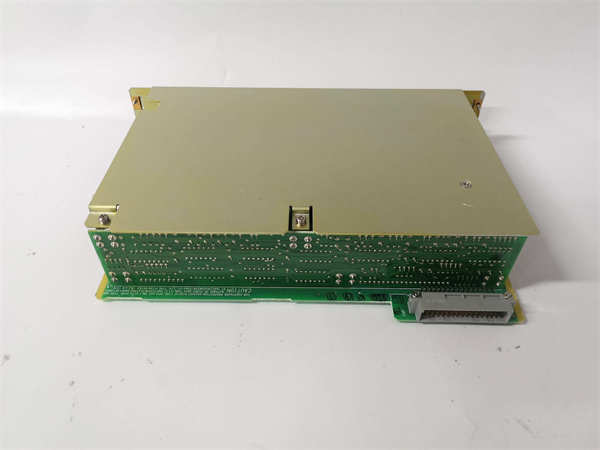
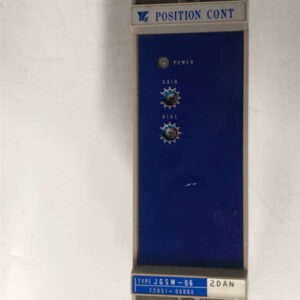
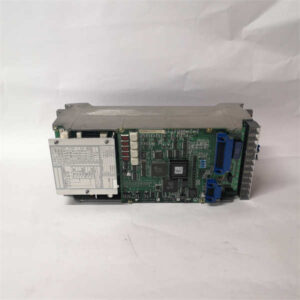
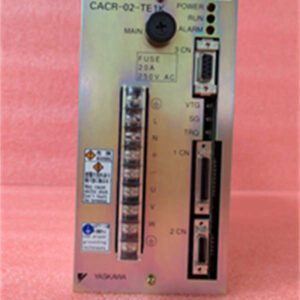
YASKAWA CPS-150F
Lifecycle Status and Migration Strategy
Yaskawa has phased out the CPS-150F in favor of newer, more efficient power supplies in its MP3000 and MotionWorks IEC platforms. No direct drop-in replacement exists in current product lines, but functional equivalents are available.
Short-Term Mitigation:
- Source only from reputable suppliers providing full load test reports (24 VDC @ 6.3 A for ≥1 hour)
- Avoid units with bulging capacitors, discoloration, or unknown storage history
- Maintain at least two verified spares per critical line
Long-Term Migration Path:
- Replace with modern industrial PSU: Use a 24 VDC, 150–200W DIN-rail power supply from reputable brands (e.g., Phoenix Contact QUINT4, Weidmüller PRO ECO, or Mean Well HEP-160A) that offers:
- Higher efficiency (>90%)
- Active PFC
- Remote monitoring (via relay contact or IO-Link)
- Selective fuse breaking (SFB) technology for faster diagnostics
- Verify compatibility: Ensure inrush current and hold-up time meet Yaskawa controller requirements (typically >10 ms hold-up). Most modern PSUs exceed legacy specs.
- Upgrade the entire motion platform (recommended for systems >15 years old): Migrate to Yaskawa MP3000 + Sigma-7 or ACOPOS-based alternatives, which use standardized, globally supported power architectures.