 Tel:
Tel:  Email:
  WhatsApp:
 Description
Technical Specifications (For Spare Parts Verification)
- Product Model: EST0240Z05WBX00
- Manufacturer: Yamatake (Yokogawa)
- System Family: CENTUM CS / CS 3000 Distributed Control System
- Output Type: 16-channel digital output, 24 VDC sink (NPN open-collector)
- Load Current per Channel: Typically up to 100 mA (verify with original system documentation)
- Voltage Rating: Compatible with standard 24 VDC control circuits
- Isolation: Opto-isolated inputs from backplane logic
- Diagnostic Capability: Basic channel status indication (via front LED); no advanced self-diagnostics
- Backplane Compatibility: Requires Yamatake-specific I/O carrier/baseplate (e.g., in FCS or AAI rack)
- Redundancy Support: Supported in redundant FCS configurations when paired with matching redundant baseplate
- Operating Temperature: 0°C to 55°C (standard industrial range)
System Role and Downtime Impact
The EST0240Z05WBX00 is a key digital output interface in legacy CENTUM CS/CS 3000 systems, commonly deployed in chemical, petrochemical, and utility plants. It translates control logic decisions from the Field Control Station (FCS) into discrete signals that energize field devices—such as pump start commands, valve actuation, or trip relay coils. A partial failure (e.g., one or more channels stuck off) can disrupt batch sequences or inhibit safety responses, while a total module fault may disable an entire equipment group. In non-redundant configurations, this often forces manual operation or triggers process alarms that escalate to unit derates. Given its role in executing both regulatory and safety-related logic, unavailability of a verified spare can significantly extend recovery time during unplanned outages.
Reliability Analysis and Common Failure Modes
Although designed for industrial reliability, the EST0240Z05WBX00 is now subject to aging effects after 15–25 years of service. The most frequent failure modes include burnout of output transistors due to inductive kickback from unshielded solenoids or motors, degradation of optocouplers leading to signal dropout, and corrosion of terminal blocks in humid environments. Electrolytic capacitors on the local power filtering circuit often dry out over time, causing voltage instability and intermittent resets. A notable design limitation is the lack of built-in flyback diodes on output channels—external protection must be provided at the field device, and omission accelerates transistor failure. For maintenance teams, recommended actions include inspecting field wiring for proper surge suppression, verifying terminal torque and oxidation, monitoring channel load currents during operation, and storing spares in ESD-safe, dry conditions to preserve semiconductor integrity.
-

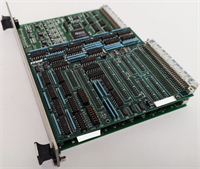
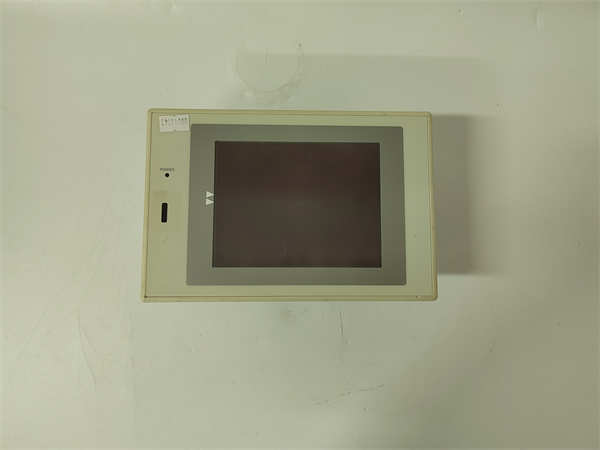
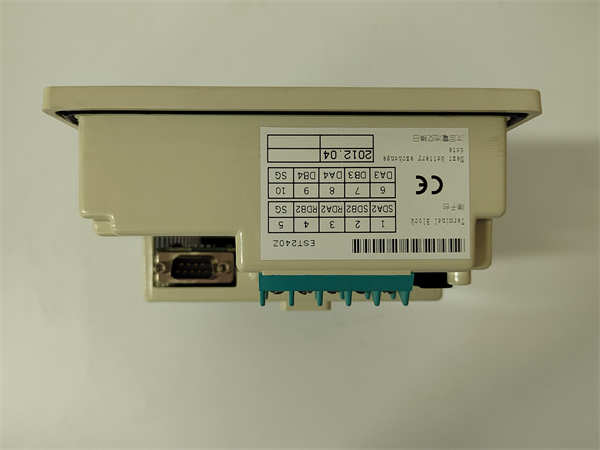
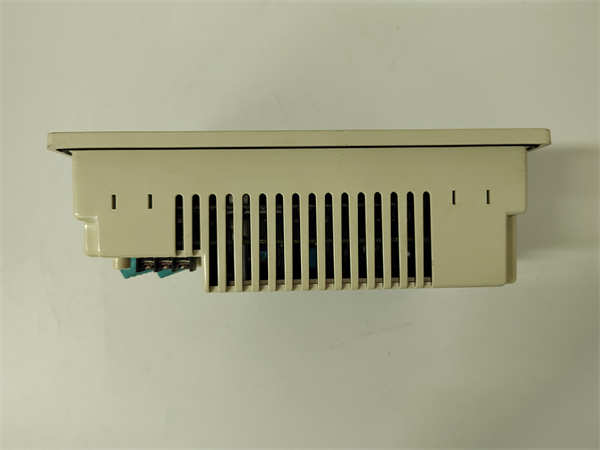
YAMATAKE EST0240Z05WBX00
Lifecycle Status and Migration Strategy
Following Yokogawa’s full integration of Yamatake, the EST0240Z05WBX00 was discontinued and is no longer supported under current product codes. Official repair services, firmware updates, and new-unit sales have ceased. Continued use depends entirely on the secondary market, where authenticity and functional condition are not guaranteed. As a short-term mitigation, facilities may implement strategic stockpiling of tested modules or engage specialized vendors for functional validation and component-level repair (e.g., transistor or capacitor replacement). For long-term sustainability, Yokogawa recommends migrating to the CENTUM VP or ProSafe-RS platform. The closest functional equivalent is the XD240 or XD241 digital output module in the YNT series, which offers enhanced diagnostics, higher density, and native support for modern redundancy schemes—but requires new I/O carriers, updated engineering in Integrated Production Control System (IPCS) tools, and re-commissioning of all associated logic. This transition is typically executed during major control system upgrades or plant modernization programs. Proactive lifecycle planning is essential to maintain operational continuity and regulatory compliance as legacy Yamatake components reach end-of-support.