 Tel:
Tel:  Email:
  WhatsApp:
 Description
Key Technical Specifications
| Parameter | Specification | Notes |
|---|---|---|
| System Compatibility | WECS-9520, W20, W32, W46F | Verify engine serial number range; not universal across all generations |
| Communication Protocol | CAN Bus (High Speed) | SAE J1939 standard; dual redundant channels often used |
| Input Voltage | 24V DC (Nominal) | Wide range: 18V – 32V DC; Reverse polarity protected |
| Power Consumption | < 15 Watts | Typical operational draw |
| I/O Interface | Digital Inputs/Outputs, Analog Inputs | Connects to injectors, sensors, and solenoid valves |
| Processing Speed | Real-time (< 1ms cycle) | Critical for combustion synchronization |
| Environmental Rating | IP65 (Front), IP20 (Rear) | Designed for engine room environments |
| Operating Temp | -40°C to +85°C (-40°F to +185°F) | Derated performance above 70°C |
| Storage Temp | -50°C to +100°C | Must be kept dry during storage |
| Mounting | DIN Rail or Engine Bracket | Specific mounting kit required (often sold separately) |
| Dimensions | Approx. 200mm x 150mm x 60mm | Varies slightly by revision |
| Weight | 1.2 kg (2.6 lbs) | Includes mounting hardware |
Product Introduction
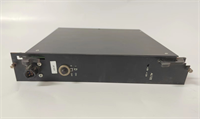
When a medium-speed diesel generator refuses to share load evenly, you don’t have time for theory; you need the part that actually balances the kilowatts. The Wärtsilä LDU-20 is that part. It sits between the main Engine Control System (ECS) and the individual fuel actuators, translating high-level load requests into precise micro-second timing signals for the injectors. Without a functioning LDU-20, your multi-engine plant becomes a nightmare of circulating currents and frequency hunting, risking a total blackout during peak demand.I’ve seen too many chief engineers try to swap these with generic “compatible” modules only to watch the engine run rough or trip on overspeed. The LDU-20 isn’t just a relay box; it runs proprietary Wärtsilä logic calibrated to the specific mechanical characteristics of your W20 or W32 block. The -20 revision specifically handles the transition from analog to digital fuel governing in the late 90s and early 2000s fleets. It’s built like a tank to survive engine room heat and vibration, but the CAN bus transceivers are sensitive to voltage spikes from bad alternators. If you’re buying this today, you’re likely keeping an older, reliable workhorse running because the newer ECUs require a full harness rewrite. It’s a legacy lifeline, not a upgrade path.
 Quality SOP & Tech Pitfalls (The Reality Check)
 Quality SOP & Tech Pitfalls (The Reality Check)
The Lab Report (SOP)
We treat marine control cards with the same suspicion we treat a calm sea in hurricane season. Here is our validation protocol for the LDU-20:
- Visual & Corrosion Check: We inspect the conformal coating for cracks or salt creep. Even “new surplus” stored in humid warehouses can have hidden corrosion on the CAN bus pins.
- Power Stress Test: Using a variable DC supply, we ramp voltage from 18V to 32V while monitoring current draw. We look for erratic spikes that indicate failing capacitors.
- CAN Bus Simulation: We connect the unit to a Vector CANalyzer setup. We simulate J1939 traffic to verify the LDU-20 acknowledges messages and outputs the correct PWM signals to a dummy load.
- Firmware Verification: We read the internal firmware checksum and compare it against Wärtsilä’s known good versions for the target engine model. Mismatched firmware causes “Comm Loss” alarms immediately.
- Thermal Cycling: The unit undergoes a 2-hour heat soak at 70°C to ensure stable operation under engine room conditions.
- Final Sealing: Packed in anti-static bags with desiccant, then boxed in double-wall corrugated cardboard with “Fragile – Marine Electronics” labeling.
The Engineer’s Warning (Pitfalls)
Check your grounding before you blame the card. I was called to a vessel in Singapore where the #2 generator was surging wildly. The crew had already swapped two “bad” LDU-20 units. Both were fine. The problem? A corroded ground strap on the engine block. The LDU-20 references its signals to the engine ground; if that potential floats, the timing jitters, and the governor goes crazy. Don’t throw money at new cards until you’ve measured the resistance between the ECU chassis and the engine block. It should be near zero ohms.Beware of the “Silent Killer” voltage spike. The LDU-20 inputs are protected, but repeated spikes from a failing AVR (Automatic Voltage Regulator) on the alternator can degrade the internal CAN transceiver over time. The card might work fine at idle but fail the moment you apply load and the alternator field fluctuates. If you replace an LDU-20, always check the health of the associated alternator and wiring harness. Otherwise, you’ll be back there swapping the same card in three months.
Installation & Configuration Guide
Replacing an LDU-20 on a running plant is high-stakes. One wrong step can drop a generator off the bus.
- Pre-Installation (⚠️ CRITICAL)
- Load Transfer: If possible, transfer the load to other generators and shut down the target engine. Hot-swapping is NOT recommended for LDU modules as it can cause a transient load spike that trips the whole plant.
- Document: Take photos of all connector pinouts and DIP switch settings (if present). Note the engine serial number and current software version.
- Safety: Lockout/Tagout (LOTO) the engine start circuit and disconnect the battery negative terminal.
- Removal
- Label every harness connector with masking tape. Do not rely on memory; marine harnesses look identical.
- Unbolt the module from its bracket.
- Disconnect the harnesses. Inspect the connector pins for green corrosion or bent pins. Clean with contact cleaner if necessary.
- Installation
- Configuration Match: Before mounting, verify any hardware jumpers or DIP switches on the new LDU-20 match the old unit exactly. A mismatch here can cause the ECU to reject the module.
- Mounting: Secure the new unit to the bracket. Ensure the mating surface is clean for proper heat dissipation.
- Connection: Reconnect the harnesses until they click. Give each cable a gentle tug to ensure it’s seated.
- Power-On & Testing
- Reconnect batteries and remove LOTO.
- Start the engine locally (not on auto-sync). Watch the HMI (Human Machine Interface) for “LDU Fault” or “Comm Loss” alarms.
- Parameter Download: In many cases, you must download the specific engine parameter file from the main ECS to the new LDU-20 using the Wärtsilä service tool (e.g., WinGD or proprietary laptop interface).
- Load Test: Gradually apply load. Monitor the fuel rack position and kW sharing. It should be smooth. If it hunts, check the gain settings in the software.
Compatible Replacement Models
The WECS-9520 system is mature, and parts availability is tightening.表格
| Compatibility Tier | Model Number | Details & Risks |
|---|---|---|
| ✅ Drop-in Replacement | LDU-20 (Exact Part Number) | Direct fit. No software changes needed if firmware matches. Risk: Low. Availability: Very Low (Surplus only). |
| ⚠️ Software Compatible | LDU-20 Rev B/C (Later Revision) | Hardware is compatible, but requires a firmware update via service tool to match the existing ECS network. Labor: 1-2 hours with licensed software. |
| ⚠️ System Upgrade | WECS-9520 Modernized Kit | Requires replacing the entire local control cabinet and harness. Not a simple swap. Labor: Days of downtime. Only for major overhauls. |
| ❌ Incompatible | LDU-10 / LDU-30 | Different voltage levels or communication protocols. Will not communicate with W20/W32 ECUs. Do not attempt. |
Frequently Asked Questions (FAQ)
Q: Can I swap this module while the generator is online?
A: Absolutely not. The LDU-20 controls fuel injection in real-time. Pulling it out will cause an immediate loss of control on that engine, leading to a rapid shutdown or, worse, an uncontrolled runaway if the fuel rack sticks. You must isolate the generator, remove the load, and shut down before swapping.Q: My new LDU-20 shows up but says “Configuration Invalid.” Why?
A: The firmware version on the replacement card doesn’t match the main Engine Control System (ECS) expectations. You need to connect a service laptop to the ECS and download the correct parameter set and firmware to the new LDU-20. This is a security feature to prevent mismatched components from damaging the engine.Q: How do I know if my LDU-20 is actually bad or if it’s a sensor issue?
A: Check the diagnostic logs in the main HMI. If the LDU-20 reports “Internal Fault” or stops communicating on the CAN bus entirely (while power is good), the card is likely dead. If it reports “Sensor Out of Range” or “Actuator Feedback Error,” the problem is likely external (wiring, sensor, or solenoid). Don’t swap the expensive card until you’ve traced the external circuit.Q: Is this card universal for all Wärtsilä engines?
A: No. The LDU-20 is specific to the WECS-9520 architecture used on W20, W32, and some W46F models. Newer engines (like the W31SG or W50DF) use completely different control systems (e.g., UNIC). Always cross-reference your engine serial number with the parts list.Q: What is the lead time for a new one from the factory?
A: Since it’s obsolete, you can’t order it “new” from the factory anymore. Lead time for certified refurbished units varies from 2 days to 2 weeks depending on stock. Beware of vendors claiming “Factory New” without a date code; they are likely selling untested pulls.Q: Does this come with a warranty?
A: Yes, reputable suppliers offer a 1-year warranty on functionality. However, the warranty usually excludes damage caused by installation errors (like reverse polarity or grounding issues). Keep your multimeter logs during installation to prove proper setup if a claim is needed.