 Tel:
Tel:  Email:
  WhatsApp:
 Description
Key Technical Specifications (For Spare Parts Verification)
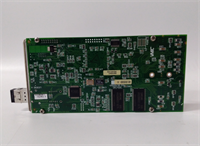
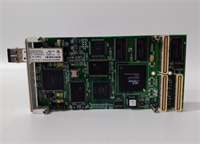
- Product Model: VMIPMC-5565
- Manufacturer: VMIC (GE Fanuc Intelligent Platforms legacy product line)
- Form Factor: PMC (PCI Mezzanine Card), requires PMC carrier on VME, PCI, or PCIe host
- Memory Capacity: 256 MB shared reflective memory
- Interface: Dual fiber-optic ports (ST connectors) for ring topology
- Data Rate: Up to 170 MB/s sustained throughput
- Latency: Sub-microsecond node-to-node transfer
- Protocol: Proprietary reflective memory protocol (VMIC RFM)
- Host Bus Support: Compatible with VME64x, PCI, or PCIe via appropriate carrier card (e.g., VMIVME-7750, VMIPCI-5565)
- Operating Systems: Legacy Windows (XP/7), VxWorks, Linux (with specific kernel drivers)
- Diagnostic Features: Link status LEDs, error counters via API
System Role and Downtime Impact
The VMIPMC-5565 is a critical enabler of deterministic data sharing in tightly coupled real-time systems. It allows multiple processors—often running simulation, control, and I/O tasks—to read and write to a common memory space with guaranteed timing, eliminating network stack overhead. In power system protection, it may synchronize phasor measurement units; in aerospace test rigs, it coordinates actuator commands and sensor feedback. Because the ring topology requires all nodes to be functional, failure of a single VMIPMC-5565 card can collapse the entire reflective memory network, causing all connected systems to lose synchronization. This typically results in immediate shutdown of the real-time application. Recovery depends on having a verified spare with matching firmware and compatible host drivers—a growing challenge as engineering environments migrate to modern operating systems that lack certified RFM support.
Reliability Analysis and Common Failure Modes
Although built for rugged industrial use, the VMIPMC-5565 is now vulnerable due to its deployment era (mid-2000s) and reliance on aging components. Common failure modes include:
- Fiber-optic transceiver degradation, leading to intermittent link loss or complete port failure—often triggered by temperature cycling or dust contamination in ST connectors.
- Onboard SDRAM or controller ASIC wear-out, causing memory corruption or inability to maintain ring integrity under load.
- PMC edge connector fatigue, resulting in poor contact with the carrier card and sporadic system crashes.
- Power regulation instability on the host carrier, exacerbated by aging capacitors, which can cause the PMC module to reset during high-speed data bursts.
A key weakness is the dependency on proprietary drivers that are incompatible with modern OS security models (e.g., Windows 10/11 kernel signing requirements). Preventive measures include regular inspection of fiber connections for cleanliness and bend radius, monitoring ring error counters via application software, ensuring stable host power, and maintaining identical firmware revisions across all nodes in the ring.
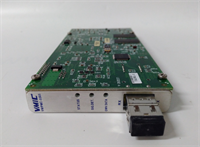
VMIPMC-5565 VMIC
Lifecycle Status and Migration Strategy
VMIC-branded products, including the VMIPMC-5565, were discontinued following GE’s exit from embedded computing and subsequent asset transfers. No official support, firmware updates, or new units are available. The reflective memory technology itself remains relevant, but this specific implementation is no longer sustainable in new deployments.
Short-term mitigation includes:
- Sourcing only from vendors providing full functional validation, including ring stress testing and memory integrity checks
- Maintaining a complete matched set of spares (same revision, same firmware)
- Isolating legacy host systems from OS updates that could break driver compatibility
Long-term, the recommended migration path is to modern reflective memory or deterministic networking alternatives such as:
- StarFabric or AFDX for avionics-grade determinism
- OPC UA PubSub over TSN (Time-Sensitive Networking) for standards-based real-time Ethernet
- Shared-memory solutions from Curtiss-Wright (e.g., DNx-550 series) or Alacron, which offer backward-compatible APIs and support for current operating systems
Migration typically requires re-architecting the communication layer, updating application code to use new APIs, and qualifying new hardware—but eliminates dependency on obsolete PMC/VME infrastructure and ensures long-term viability for real-time systems in research, energy, and defense applications.