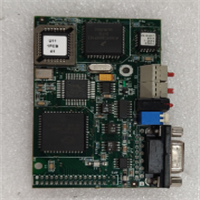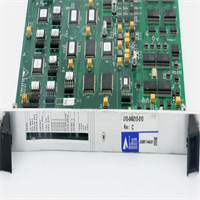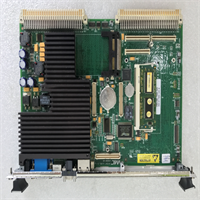
 Tel:
Tel:  Email:
  WhatsApp:
 Description
Key Technical Specifications (For Spare Part Verification)
- Product Model: VMIVME-7698-140
- ABB/VMIC P/N: 350-017698-140 (the “A” suffix often denotes minor revision or conformal coating)
- Processor: IBM PowerPC 603e or 604e @ 140 MHz
- Memory:
- Onboard DRAM: Typically 32 MB or 64 MB (soldered or SO-DIMM)
- Flash: 4–8 MB for boot firmware and OS storage
- Bus Interface: VME64 (6U form factor, P1/P2 connectors), 32-bit address/data (A32/D32), supports A24 and A16
- I/O Interfaces:
- Dual 10/100 Mbps Ethernet (RJ-45 or MII)
- Serial ports (RS-232/422 via front panel or rear transition module)
- PMC (PCI Mezzanine Card) site for expansion (e.g., FPGA, DSP)
- Operating System Support: VxWorks, LynxOS, Linux (PPC kernel), QNX
- Form Factor: Standard 6U VME (233.35 mm × 160 mm)
- Power Consumption: ~15–25 W (depends on load and PMC modules)
- Operating Temperature: Commercial (0°C to +60°C) or extended (-40°C to +70°C) variants available
- Watchdog Timer & Reset Control: Integrated for fail-safe recovery
System Role and Downtime Impact
The VMIVME-7698 was widely deployed in high-reliability embedded systems where deterministic real-time performance was essential, including:
- Nuclear power plant safety I/O processors
- Military command-and-control systems
- Railway signaling controllers
- Oil & gas pipeline SCADA gateways
In these roles, the board runs custom real-time applications that interface directly with analog/digital I/O modules via the VME backplane. A hardware failure—such as CPU lockup, memory corruption, or Ethernet controller fault—results in complete loss of local intelligence, potentially triggering safety shutdowns or requiring manual intervention. Because many of these systems lack hot-swap or redundant computing, the VMIVME-7698 represents a single point of failure with severe operational and regulatory consequences.
Reliability Analysis and Common Failure Modes
Despite ruggedized design, units over 15–20 years old exhibit predictable aging issues:
- DRAM bit errors due to charge leakage or cosmic-ray-induced SEUs (especially in unshielded environments)
- Flash memory wear-out: Prevents booting if bootloader or OS image becomes corrupted
- PMC connector fatigue: Causes intermittent expansion module failures
- Electrolytic capacitor degradation on power regulation circuits: Leads to voltage instability and resets
- Ethernet PHY chip failure: Common in early 10/100 integrated MACs; results in network dropout
- Conformal coating delamination: In harsh environments, exposes traces to moisture and corrosion
Thermal cycling and continuous operation accelerate component fatigue. Recommended preventive actions include:
- Periodic memory scrubbing and CRC validation of critical code segments
- Monitoring system uptime and unexpected reboots
- Maintaining burn-in-tested spares with identical firmware and configuration
- Archiving original BSP (Board Support Package) and boot images
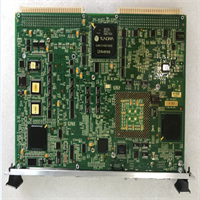
VMIVME-7698 VMIVME-7698-140 350-017698-140 A VMIC
Lifecycle Status and Migration Strategy
VMIC was acquired by GE Fanuc in 2003, and the VMIVME-7698 line was discontinued shortly thereafter. Emerson later absorbed the product portfolio and terminated all support. No direct replacement exists, and even datasheets are now rare or archived.
Short-term mitigation:
- Source units from trusted defense/aerospace surplus suppliers (e.g., Apex, AERCO) with functional test reports
- Implement application-level watchdogs and heartbeat monitoring
- Use FPGA-based VME emulators (e.g., from EKF Elektronik or MEN Mikro) for critical spares
Long-term migration path:
- Replace VME chassis with VPX or CompactPCI Serial platforms featuring modern Power Architecture or x86 processors
- Port real-time software to contemporary RTOS (e.g., VxWorks 7, QNX Neutrino) on conduction-cooled SBCs
- Adopt time-sensitive networking (TSN) or DDS middleware to replace VME-based inter-board communication
- Virtualize non-critical functions on industrial servers while retaining FPGA-based I/O for hard real-time tasks
Given the prevalence of VMIVME-7698 in safety-related and regulated systems, organizations should conduct a formal obsolescence risk assessment and develop a phased migration plan. Continuing to rely on untested surplus boards poses unacceptable risks to availability, safety, and compliance—particularly in nuclear, defense, and critical infrastructure sectors.