 Tel:
Tel:  Email:
  WhatsApp:
 Description
Key Technical Specifications (For Spare Parts Verification)
- Product Model: VMIVME-7452
- Manufacturer: VMIC (VME Microsystems International Corporation)
- System Family: VME64 / VME64x embedded computing platform
- Board Type: Reflective Memory (RFM) network interface
- Memory Capacity: 128 MB synchronous DRAM (shared across network)
- Bus Interface: VME64, 32-bit, 33 MHz, R1/R2 rear I/O or front-panel fiber-optic
- Network Topology: Ring or star via fiber-optic (typically ST or SC connectors)
- Data Rate: Up to 170 MB/s node-to-node (deterministic, hardware-level replication)
- Operating System Support: VxWorks, Linux, Windows NT/XP Embedded (via drivers)
- Form Factor: 6U VME (233.35 mm x 160 mm), single-slot
- Diagnostic Features: LEDs for power, link status, and memory activity
System Role and Downtime Impact
The VMIVME-7452 is a specialized reflective memory board used in tightly coupled, multi-processor VME systems requiring microsecond-level data consistency—common in defense (radar signal processing), energy (turbine simulation), and industrial test automation. It creates a shared memory space that is automatically replicated across all nodes in the RFM ring. Any write by one CPU is instantly mirrored to all others without software overhead, enabling deterministic coordination impossible with standard Ethernet or message passing.
Because system timing and state coherence depend on this shared memory fabric, a failed VMIVME-7452 disrupts the entire RFM ring. Consequences include data desynchronization, watchdog timeouts, or complete application crash across multiple chassis. In real-time control environments, this often triggers emergency shutdowns or invalidates test results. Recovery requires not only board replacement but also reinitialization of the entire reflective memory network—a process that may demand system-wide reboot and recalibration.
Reliability Analysis and Common Failure Modes
Despite rugged construction, the VMIVME-7452 is vulnerable due to its reliance on aging DRAM technology and high-speed analog circuitry. Primary failure modes include:
- DRAM cell degradation: Over time, memory cells lose charge retention, causing silent data corruption or read/write errors—often intermittent and temperature-dependent.
- Fiber-optic transceiver failure: The optical I/O components (especially older ST-style) suffer from LED/laser aging, leading to link dropouts or increased bit error rates.
- Power regulator drift: Onboard DC-DC converters supplying 3.3V/2.5V to memory and FPGA can degrade, causing brownout resets or instability under load.
- VME connector fatigue: Repeated thermal cycling loosens P2/P3 backplane contacts, resulting in bus errors or configuration failures.
Design weaknesses include lack of ECC (error-correcting code) on memory, no built-in self-test beyond basic POST, and sensitivity to ground loops in multi-chassis installations.
Recommended preventive maintenance:
- Monitor system logs for RFM timeout or CRC errors
- Perform annual memory integrity tests using vendor diagnostics (e.g., RFMUTIL)
- Inspect fiber cables for bends, cracks, or dirty connectors
- Ensure chassis grounding meets RFM installation guidelines
- Maintain at least one fully tested spare with matching firmware revision
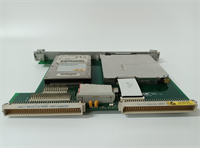
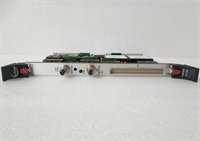
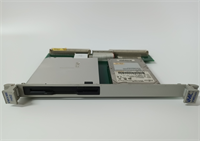
VMIC VMIVME-7452
Lifecycle Status and Migration Strategy
The VMIVME-7452 was discontinued after VMIC’s acquisition chain (GE Fanuc → Emerson). No new units have been manufactured for over 15 years. Official support ended long ago; driver updates for modern OS versions are unavailable. Genuine spares exist only in surplus markets or decommissioned systems, often with unknown usage history.
Continued operation poses significant risk: a single point of failure can incapacitate an entire real-time system, and troubleshooting is complicated by obsolete toolchains.
Interim mitigation includes:
- Engaging specialized vendors for board refurbishment (DRAM replacement, capacitor rework)
- Implementing redundant RFM rings where architecture permits
- Archiving original firmware, drivers, and configuration files
Long-term, migration to modern reflective memory or deterministic networking is necessary. Options include:
- GE/Emerson REFLECTIVE MEMORY SERIES 5565/5566: Fiber-optic RFM with PCIe/VME64x options and updated drivers
- Conduant StreamStor or Curtiss-Wright DDR4 RFM: Higher bandwidth, larger memory, and support for modern OS/hypervisors
- Time-Triggered Ethernet (TTEthernet) or DDS over deterministic switches: For new designs, replacing RFM with standards-based real-time IP
Migration typically requires re-architecting the application’s communication layer, but preserves core algorithms. Given the criticality of these systems, planning should begin well before final spare exhaustion—ideally as part of a broader embedded platform refresh initiative.