 Tel:
Tel:  Email:
  WhatsApp:
 Description
Key Technical Specifications (Reconstructed from Historical Data)
- Product Identifier: VMIC 12149 Assembly
- Manufacturer: VMIC (Virtual Machine Instruments Corp.)
- Platform: VMEbus (likely VME64 or VME64x compliant)
- Form Factor: Typically 6U VME board (233.35 mm × 160 mm)
- Processor: Likely PowerPC, Intel i960, or Motorola 68k series (era-dependent)
- Memory: Onboard SRAM/DRAM (size unknown; possibly 16–64 MB)
- I/O Interfaces: May include discrete I/O, serial (RS-232/422), MIL-STD-1553, ARINC 429, or custom FPGA logic
- Backplane Compatibility: Standard VME P1/P2 connectors; requires compatible VME chassis and power supply
- Operating System: Typically VxWorks, pSOS, or proprietary real-time OS
- Firmware/Software: Proprietary drivers; unlikely to be compatible with modern development tools
- Cooling: Conduction-cooled or forced-air, depending on variant
-

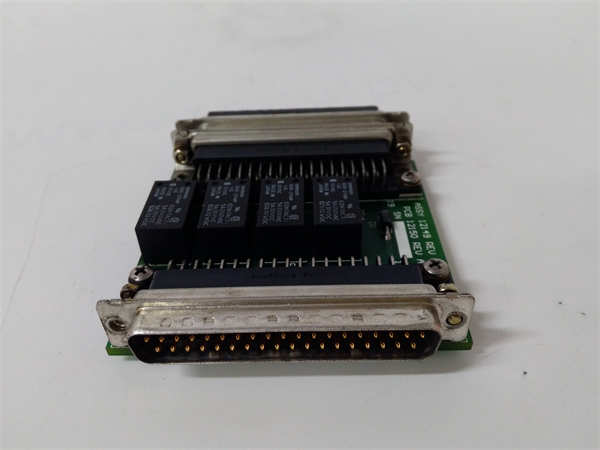
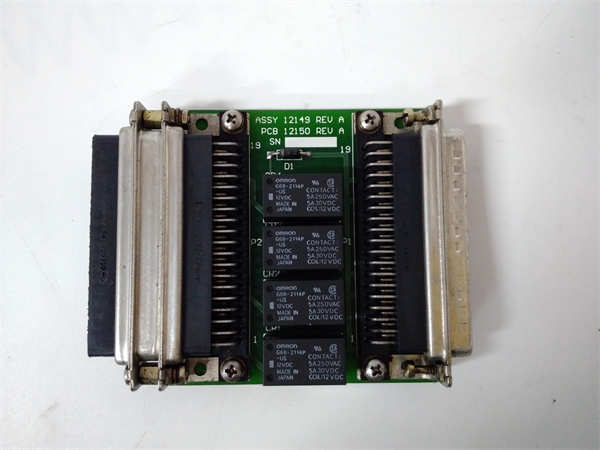
VMIC 12149 Assembly
System Role and Downtime Impact
The VMIC 12149 Assembly typically functions as a mission-critical embedded node within larger VME-based test, control, or simulation systems—common in radar test benches, flight simulators, or nuclear instrumentation. Due to its custom nature, it often implements unique protocol translation, timing synchronization, or hardware-in-the-loop (HIL) logic that cannot be easily replicated.
Failure of this module usually results in complete subsystem failure, as replacements are unavailable and reverse-engineering is prohibitively expensive. Unlike commercial off-the-shelf (COTS) components, the 12149 lacks standardized pinouts or open documentation, making third-party emulation nearly impossible without original design files. In defense applications, this poses not only operational risk but also compliance challenges under DoD sustainment mandates.
Reliability Analysis and Common Failure Modes
Given its age (likely deployed between late 1990s and mid-2000s), the 12149 assembly is highly susceptible to:
- Electrolytic capacitor aging leading to power instability or boot failure
- BGA solder joint fatigue due to thermal cycling, especially in conduction-cooled variants
- Flash memory wear-out causing firmware corruption
- Connector oxidation on VME edge fingers, resulting in intermittent communication
- FPGA bitstream loss if configured with volatile SRAM-based devices
A critical vulnerability is the lack of diagnostic visibility: most such assemblies predate modern IPMI or JTAG-based health monitoring, so failures are often detected only after system malfunction.
Preventive maintenance recommendations include:
- Performing periodic power-on cycles (even in storage) to recondition capacitors
- Cleaning VME edge connectors with contact enhancer every 12–18 months
- Imaging firmware and configuration data using legacy programmers (if accessible)
- Maintaining at least two verified spare assemblies in climate-controlled storage
- Documenting signal behavior via logic analyzers to aid future emulation efforts
-
VMIC 12149 Assembly
Lifecycle Status and Migration Strategy
No manufacturer support exists for the VMIC 12149. Emerson does not recognize it under current product lines, and GE Fanuc discontinued all VMIC-branded products decades ago. Secondary market sources are unreliable, with many units sold as “untested” or misrepresented.
Short-term mitigation involves:
- Partnering with specialized obsolescence management firms for component-level repair
- Implementing board-level redundancy (if system architecture allows)
- Creating functional test fixtures to validate spares before deployment
Long-term, migration to a modern embedded platform is essential. Options include:
- VME-to-VPX transition: Replace VME chassis with VPX (VITA 46) using FPGA-based protocol bridges
- Custom FPGA carrier board: Replicate I/O functionality on a CompactPCI Serial or PCIe platform
- Emulation via real-time controller: Use National Instruments PXIe + FlexRIO or Speedgoat systems to mimic timing-critical behavior
Such migrations require significant reverse engineering but are increasingly necessary to meet cybersecurity, reliability, and regulatory requirements. Early planning—including functional decomposition and interface capture—is critical to avoid operational disruption.