 Tel:
Tel:  Email:
  WhatsApp:
 Description
Key Technical Specifications (For Spare Parts Verification)
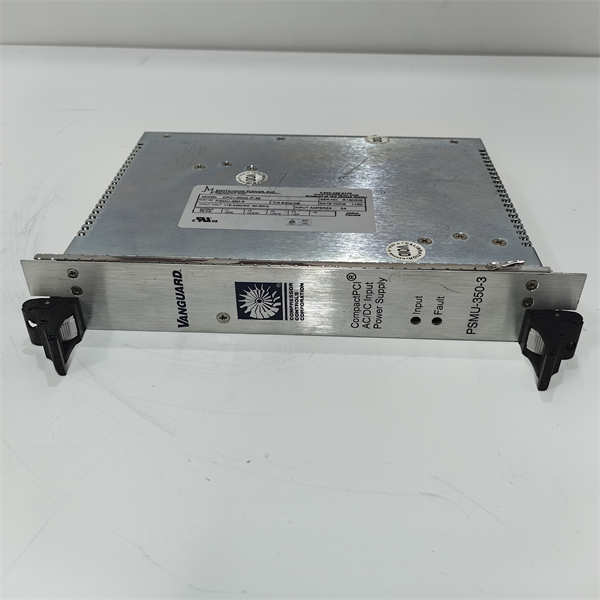
- Product Model: PSMU-350-3
- Alternate Part Number: CPCI-350Q-P-38
- Manufacturer: Vanguard (formerly Tyco Electronics Power Systems group)
- System Family: CompactPCI (PICMG 2.0/2.11 compliant) power infrastructure
- Module Type: Power Supply Monitoring Unit (PSMU)
- Function: Monitors +3.3V, +5V, +12V, –12V rails; controls hot-swap sequencing and redundancy via I²C/SMBus
- Input Voltage Range: Typically 48 VDC nominal (telecom-grade input)
- Output Compatibility: Drives standard CPCI power supplies with enable/disable signaling
- Communication Interface: I²C bus for status reporting to shelf manager or host controller
- Diagnostic Features: LEDs for power good, fault, and redundancy status; optional remote alert via GPIO
- Form Factor: 3U or 6U CPCI-compatible plug-in module (matches CPCI-350Q series)
- Operating Temperature: 0°C to 55°C (commercial/industrial variants may differ)
System Role and Downtime Impact
The PSMU-350-3 (CPCI-350Q-P-38) serves as the intelligent power orchestrator in CompactPCI-based systems—commonly deployed in legacy telecom switching, military computing, or industrial control platforms. It ensures that all DC voltage rails power up in the correct sequence to prevent latch-up or damage to downstream boards, monitors rail health during operation, and coordinates failover between redundant power supplies. If this module fails, the system may experience:
- Uncontrolled power cycling due to false “power bad” signals
- Inability to bring redundant supplies online during a primary failure
- Complete backplane power inhibition if the PSMU locks in a fault state
In high-availability applications (e.g., cellular base stations or SCADA gateways), such failures can lead to extended outages, especially since many older CPCI systems lack bypass mechanisms for the PSMU. The module’s role is non-redundant by design, making it a critical single point of failure.
Reliability Analysis and Common Failure Modes
As an early-2000s mixed-signal board combining analog sensing and digital logic, the PSMU-350-3 is vulnerable to several age-related issues:
- Voltage reference drift in supervisory ICs (e.g., MAX160xx-family chips), causing false undervoltage trips
- I²C bus lockup due to ESD damage on communication lines, halting shelf management
- Electrolytic capacitor degradation on input filtering circuits, leading to noise-induced resets
- Cold solder joints on high-pin-count connectors from thermal stress over years of operation
- Firmware corruption in onboard microcontrollers (if present), especially after power glitches
A key weakness is the lack of field-upgradable firmware and minimal remote diagnostics—most faults require physical inspection or replacement. Additionally, the module relies on obsolete ASICs and custom hybrids no longer in production, severely limiting repair options.
Recommended preventive actions:
- Log I²C status registers periodically (if accessible via shelf manager) to detect early warnings
- Inspect for capacitor bulging or PCB discoloration during maintenance access
- Verify redundancy switchover by simulating a power supply failure during safe windows
- Ensure clean, stable 48 VDC input with proper transient suppression
- Store spares in anti-static, dry environments with conformal coating intact
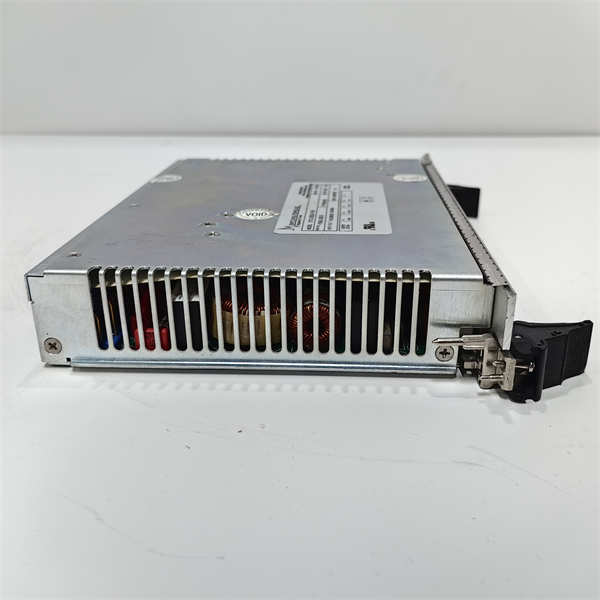
VANGUARD PSMU-350-3 CPCI-350Q-P-38
Lifecycle Status and Migration Strategy
Vanguard’s CPCI power product line, including the PSMU-350-3, was discontinued following corporate restructuring in the late 2000s. No manufacturer support, documentation, or new units exist. Remaining inventory is virtually nonexistent; any available units are salvaged from retired equipment and carry high risk of latent defects.
Short-term mitigation strategies include:
- Securing last-known-good spares from decommissioned identical systems
- Designing external watchdog circuits to override PSMU lockout (advanced workaround)
- Implementing full system redundancy at the chassis level (if architecture allows)
Long-term, the only viable path is platform migration. Modern alternatives include:
- PICMG-compliant Shelf Managers with integrated power control (e.g., from Kontron, Emerson, or Artesyn)
- Open Compute-inspired power architectures using IPMI or Redfish for monitoring
- Custom FPGA-based sequencers for bespoke embedded upgrades
However, migration typically requires redesigning the entire backplane power architecture, updating software drivers, and revalidating system safety—making it a significant engineering effort. Given the fragility of remaining PSMU-350-3 units, asset owners should initiate migration planning immediately to avoid unplanned, prolonged downtime.