Tel:
Tel:  Email:
  WhatsApp:
 Description
Key Technical Specifications (For Spare Parts Verification)
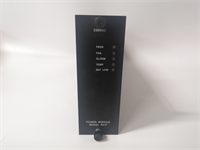
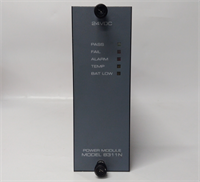
- Product Model: TCM 4355X
- Manufacturer: Triconex (Emerson)
- System Platform: Tricon v10 / Enhanced Tricon (Chassis Type: MP or XP series)
- Module Type: Main Processor (MP) – one of three redundant processors in a TMR set
- Processing Architecture: Triple-modular redundant (TMR) with voting on all I/O and internal states
- Memory: Onboard flash for application program; battery-backed SRAM for state retention
- Communication: Proprietary high-speed bus to I/O modules and other TCMs in the chassis
- Diagnostic Coverage: Continuous self-test, fault logging, and online diagnostics per IEC 61508 SIL 3
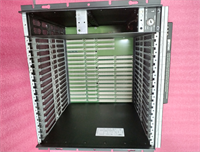
- Mounting: Full-slot module in Tricon main chassis (typically slots 1–3)
- Power: Supplied via backplane; requires stable +5 V DC and auxiliary rails
System Role and Impact of Failure
The TCM 4355X serves as the central processing unit in Triconex TMR safety systems, widely deployed in critical process industries for emergency shutdown (ESD), fire & gas (F&G), and burner management. It runs the certified safety application logic and continuously cross-checks results with two sister processors. If one TCM fails, the system continues operating in 2-out-of-3 (2oo3) mode. However, loss of a second TCM triggers a safe shutdown. A faulty or unresponsive TCM 4355X can therefore lead to partial degradation or complete trip of the protected process—resulting in unplanned downtime, production loss, and potential safety exposure. Given its role in functional safety, any uncertainty about module integrity directly impacts plant risk profiles and regulatory compliance.
Reliability Analysis and Common Failure Modes
Although designed for high reliability, the TCM 4355X is now commonly operating beyond its intended service life (original installations date to early-to-mid 2000s). The most frequent failure mechanisms include:
- Battery-backed SRAM degradation: The onboard lithium battery (typically 10-year life) depletes over time, leading to loss of runtime state during power interruptions. This may cause the module to fail startup diagnostics or revert to an outdated program version.
- Flash memory wear: Repeated downloads or power cycling can corrupt the application image stored in flash, resulting in boot failures or logic errors.
- Backplane connector fatigue: Thermal cycling and vibration induce micro-cracks in solder joints or pin corrosion, disrupting communication with I/O modules or peer processors.
- Power supply sensitivity: Voltage sags or ripple outside specification can trigger false fault conditions due to aging voltage regulators.
A key design vulnerability is the lack of field-replaceable batteries—replacement requires module return to a certified service center, which is no longer available from Emerson.
Recommended preventive actions:
- Monitor battery voltage via Triconex Enhanced Diagnostic Monitor (EDM) software
- Maintain at least two verified spare TCMs per critical system
- Perform periodic “hot-swap” tests during planned outages to validate redundancy
- Ensure clean, regulated power to the Tricon chassis with adequate surge protection

TCM 4355X TRICONEX
Lifecycle Status and Migration Strategy
Emerson has formally discontinued the TCM 4355X and ceased all repair, calibration, and technical support services. No new modules are produced, and remaining inventory consists of used or refurbished units with no performance warranty. Continued operation carries significant functional safety and cybersecurity risks, especially as regulatory bodies increasingly require up-to-date, supported SIS platforms.
Short-term mitigation includes:
- Securing tested spares from certified industrial asset resellers with full diagnostic reports
- Implementing rigorous module health monitoring via EDM
- Avoiding unnecessary firmware or application changes on aging hardware
For long-term sustainability, Emerson’s official migration path is upgrading to the Triconex eXP or Triconex CX platform. The TCM 4355X can be replaced by the eXP Main Processor Module (e.g., 9700/9710 series) within a new chassis, though this requires:
- Replacement of the entire Tricon rack (power supplies, chassis, terminal bases)
- Rewiring of all field connections (existing cables can typically be reused)
- Re-compilation of the safety application in Triconex Application Suite (TAS)
- Full re-validation per IEC 61511, including proof test coverage analysis
Given the criticality of these systems, a phased migration—starting with the highest-risk or oldest installations—is the industry-preferred approach to maintain safety integrity while restoring access to vendor support, cybersecurity updates, and future-proof architecture.