 Tel:
Tel:  Email:
  WhatsApp:
 Description
Technical Specifications (For Spare Parts Verification)
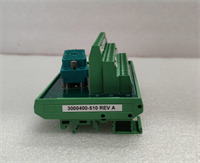
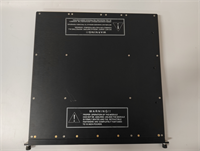
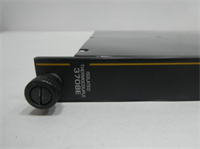
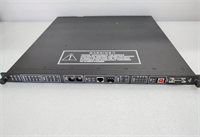
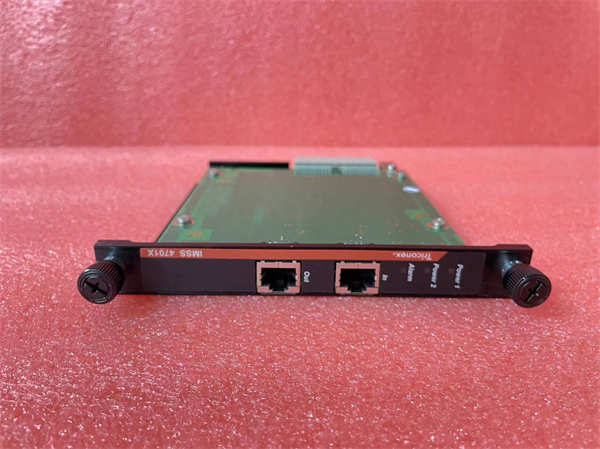
- Product Model: IMSS 4701X
- Manufacturer: Triconex (Emerson Automation Solutions)
- System Compatibility: Triconex Tricon (Classic) chassis – typically versions prior to v10
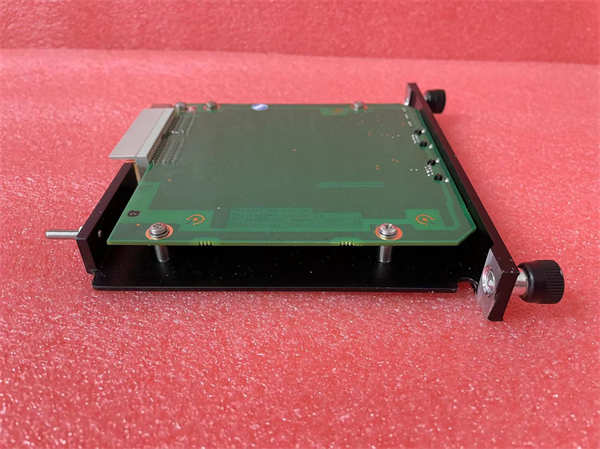
- Form Factor: Proprietary PCB card with edge connector, mounted internally in I/O chassis
- Function: Provides intra-chassis timing sync, module presence detection, and diagnostic data routing
- Power Supply: +5 VDC and ±12 VDC from backplane
- Communication: Proprietary high-speed serial bus between Main Processors (MPs) and I/O modules
- Diagnostic Features: LED indicators for module OK, sync status, and fault conditions
- Mounting: Secured via guide rails and retention screws inside I/O rack
- Revision Code: “X” suffix indicates specific hardware/firmware revision; must match chassis firmware
- Certifications: Designed for use in SIL 3 / Category 4 safety applications per IEC 61508/61511
System Role and Downtime Impact
The IMSS 4701X resides inside the I/O chassis of a Triconex Tricon safety system and is essential for maintaining the integrity of the triple-modular redundant (TMR) architecture. It ensures all three independent processing lanes remain synchronized and validates the health of connected I/O modules. If this board fails, the Tricon system may report a “Chassis Fault” or “I/O Bus Error,” potentially triggering a safe shutdown of the protected process—such as an emergency depressurization in an oil refinery or reactor trip in a chemical plant. Because the IMSS is not field-replaceable without chassis power-down, its failure often leads to unplanned process interruption with significant safety, environmental, and financial consequences.
Reliability Analysis and Common Failure Modes
Despite robust design for harsh industrial environments, units operating beyond 15–25 years face predictable aging issues:
- Backplane connector fatigue: Repeated thermal cycling causes micro-cracks in edge connector fingers, leading to intermittent sync loss.
- Clock oscillator drift: Aging crystal oscillators degrade timing precision, causing TMR comparison mismatches and nuisance trips.
- Power regulation failure: Onboard voltage regulators overheat due to dust accumulation or poor ventilation, destabilizing logic levels.
- Capacitor degradation: Tantalum capacitors on power rails develop high ESR or short-circuit, corrupting internal signals.
A critical vulnerability is the lack of external diagnostics—most faults manifest only as system-level alarms, requiring deep troubleshooting to isolate the IMSS as the root cause. Additionally, replacement requires matching not only the hardware revision but also compatibility with the Main Processor firmware version, adding complexity to spare management.
Preventive maintenance recommendations include:
- Performing periodic chassis diagnostics using Triconex Enhanced Diagnostic Monitor (EDM) software.
- Inspecting for discoloration, burnt smell, or capacitor bulging during scheduled outages.
- Verifying proper airflow and ambient temperature around I/O racks.
- Maintaining at least one verified spare IMSS 4701X powered up annually to prevent storage-related failures.
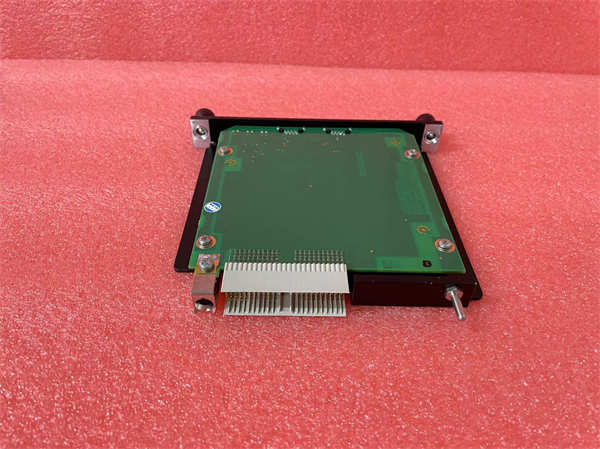
TRICONEX IMSS 4701X
Lifecycle Status and Migration Strategy
Emerson no longer produces the IMSS 4701X and has transitioned support to the Triconex Tricon v10/v11 and Triconex eXpress platforms. While limited repair services may exist through authorized partners, component obsolescence makes long-term reliability uncertain. Continued operation of systems dependent on this module carries escalating risk, especially in regulated industries where proof of hardware integrity is required for compliance (e.g., OSHA PSM, IEC 61511).
As an interim solution:
- Inventory and functionally test all existing spares using EDM or chassis self-test.
- Document exact firmware and hardware compatibility requirements.
- Implement enhanced monitoring of chassis health parameters to detect early degradation.
For sustainable operation, Emerson’s official migration path is upgrading to Triconex Tricon v11. This involves:
- Replacing I/O chassis and main processors
- Retaining field wiring via compatible terminal bases (in many cases)
- Reusing application logic with minimal revalidation (due to backward-compatible programming environment)
This upgrade preserves the proven TMR safety architecture while delivering modern cybersecurity features, improved diagnostics, and extended lifecycle support. For facilities with safety-critical processes expected to operate beyond 2027, initiating this migration during planned turnarounds is strongly advised.