 Tel:
Tel:  Email:
  WhatsApp:
 Description
Technical Specifications (For Spare Parts Verification)
- Product Model: AIH 3723X
- Manufacturer: TRICONEX / Schneider Electric
- System Platform: Tricon (Model 3008/3508/3700) and early Triconex SIS platforms
- Module Type: Analog Input (AI), triple-modular redundant (TMR) architecture
- Number of Channels: 16
- Input Signal Range: 4–20 mA (loop-powered)
- HART Support: Yes – transparent pass-through for HART digital communication
- Input Impedance: ≤ 250 Ω per channel
- Accuracy: ±0.1% of span (typical at 25°C)
- Diagnostic Coverage: Per-channel open-wire, over/under-range, and TMR mismatch detection
- Isolation: Channel-to-channel and channel-to-backplane optical isolation
- Certifications: IEC 61508 SIL 3, IEEE 603, UL 61010-1
- Mounting: Pluggable into standard Tricon main chassis (backplane-powered)
System Role and Downtime Impact
The AIH 3723X is a high-density analog input module commonly deployed in safety applications requiring multiple process measurements—such as reactor pressure monitoring, boiler drum level, or compressor surge control. It resides in the main Tricon chassis and feeds real-time analog data into the triple-redundant voting logic that determines whether a safety action (e.g., emergency shutdown) is required.
Because it supports HART, it also enables digital access to transmitter diagnostics and configuration during maintenance, which is critical for compliance with IEC 61511 proof testing requirements.
If the AIH 3723X fails—due to internal drift, open-wire fault, or backplane communication loss—the affected channels may report invalid values. In a TMR system, a single faulty channel is typically outvoted, but repeated or correlated failures can trigger a module fault and force the controller into a safe state. This may result in an unplanned plant trip. Replacement requires system downtime, module swap, and re-validation of all 16 channels via calibrated test sources.
Reliability Analysis and Common Failure Modes
Despite its robust TMR design, the AIH 3723X exhibits several age- and environment-related vulnerabilities:
- Precision resistor drift: The 250 Ω sense resistors and signal conditioning networks degrade over time due to thermal cycling, leading to gain or offset errors beyond specification—especially in high-ambient-temperature cabinets.
- HART modem IC failure: The integrated HART demodulator circuitry is sensitive to electrical noise and power transients; failure disables digital communication while analog signal may remain intact, creating a “silent” diagnostic gap.
- Backplane connector oxidation: Repeated thermal expansion or exposure to sulfur-bearing atmospheres (common in refineries) can corrode edge connector contacts, causing intermittent data loss or cyclic module resets.
- Capacitor aging in filtering circuits: Affects noise rejection performance, increasing susceptibility to EMI from VFDs or radio transmitters, potentially causing false high/low alarms.
A key weakness is the lack of per-channel hot-swap capability—any repair necessitates full module replacement, disrupting all 16 safety loops simultaneously.
Preventive maintenance should include:
- Performing annual loop calibration with certified mA sources
- Verifying HART communication integrity using a field communicator
- Inspecting for discoloration or heat marks near terminal blocks
- Monitoring Tricon diagnostics for “channel deviation” or “TMR mismatch” trends
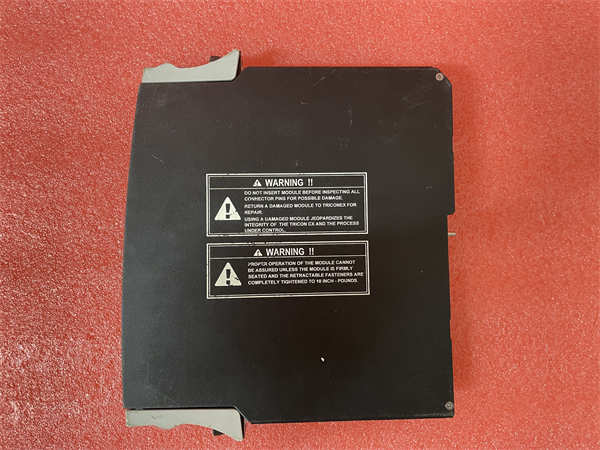
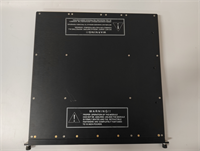
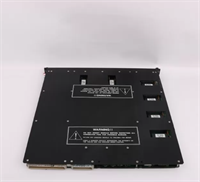
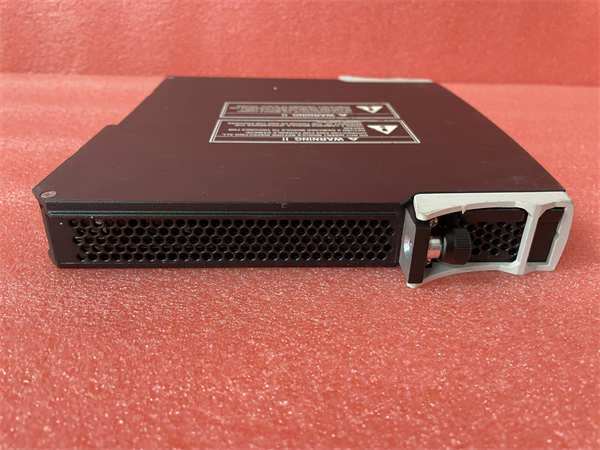
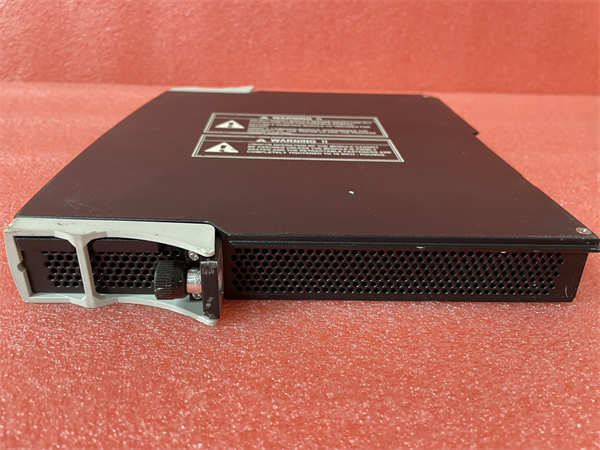
TRICONEX AIH 3723X
Lifecycle Status and Migration Strategy
Schneider Electric has discontinued the AIH 3723X as part of its strategic shift toward the Triconex eXPe platform, which offers enhanced cybersecurity, higher reliability, and modern I/O density. The module is no longer available through official channels, and factory support has been withdrawn. Continued use increases operational and compliance risk, particularly in regulated industries requiring auditable hardware integrity.
Immediate risk mitigation includes:
- Securing calibrated, tested spares with documented performance at multiple mA points (4, 12, 20 mA)
- Implementing redundant transmitters on critical loops to tolerate single-channel loss
- Archiving HART device descriptors (DDs) and configuration files for rapid recovery
The recommended long-term migration path is to upgrade to the Triconex eXPe system, using the MP3723 analog input module or equivalent, which provides:
- Improved accuracy (±0.05%) and noise immunity
- Enhanced HART 7 support with secure device management
- Built-in cybersecurity features compliant with IEC 62443-3-3
- Continued certification to IEC 61508:2010 SIL 3
This transition maintains the proven TMR safety architecture while restoring access to manufacturer support, firmware updates, and global spare parts availability. For sites unable to execute a full platform upgrade, engaging qualified third-party service providers for component-level refurbishment and recalibration may serve as a temporary bridge—but only with rigorous traceability and functional validation.