 Tel:
Tel:  Email:
  WhatsApp:
 Description
Technical Specifications (For Spare Parts Verification)
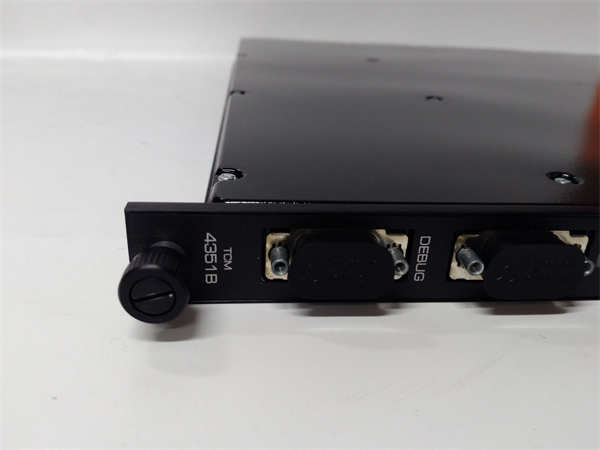
- Product Model: 4351B
- Manufacturer: Triconex (Schneider Electric)
- System Family: Tricon v9/v10 Safety Instrumented System (SIS)
- Output Channels: 4 independent TMR analog outputs
- Output Signal: 4–20 mA (sink/source capable, field-configurable)
- Load Drive Capability: Up to 750 Ω per channel
- Accuracy: ±0.1% of full scale at 25°C
- Diagnostic Coverage: >99% (per IEC 61508 for SIL 3 applications)
- Redundancy Architecture: Full Triple-Modular Redundancy (three independent channels voted per output)
- Backplane Compatibility: Requires Tricon MP or XP series main chassis (e.g., 4329A baseplate)
- Certification: IEC 61508 SIL 3, ANSI/ISA 84.01, EN 61511
-

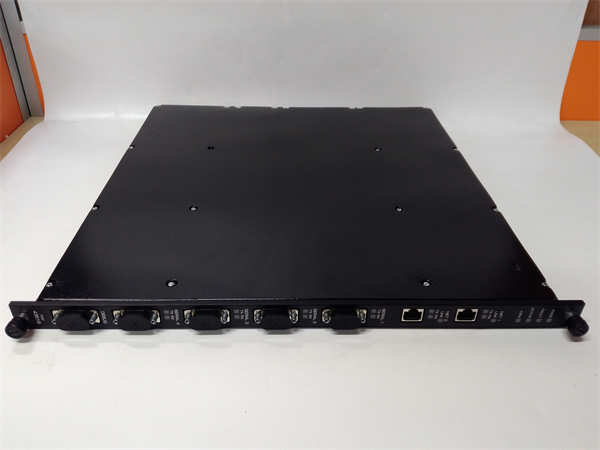
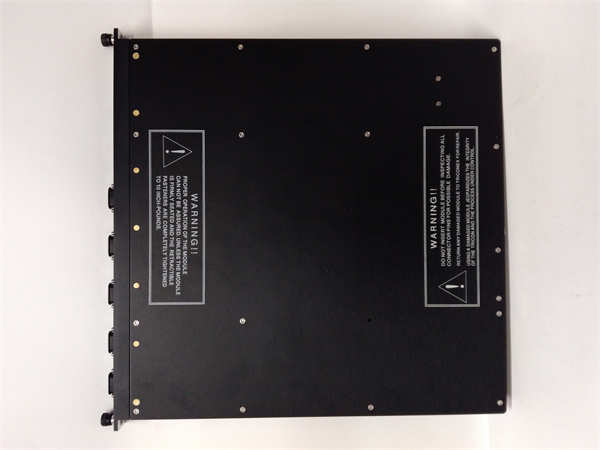
TRICONEX 4351B
System Role and Downtime Impact
The 4351B is a safety-critical analog output module deployed in Tricon-based Safety Instrumented Systems (SIS) across oil & gas, chemical, and power generation facilities. It translates voted digital commands from the Tricon main processors into analog signals that drive final elements such as emergency shutdown (ESD) valves, turbine trip solenoids, or boiler fuel cut-off actuators. Due to its role in executing safety functions, a failure—whether partial (single channel drift) or total (module fault)—can degrade the system’s ability to achieve a safe state during process excursions. In worst-case scenarios, undetected output deviation may lead to failure on demand, violating regulatory compliance (e.g., OSHA PSM, EPA RMP). Moreover, replacement delays due to parts scarcity can extend plant outages during turnarounds or force operation under management-of-change (MOC) waivers with elevated risk.
Reliability Analysis and Common Failure Modes
Despite its robust TMR design, the 4351B is subject to aging effects after decades of service. The most prevalent failure modes include drift in precision current-output op-amps due to thermal cycling, degradation of onboard reference voltage sources, and corrosion of terminal blocks in humid or corrosive environments. Electrolytic capacitors in the local power regulation circuit often dry out over time, causing intermittent resets or output instability. A key vulnerability is the module’s sensitivity to external wiring faults: short circuits or ground loops on field lines can damage output drivers, even though the TMR architecture masks single-point failures. For maintenance personnel, recommended practices include performing annual loop calibration with full three-channel verification, inspecting terminal torque and oxidation, ensuring proper shield grounding at one end only, and storing spares in static-shielded, climate-controlled packaging to preserve component reliability.
-
TRICONEX 4351B
Lifecycle Status and Migration Strategy
Schneider Electric has discontinued the 4351B as part of the broader phase-out of legacy Tricon v9/v10 hardware. No direct “drop-in” replacement exists under current Triconex product lines, and official technical support is restricted to existing service contracts with limited scope. Continued use carries escalating risk due to diminishing spare availability and absence of factory repair options. As an interim measure, operators may engage certified third-party vendors for functional testing, board-level rework (e.g., capacitor replacement), or strategic stockpiling of tested units. For long-term sustainability, Schneider recommends migrating to the Triconex eXP or Tricon CX platforms. The closest functional equivalent is the AO-4351C (or newer AO-4351D) module, which maintains similar I/O density and SIL 3 certification but requires a new chassis, updated firmware, and re-validation of all safety logic in TriStation 1131. This migration is typically executed during major safety system upgrades or plant life-extension projects. Early assessment of safety function dependencies and spare inventory status is essential to avoid unplanned operational exposure.