 Tel:
Tel:  Email:
  WhatsApp:
 Description
Key Technical Specifications (For Spare Part Verification)
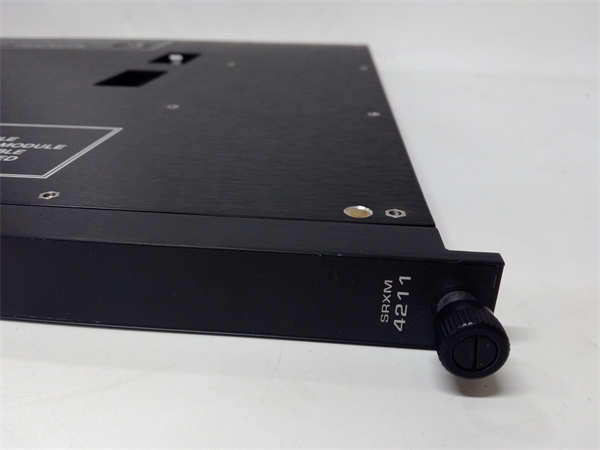
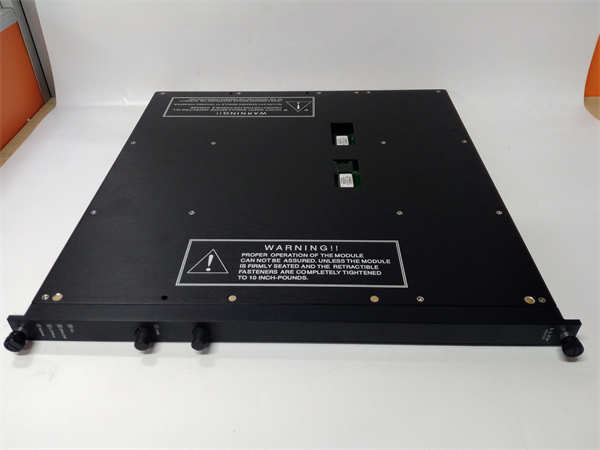
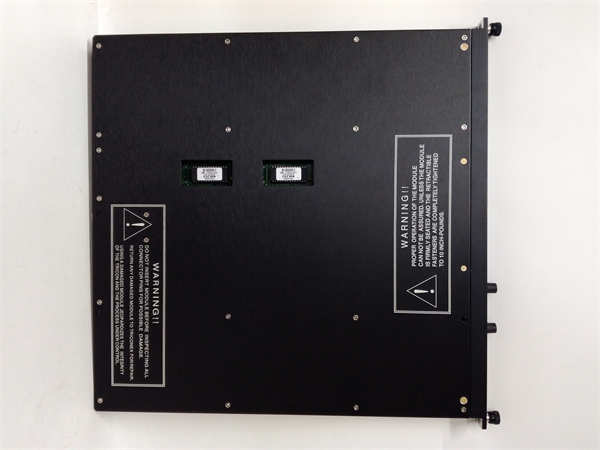
- Product Model: TRICONEX 4211
- Manufacturer: Schneider Electric (Triconex)
- System Platform: Tricon v9 or v10 Safety Instrumented System (SIS)
- Module Type: Digital Input (DI), 32 channels
- Input Voltage: 24 VDC nominal (wet or dry contact compatible)
- Safety Certification: Certified for SIL 3 per IEC 61508, FM, CSA, ATEX (depending on variant)
- Redundancy Architecture: Triple-modular redundant (TMR) – each channel processed by three independent circuits
- Diagnostic Coverage: >99% via continuous on-line diagnostics
- LED Indicators: Per-module status (OK, FAULT), no per-channel LEDs
- Backplane Compatibility: Requires Tricon v10 main chassis (e.g., 8310A, 8311A)
- Firmware Dependency: Must match Tricon MPU firmware version; mismatch causes module rejection
System Role and Downtime Impact
The TRICONEX 4211 resides in the I/O chassis of a Tricon safety system and serves as the primary interface for critical binary signals such as emergency shutdown buttons, pressure switch trips, or motor fault contacts. Operating within a Triple Modular Redundant (TMR) architecture, it ensures that even in the presence of a single hardware fault, safety functions remain operational.
If this module fails—due to internal fault, diagnostic trip, or communication loss with the Main Processing Unit (MPU)—the Tricon system may:
- Force a safety shutdown (trip) if the failed module carries active safety-critical inputs;
- Enter a degraded mode if redundancy allows, but with reduced diagnostic coverage;
- Prevent system restart until the faulty module is replaced and verified.
In continuous-process facilities like refineries or LNG plants, an unplanned SIS trip can result in multi-million-dollar production losses, regulatory reporting, and extended recovery timelines due to safety revalidation requirements.
Reliability Analysis and Common Failure Modes
Despite rigorous design for safety-critical use, aging 4211 modules exhibit known failure trends:
- Common Failure Modes:
- Internal TMR voter circuit degradation, causing spurious diagnostic faults;
- Input optocoupler drift, leading to incorrect state detection at marginal voltages;
- Backplane connector oxidation, resulting in intermittent communication with the MPU;
- Firmware incompatibility after MPU upgrades, triggering “module not recognized” errors.
- Design Weaknesses:
- No hot-swap capability—replacement requires system de-energization or safe bypass procedures;
- Limited field diagnostics—faults often require Triconex Enhanced Diagnostic Monitor (EDM) software to interpret;
- Sensitivity to ground loops if field wiring lacks proper isolation.
- Preventive Maintenance Recommendations:
- Perform annual EDM log reviews to detect early diagnostic warnings;
- Clean and reseat module connectors during scheduled outages;
- Verify input signal voltage levels meet minimum ON threshold (typically >15 VDC);
- Maintain exact firmware version alignment between MPU and I/O modules.
-

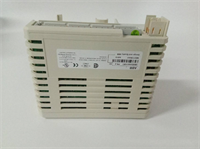
TRICONEX 4211
Lifecycle Status and Migration Strategy
- Official Status and Risks:
Schneider Electric has shifted focus to the Trident platform, which offers enhanced cybersecurity, Ethernet-based I/O, and longer lifecycle support. Continuing to operate 4211 modules entails:- Escalating spare costs and delivery uncertainty;
- Inability to integrate with modern asset management or cloud monitoring tools;
- Potential non-compliance with evolving functional safety audit expectations.
- Interim Mitigation Measures:
- Secure a minimum of two tested spares per critical system;
- Implement strict change control to avoid MPU firmware updates that invalidate 4211 compatibility;
- Use redundant I/O assignments where possible to tolerate single-module faults.
- Migration Path:
Schneider Electric’s official upgrade path is migration to the Triconex Trident system, using modules such as the 4351 (32-channel DI) or 4451 (universal I/O). This transition involves:- Replacing Tricon v10 chassis with Trident MPU and carrier;
- Rewiring field connections to new terminal blocks;
- Re-engineering safety logic in Tristation 1131 v5+ with updated function blocks;
- Re-validating all SIFs (Safety Instrumented Functions) per IEC 61511.
For sites with long asset life expectations, initiating a phased migration during turnaround windows is strongly advised to eliminate obsolescence exposure while maintaining safety integrity.