 Tel:
Tel:  Email:
  WhatsApp:
 Description
Key Technical Specifications (For Spare Part Verification)
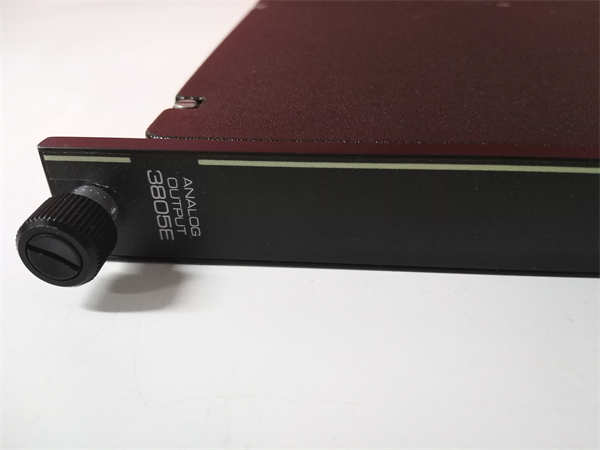
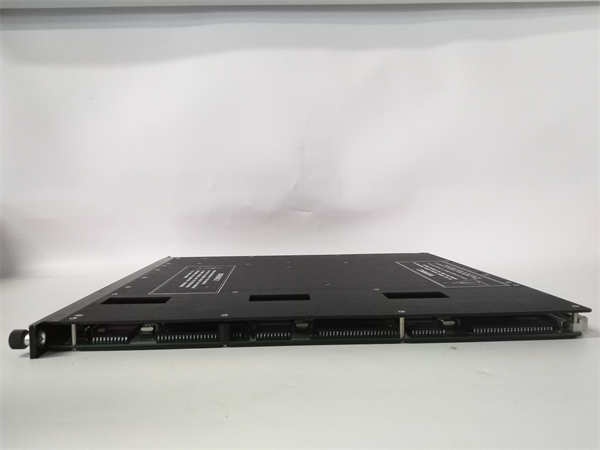
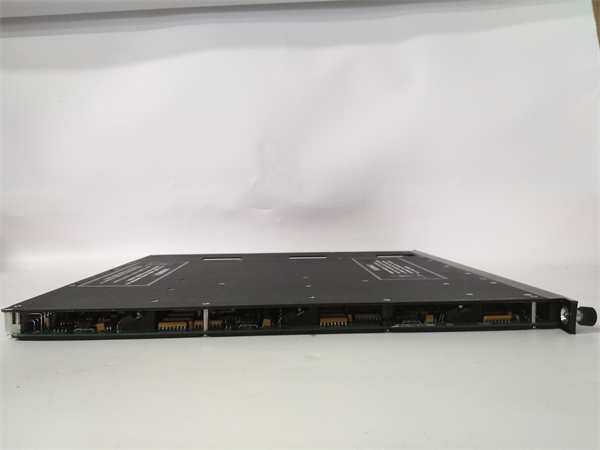
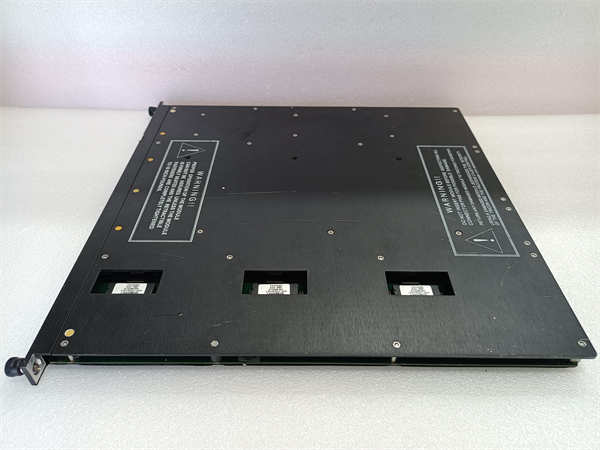
- Product Model: 3805E
- Manufacturer: Triconex (Schneider Electric)
- System Family: Tricon v9 / v10 (Model 3700/3800 series chassis)
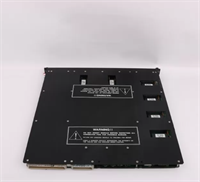
- Function: Main processor module (MPM) with triple-redundant microprocessors
- Architecture: Triple-Modular Redundancy (TMR) with voting on all I/O and internal signals
- Application Memory: 16 MB (supports up to ~25,000 FBD rungs or equivalent)
- Execution Speed: ~10 ms typical scan time for medium-sized safety programs
- Communication Interfaces: Proprietary backplane only; connects to COM, I/O, and power modules
- Diagnostic Coverage: >99% via continuous self-test and cross-channel comparison
- Power Consumption: ~15 W (supplied via Tricon chassis backplane)
- Mounting: Slot 1, 2, or 3 in a 3800-series chassis (three required for full TMR operation)
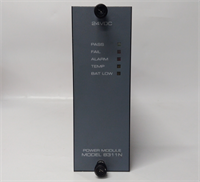
- Indicators: LEDs for ACTIVE, PASS, FAULT, and CHANNEL SYNC per processor
System Role and Downtime Impact
The 3805E is the computational core of legacy Tricon safety instrumented systems (SIS), widely deployed in oil & gas, chemical processing, and power generation for emergency shutdown (ESD), burner management (BMS), and turbine protection. Three 3805E modules operate in parallel, comparing results continuously; any single channel fault is masked without process interruption. However, if two channels fail or lose synchronization, the system initiates a safe trip. A complete failure—due to hardware defect, firmware corruption, or power anomaly—results in immediate de-energization of final elements (e.g., valves, breakers), halting production. Because these systems are often tied to regulatory compliance (e.g., IEC 61511 SIL 3), unplanned trips can incur significant financial and safety consequences.
Reliability Analysis and Common Failure Modes
Despite its robust TMR design, the 3805E is now vulnerable due to aging components and obsolete semiconductor sourcing. Common failure modes include:
- Memory bit errors: Degradation of DRAM or flash memory leads to application corruption or boot failure.
- Clock oscillator drift: Causes loss of inter-channel synchronization, triggering false trips.
- Backplane connector corrosion: Especially in high-humidity environments, resulting in intermittent communication or power dropout.
- Power supply ripple sensitivity: Aging capacitors in the Tricon power modules (e.g., 8312) can introduce noise that destabilizes processor voltage rails.
A key weakness is the lack of remote health monitoring—the only real-time indicators are front-panel LEDs. Diagnostics require local access via TriStation 1131 software, which itself runs only on legacy Windows OS versions (e.g., Windows XP/7). Preventive maintenance should include:
- Performing periodic “channel swap” tests to verify fault masking capability
- Verifying application checksums and version consistency across all three modules
- Inspecting chassis ventilation and cleaning dust from module fins
- Monitoring power supply output stability under load using an oscilloscope
TRICONEX 3805E
Lifecycle Status and Migration Strategy
Schneider Electric has formally discontinued the 3805E and ended all repair services. It is no longer covered under standard support contracts, and firmware updates ceased years ago. Continuing to operate this module in critical safety applications poses growing technical and compliance risks.
Short-term mitigation includes:
- Securing matched sets of tested 3805E modules (all same firmware and hardware revision)
- Maintaining isolated, air-gapped engineering workstations with TriStation 1131 installed
- Implementing rigorous change control to avoid unnecessary re-downloads
For long-term sustainability, Schneider recommends migration to the Triconex eXP or Tricon CX platforms. The 3815E (for eXP) or CX-MPM modules offer:
- Higher performance and larger application capacity
- Cybersecurity features (secure boot, role-based access)
- Support for modern engineering tools (TriStation 1131 on Windows 10/11)
- Extended lifecycle commitments (10+ years availability)
Migration requires recompilation (not rewrite) of existing safety logic, chassis replacement, and I/O marshaling updates—but preserves functional safety certification. A phased approach, starting with non-critical or lower-SIL loops, allows risk-managed modernization while maintaining operational integrity.