 Tel:
Tel:  Email:
  WhatsApp:
 Description
Technical Specifications (For Spare Parts Verification)
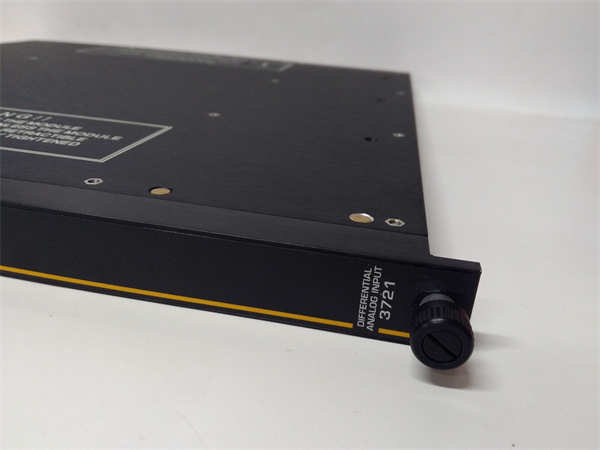
- Product Model: 3721
- Manufacturer: Triconex (Schneider Electric)
- System Family: Tricon v9/v10 Safety Instrumented System (SIS)
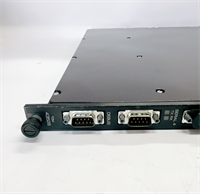
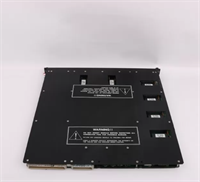
- Module Type: Tricon Communications Module (TCM)
- Function: Provides high-speed, fault-tolerant peer-to-peer communication between two or more Tricon main racks
- Communication Protocol: Proprietary Triconex TMR-synchronized serial link
- Redundancy Support: Full Triple-Modular Redundancy (three independent channels per link)
- Data Rate: Sufficient for real-time safety logic synchronization (exact rate proprietary)
- Backplane Compatibility: Requires Tricon MP/XP main processor chassis with dedicated TCM slot
- Diagnostic Coverage: Integrated self-test and cross-channel comparison for fault detection
- Operating Temperature: 0°C to 60°C
- Certification: IEC 61508 SIL 3, ANSI/ISA 84.01 compliant
System Role and Downtime Impact
The 3721 module is a foundational component in multi-chabinet Tricon safety architectures, commonly deployed in large oil refineries, LNG terminals, and offshore platforms where a single chassis cannot accommodate all I/O or where enhanced fault tolerance is required. It enables synchronized execution of safety logic across physically separate Tricon systems—for example, linking a primary process shutdown system with a fire & gas subsystem. A failure of the 3721—whether due to internal fault, communication timeout, or loss of synchronization—causes the linked chassis to operate independently, potentially leading to inconsistent safety responses or partial system disablement. In redundant configurations, this may force a downgrade from 2oo3 voting to simplex mode, reducing diagnostic coverage and increasing the probability of dangerous undetected failures. Such a state often triggers regulatory reporting obligations and may necessitate operational restrictions until restored.
Reliability Analysis and Common Failure Modes
Although engineered for high reliability, the 3721 is susceptible to long-term degradation after 15–25 years in service. Common failure modes include aging of onboard crystal oscillators leading to timing drift, corrosion of backplane edge connectors causing intermittent contact, and failure of surface-mount capacitors in power filtering circuits. The module’s reliance on precise clock synchronization makes it sensitive to power supply noise or ground loops between chassis. A design limitation is its dependence on proprietary firmware stored in non-volatile memory without modern error correction—exposure to electromagnetic interference or voltage sags can corrupt configuration data, resulting in boot failure or link negotiation errors. For maintenance teams, recommended actions include periodic verification of inter-chassis communication status via TriStation 1131, inspection of chassis grounding and cable shielding, ensuring clean and stable 24 VDC supply to all linked racks, and maintaining powered spares in ESD-safe, temperature-controlled storage.
-

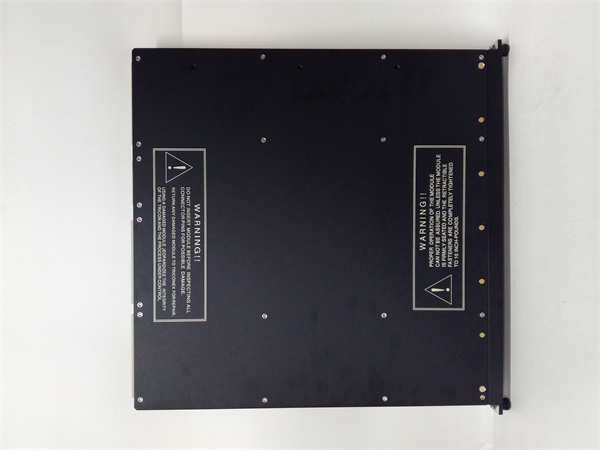
TRICONEX 3721
Lifecycle Status and Migration Strategy
Schneider Electric has officially discontinued the 3721 as part of the legacy Tricon v9/v10 retirement plan. No direct replacement exists in current Triconex portfolios, and OEM repair or calibration services are no longer available. Continued operation relies on dwindling surplus inventory, posing significant risk during unscheduled failures. As a short-term mitigation, facilities may implement strategic stockpiling of tested modules or engage specialized third-party vendors for functional validation and board-level repair. For sustainable operation, Schneider recommends migrating to the Tricon CX or eXP platform, which uses modern Ethernet-based TriBus+ or Safety Network protocols for inter-controller communication. This transition requires new chassis, updated I/O modules, re-engineering of safety applications in TriStation 1131, and full re-validation of all safety functions—a process typically aligned with plant turnaround schedules or digital transformation initiatives. Proactive lifecycle planning is essential to maintain compliance and avoid forced operational curtailments due to component obsolescence.