 Tel:
Tel:  Email:
  WhatsApp:
 Description
Key Technical Specifications (For Spare Parts Verification)
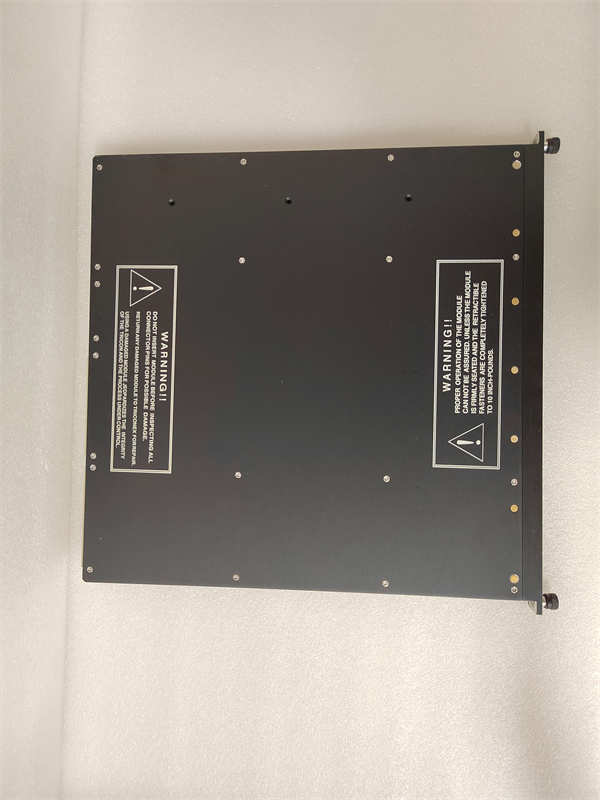
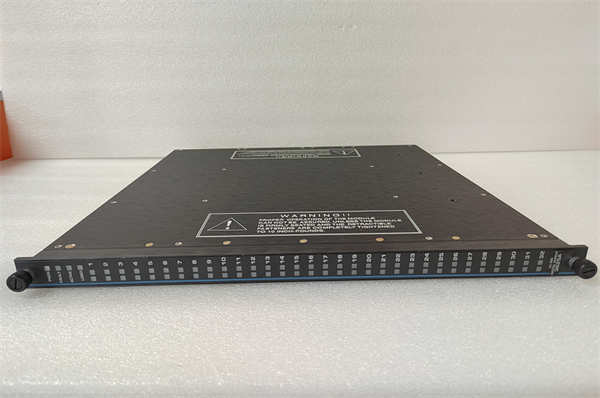
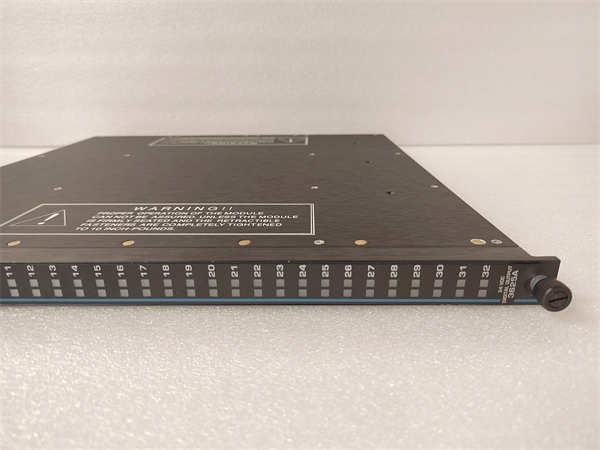
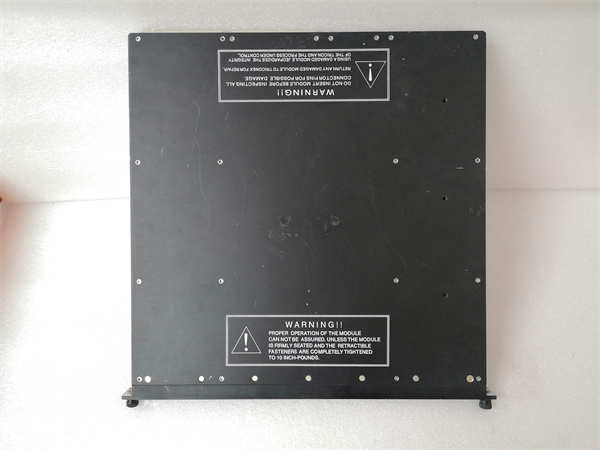
- Product Model: 3625A
- Manufacturer: Triconex (Schneider Electric)
- System Platform: Tricon v10 and earlier TMR safety controllers
- Module Type: Analog Output (AO), 8 channels
- Output Signal: 4–20 mA per channel, sourced (active) output
- Load Capability: Up to 750 ohms per channel
- Resolution: 12-bit
- Accuracy: ±0.1% of full scale at 25°C
- Diagnostic Coverage: Built-in TMR voting and channel-level diagnostics (open circuit, overrange)
- Power: Supplied via Tricon chassis backplane (redundant +5 V and ±12 V rails)
- Physical Form: Half-height I/O module, requires specific slot assignment in Tricon chassis
- Firmware Dependency: Compatible with Tricon MP3008/MP3009 main processors running firmware prior to v11.x
System Role and Downtime Impact
The 3625A is a safety-critical output interface in Tricon-based Safety Instrumented Systems (SIS), commonly deployed in refineries, chemical plants, and offshore platforms. It converts voted digital commands from the triple-redundant main processors into analog signals that drive actuators such as emergency shutdown (ESD) valves or turbine trip solenoids. Because it operates within a TMR architecture, a single channel failure is typically masked—but complete module failure or undetected drift can lead to either a dangerous failure (failure to trip) or a safe but costly spurious trip.
In continuous-process environments, an unplanned SIS activation due to faulty output can result in multi-million-dollar production losses. Conversely, latent degradation in the 3625A’s output accuracy may go unnoticed until a demand event occurs, risking non-compliance with IEC 61511 functional safety requirements. Since the module cannot be hot-swapped in most legacy Tricon systems, replacement usually requires a planned shutdown window.
Reliability Analysis and Common Failure Modes
Despite its robust TMR design, the 3625A is vulnerable to component aging. The most prevalent failure mechanisms include: electrolytic capacitor degradation in the power regulation circuitry, leading to output instability; DAC (digital-to-analog converter) drift due to thermal stress over time; and corrosion on terminal blocks or backplane connectors in high-humidity or corrosive atmospheres.
A key weakness lies in its reliance on precision analog components that are no longer available from original suppliers—making board-level repair increasingly difficult. Additionally, early revisions lack comprehensive self-diagnostics for subtle gain/offset errors, meaning output deviations may not trigger alarms until they exceed trip thresholds.
Maintenance best practices include: performing periodic loop calibration checks using a certified mA source/sink, inspecting terminal torque and wire insulation integrity, and monitoring module diagnostic status via Triconex Enhanced Diagnostic Monitor (EDM) software. Any unit exhibiting intermittent communication faults or unexplained output offsets should be removed from service immediately.
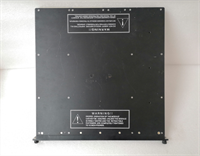
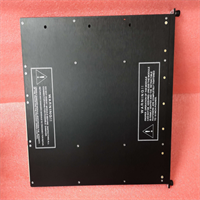
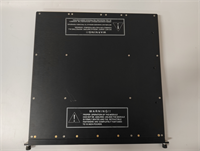
TRICONEX 3625A
Lifecycle Status and Migration Strategy
Schneider Electric has formally discontinued the 3625A as part of the Tricon v10 platform sunset. No direct replacement exists within the same form factor, and new production is unavailable. Continuing to operate with this obsolete module introduces escalating risks: dwindling supply of functionally tested units, absence of factory repair options, and potential non-compliance during safety audits due to unsupported hardware.
As an interim measure, facilities should secure at least one fully tested spare and consider third-party refurbishment services that perform component rework and full functional validation. For long-term sustainability, Schneider recommends migrating to the Triconex Trident platform (e.g., using the 3725E analog output module), which offers enhanced diagnostics, Ethernet connectivity, and compatibility with modern engineering tools like Triconex Workbench.
However, migration requires a full safety system revalidation—including SIL verification, loop retesting, and operator retraining. Until then, rigorous spares management, regular proof testing, and integration with asset health monitoring tools are essential to maintain safety integrity and avoid unplanned process interruptions.