 Tel:
Tel:  Email:
  WhatsApp:
 Description
Technical Specifications (For Spare Part Verification)
- Product Model: 3481
- Manufacturer: TRICONEX
- System Family: Tricon v9 / v10 Triple Modular Redundant (TMR) Safety System
- Output Type: 32 Form A (normally open) electromechanical relays
- Contact Rating: 2 A @ 30 VDC (resistive), 1 A @ 125 VAC
- Voltage Input: Powered via Tricon chassis backplane (no external power required for logic)
- Diagnostic Coverage: Full on-line diagnostics per IEC 61508, supports TMR voting integrity
- Mounting: Occupies one I/O slot in Tricon main chassis (e.g., 8310A/8311A)
- Certification: Certified to IEC 61508 SIL 3, ANSI/ISA S84.01, and API RP 14C
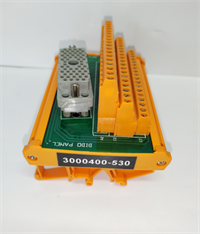
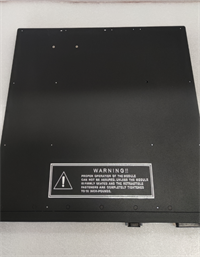
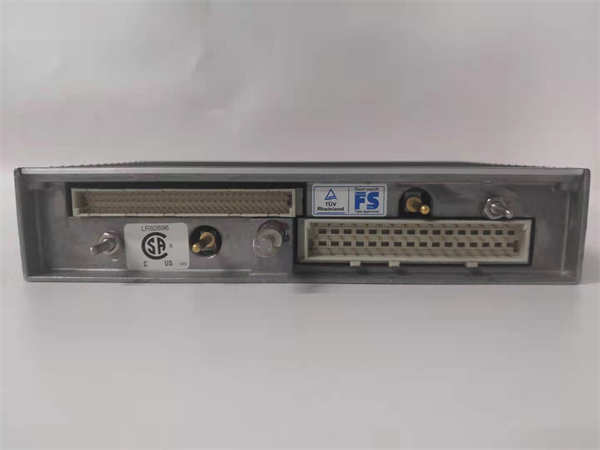
- Physical ID: Label includes “3481” and firmware revision (e.g., Rev C); must match existing system configuration
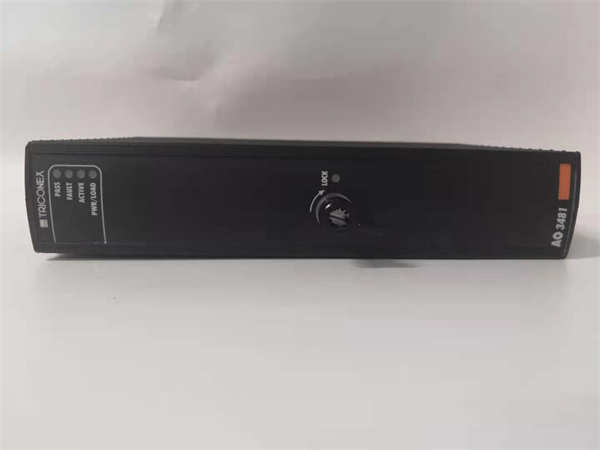
TRICONEX 3481
System Role and Downtime Impact
The TRICONEX 3481 is a final element driver in Tricon-based safety instrumented systems (SIS). It resides in the output stage of the TMR architecture, where it receives voted trip commands from the three main processors and actuates field devices such as solenoid valves, motor starters, or alarm beacons. Because it implements the physical disconnection or activation required for safety functions, its failure directly compromises the integrity of the entire SIF (Safety Instrumented Function). If the 3481 fails undetected—due to relay contact welding, coil burnout, or internal diagnostic fault—the system may not execute a shutdown when demanded, leading to potential process hazards. In continuous operations like oil & gas, chemicals, or power generation, an unrecoverable 3481 failure typically forces a full plant or unit shutdown until a verified spare is installed and the SIS is revalidated.
Reliability Analysis and Common Failure Modes
Despite its robust TMR design, the 3481 contains inherent wear components that degrade over time. The most common failure mode is relay contact degradation, including sticking (welding closed due to high inrush currents) or increased contact resistance from arcing, especially when switching inductive loads without proper suppression. A secondary issue is coil failure from thermal stress during prolonged energization or voltage surges on the field wiring.
The module’s primary weakness lies in its electromechanical nature—unlike solid-state outputs, relays have finite mechanical life (typically rated for 100,000–500,000 operations). In high-cycle applications (e.g., frequent testing or nuisance trips), this lifespan can be exhausted prematurely. Additionally, the module is sensitive to external electrical transients; without adequate surge protection on field wiring, lightning or switching spikes can damage relay drivers or diagnostic circuitry.
For preventive maintenance, focus on:
- Regularly inspecting field wiring for signs of arcing or insulation breakdown
- Verifying that switched loads do not exceed contact ratings (use snubber circuits for inductive loads)
- Performing periodic functional tests via the Triconex Enhanced Diagnostic Monitor (EDM) to confirm relay operation and diagnostic coverage
- Monitoring for “stuck” relays by comparing commanded vs. actual field device status during partial stroke tests
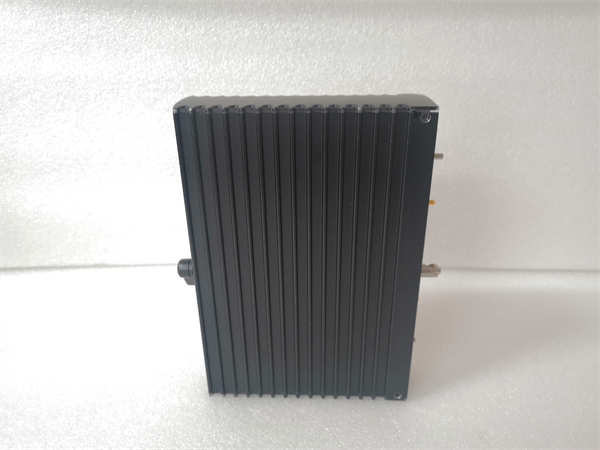
TRICONEX 3481
Lifecycle Status and Migration Strategy
The TRICONEX 3481 has been officially discontinued by Schneider Electric. No new units are being produced, and remaining stock consists of refurbished or New Old Stock (NOS) inventory with uncertain traceability. Continued use carries significant risk: lead times can exceed 12 weeks, prices have risen 300–500% over the past decade, and counterfeit parts have entered the gray market.
As a temporary measure, facilities may consider:
- Securing multiple verified spares now to cover 5–10 years of operational risk
- Implementing board-level repair services from certified third parties (though this voids original certification)
- Isolating non-critical outputs to reduce cycling stress on remaining modules
For long-term sustainability, Schneider Electric recommends migrating to the Triconex eXtended Architecture (TXS) platform. The direct functional successor is the 3581E (32-channel solid-state output module) or 3582E (relay version), which offer higher reliability, integrated HART pass-through, and compatibility with modern TXS controllers. However, migration requires:
- Replacement of the entire Tricon chassis with a TXS rack
- Reconfiguration of I/O assignments in Triconex Workbench
- Re-validation of all SIFs per IEC 61511
- Potential rewiring due to terminal block differences
Given the critical safety role of the 3481, any migration project should be planned as part of a broader SIS lifecycle management initiative, with thorough risk assessment and regulatory documentation.