 Tel:
Tel:  Email:
  WhatsApp:
 Description
Key Technical Specifications (For Spare Part Verification)
- Product Model: 3481
- Manufacturer: Triconex (Schneider Electric)
- System Family: Triconex TMR safety system (Classic Tricon platform, pre-Triconex v10)
- Input Channels: 16 differential analog inputs
- Supported Signals: 4–20 mA current loops (with HART pass-through capability)
- Input Impedance: 250 Ω per channel
- Diagnostic Coverage: >99% via continuous TMR voting and channel self-test
- Redundancy Architecture: Fully triplicated—each channel processed independently by three microprocessors
- Backplane Compatibility: Requires Classic Tricon main chassis (e.g., 3201/3202/3203) with compatible power and main processor modules
- Certification: Certified to IEC 61508 SIL 3, ANSI/ISA 84.01
- Mounting: Hot-swappable module in 19″ safety rack
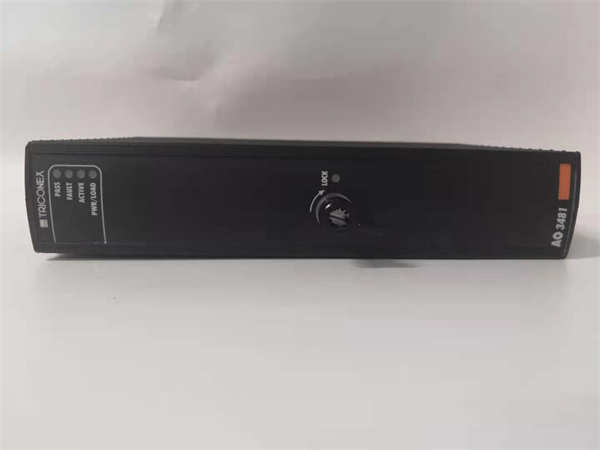
- LED Indicators: Per-channel OK/FAULT status and module-level TRIP indicator
System Role and Downtime Impact
The Triconex 3481 is a foundational component in legacy safety instrumented systems used across oil & gas, chemical processing, and power generation. It acquires analog process variables—such as reactor pressure, turbine vibration, or separator level—that feed directly into emergency shutdown (ESD), fire & gas (F&G), or burner management logic. Due to its role in SIL-rated functions, a failed 3481 can trigger a spurious trip if diagnostics detect internal inconsistency, or worse, fail dangerously silent if undetected (though TMR design makes this extremely unlikely). In either case, loss of this module typically forces the protected unit into a safe state, halting production. Given its deployment in high-hazard areas, unplanned trips not only incur significant revenue loss but may also require lengthy safety revalidation before restart.
Reliability Analysis and Common Failure Modes
The 3481 benefits from Triconex’s robust TMR architecture, which inherently masks single-point hardware faults. However, after 15–25 years of service, aging-related issues emerge. The most common failure mode is channel drift or open-circuit detection, often caused by degradation of precision resistor networks or input op-amps. A second frequent issue is backplane connector wear, leading to intermittent communication with the main processors—manifesting as transient “channel fault” alarms. Additionally, power supply ripple from aging chassis PSUs can exceed tolerance, causing module reset or diagnostic errors.
Design limitations include non-replaceable internal components and dependence on legacy surface-mount technology now difficult to source. Preventive maintenance should include: (1) quarterly review of Triconex diagnostic logs for channel health trends; (2) visual inspection of module seating and connector integrity during outages; (3) verification of 4–20 mA loop resistance and grounding; and (4) storage of at least one tested spare with matching hardware revision (e.g., 3481-xxxA vs. -xxx B).
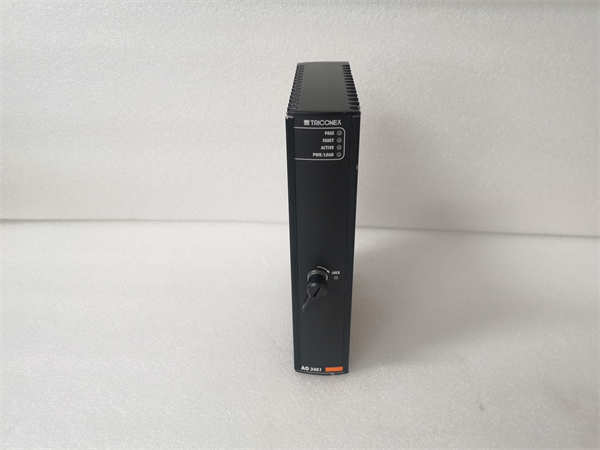
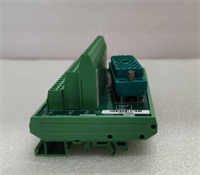
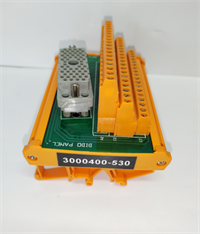
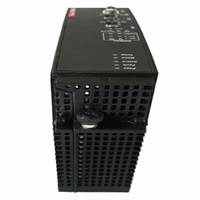
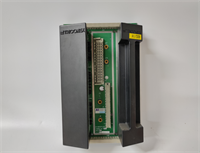
Triconex 3481
Lifecycle Status and Migration Strategy
Schneider Electric has transitioned support away from the Classic Tricon platform (including the 3481) toward the Triconex v10/v11 (TMRx) architecture. While limited repair services may exist, no new 3481 modules are manufactured, and firmware updates are frozen. Continued use carries risk of extended downtime due to spare unavailability.
Short-term mitigation includes sourcing vetted used units with full diagnostic and loop-test validation or using authorized Triconex service centers for board-level repair. The strategic migration path is upgrade to Triconex v10/v11 with equivalent TMR analog input modules (e.g., 3482 or 3483). This modernization retains the TMR safety philosophy while offering enhanced diagnostics, higher channel density, and support for modern engineering tools (TriStation 1131 v5+). Migration requires: (1) replacement of chassis, power supplies, and I/O modules; (2) recompilation of safety application logic; and (3) re-validation of all SIFs per IEC 61511. Though capital-intensive, this extends system life by 15+ years and ensures ongoing compliance with functional safety standards. For facilities deferring full migration, maintaining a “certified spare” 3481—tested under load and stored in ESD-safe conditions—is essential for operational continuity.