 Tel:
Tel:  Email:
  WhatsApp:
 Description
Technical Specifications (For Spare Part Verification)
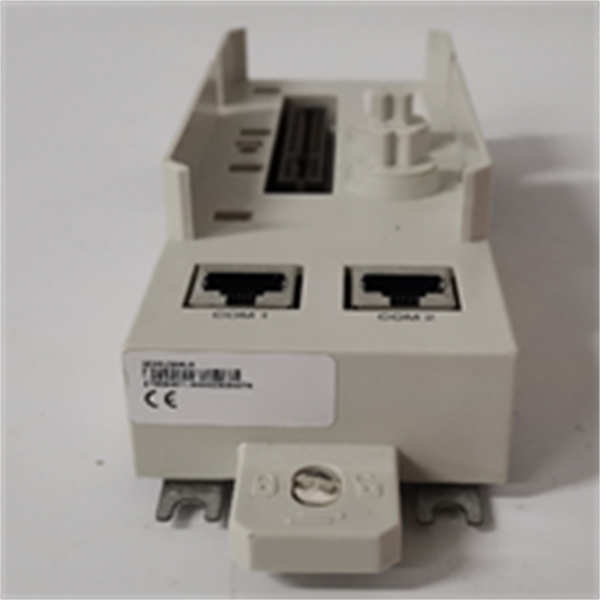
- Product Model: TP853
- ABB Order Code: 3BSE018126R1
- Manufacturer: ABB
- System Platform: AC 800M (part of ABB’s 800xA automation architecture)
- Module Type: Analog input termination unit (used with CI854 or similar communication interfaces)
- Channel Count: 8 channels
- Supported Signal Types: 4–20 mA (with HART), 0–20 mA, ±10 V, Pt100 RTD (depending on base I/O module configuration)
- Field Connection: Screw terminals (removable terminal blocks)
- Isolation: Channel-to-bus isolation per IEC 61010
- Operating Temperature: 0°C to +60°C
- Mounting: DIN rail mountable, designed for use in I/O cabinets with standard AC 800M backplane assemblies
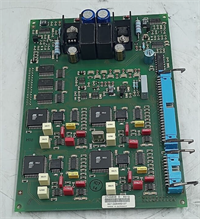
- Physical Identification: Green PCB, labeled “TP853”, with ABB logo and order code silkscreened
System Role and Downtime Impact
The TP853 termination module is a passive but essential component in ABB’s AC 800M I/O architecture. It serves as the physical interface between field instruments (such as pressure transmitters, temperature sensors, or flow meters) and the active I/O modules (e.g., AI810) mounted on the same rail. While it contains no active electronics, it routes signals, provides terminal access, and often includes fuse protection or test points.
Although not a “smart” module, its failure—typically due to terminal corrosion, mechanical damage, or internal trace fracture—can cause open circuits or shorted signals, leading to invalid or frozen process values in the control system. In a refinery or chemical plant, loss of multiple temperature or pressure readings from a single TP853 can trigger safety interlocks or force manual operation. Because these modules are often densely packed in I/O cabinets, replacing a faulty unit requires careful de-energization and wiring documentation, increasing mean time to repair (MTTR).
Reliability Analysis and Common Failure Modes
The TP853 is a passive printed circuit board assembly with screw terminals, making its reliability heavily dependent on installation quality and environmental conditions. The most common failure mode is terminal block degradation: repeated thermal cycling causes brass terminals to loosen, increasing contact resistance and leading to signal drift or intermittent loss. In high-humidity or corrosive environments (e.g., offshore platforms), oxidation of copper traces near terminals can create high-impedance paths.
Mechanical stress is another concern—improper wire insertion or excessive torque during maintenance can crack solder joints or delaminate PCB traces. Although rare, contamination from dust, oil, or conductive debris can cause channel-to-channel leakage, especially in voltage-input configurations.
Preventive maintenance should include: annual torque checks on terminal screws (per ABB spec: 0.5 Nm); visual inspection for discoloration or arcing marks; and verification of signal continuity during plant outages. When handling spare TP853 units, avoid static discharge and ensure terminal blocks are fully seated before installation.
TP853 3BSE018126R1 ABB
Lifecycle Status and Migration Strategy
ABB has officially discontinued the TP853 (3BSE018126R1) as part of the broader rationalization of legacy AC 800M I/O components. While the AC 800M platform itself remains supported, many older termination and I/O modules have been phased out in favor of newer series (e.g., TU/TB85x with enhanced diagnostics). ABB no longer produces this module, and technical documentation is restricted to existing customer portals.
Continued reliance on this part carries risk: counterfeit or misrepresented units have appeared in the gray market, and genuine spares are dwindling. Unlike active modules, the TP853 cannot be repaired—replacement is the only option.
In the short term, users should audit their installed base and secure verified spares. Each incoming unit must be inspected for correct order code, PCB revision, and terminal integrity.
For long-term sustainability, ABB recommends migrating to the TU853 or TB853 series termination units, which are mechanically and functionally compatible with existing AI810/AI815 modules but feature improved terminal design and labeling. This is a direct “form-fit-function” replacement that does not require re-engineering—only physical swap during a planned outage. However, if the entire I/O system is being modernized, transitioning to the AC 800M Compact or Ability™ System 800xA with Select I/O offers future-proofing, reduced footprint, and enhanced cybersecurity. Planning this migration now mitigates future operational risk while leveraging existing control logic investments.