 Tel:
Tel:  Email:
  WhatsApp:
 Description
Key Technical Specifications (For Spare Parts Verification)
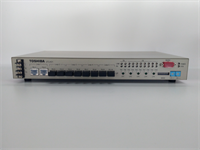
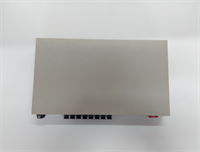
- Model: UTLH21
- Manufacturer: Toshiba
- System Family: FA-M3 modular PLC platform
- Module Type: High-speed counter input unit
- Number of Channels: 4 independent channels
- Input Signal Type: Open-collector or line-driver pulse inputs (compatible with incremental encoders)
- Maximum Counting Speed: 200 kHz per channel (typical)
- Counting Modes: Up/down, up-only, A/B phase quadrature (1x, 2x, 4x decoding)
- Isolation: Optical isolation between field inputs and internal logic (typically 500 VAC)
- Power Consumption: Approx. 0.8 A from +5 VDC backplane supply
- Mounting: Plugs into FA-M3 base unit (e.g., UTB1, UTB2) – requires specific slot assignment
- Configuration: Set via DIP switches on module front panel (e.g., filter time, counting mode)
- Status Indicators: LED per channel (green = power/ready, red = count/fault)
System Role and Downtime Impact
The UTLH21 is typically installed in FA-M3 racks controlling high-speed machinery such as labelers, fillers, case packers, or conveyor indexing systems. It receives pulses from rotary encoders mounted on motor shafts or web tension rollers and provides real-time position or speed data to the FA-M3 CPU (e.g., UTK5 or UTK7). This data drives critical functions like cut-to-length, batch counting, or synchronous motion.
If the UTLH21 fails—due to input circuit damage, firmware lockup, or power instability—the PLC loses accurate position feedback. In a bottling line, this may cause overfilling or misaligned capping; in a printing press, it can lead to color registration errors. While the machine may continue running in open-loop mode, product quality degrades rapidly, often triggering downstream rejects or manual stoppages. In fully automated lines without redundancy, UTLH21 failure typically results in immediate production halt until replaced.
Reliability Analysis and Common Failure Modes
Despite robust industrial design, the UTLH21 exhibits predictable aging issues:
- Input optocouplers degrade over time, especially when exposed to frequent voltage spikes from unshielded encoder cables—leading to missed counts or erratic behavior.
- DIP switch contacts oxidize or become intermittent, causing incorrect counting mode selection that is difficult to diagnose.
- Internal FPGA or ASIC latch-up can occur after repeated power cycling or EMI exposure, resulting in complete channel freeze.
- Backplane connector wear from thermal expansion cycles causes poor contact, manifesting as intermittent communication loss with the CPU.
A key vulnerability is the lack of diagnostic messaging: the FA-M3 system only reports generic I/O errors, not channel-specific faults. Technicians must use external oscilloscopes or counters to verify signal integrity—a time-consuming process during outages.
Recommended preventive actions include:
- Installing ferrite cores and shielded twisted-pair cables on all encoder lines
- Verifying DIP switch settings during routine shutdowns
- Monitoring for rising error counts in the PLC program as an early warning sign
- Keeping a known-good spare powered periodically to prevent capacitor degradation
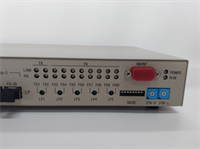
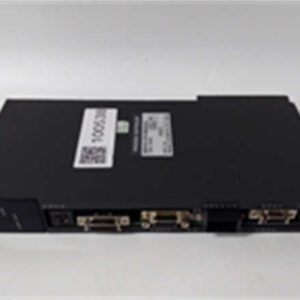
TOSHIBA UTLH21
Lifecycle Status and Migration Strategy
Toshiba officially ended support for the FA-M3 platform in the late 2010s, shifting focus to the SCiB and later TOSMAP-based controllers. The UTLH21 is no longer manufactured, and official repair services have been discontinued. Spare units are available only through third-party brokers, often at premium prices and without functional testing guarantees.
Continued reliance on this module introduces significant operational risk, particularly in food & beverage or automotive plants where uptime is critical.
Short-term mitigation options include:
- Sourcing and functionally testing multiple spares for hot-swap readiness
- Implementing external high-speed counters (e.g., Omron CJ1W-CT021) with discrete I/O integration—though this adds complexity
- Engaging specialized firms for board-level component replacement (e.g., optocoupler or capacitor renewal)
For sustainable operation, migration to a modern PLC platform is advised. Viable paths include:
- Toshiba’s own TOSMAP series, which offers native high-speed counter modules with Ethernet/IP and data logging
- Mitsubishi iQ-R or Q Series, with compatible high-speed I/O and strong FA heritage
- Rockwell CompactLogix, using 1769-HSC or 5069-HSC modules with Studio 5000 integration
Migration requires:
- Rewiring field devices to new I/O terminals
- Re-engineering ladder logic to match new instruction sets
- Recalibrating motion profiles and batch parameters
- Updating electrical schematics and safety documentation
Given the UTLH21’s role in precision motion control, organizations should treat its obsolescence as a strategic risk—not merely a component issue—and initiate migration planning before a forced outage occurs.