 Tel:
Tel:  Email:
  WhatsApp:
 Description
Technical Specifications (For Spare Part Verification)
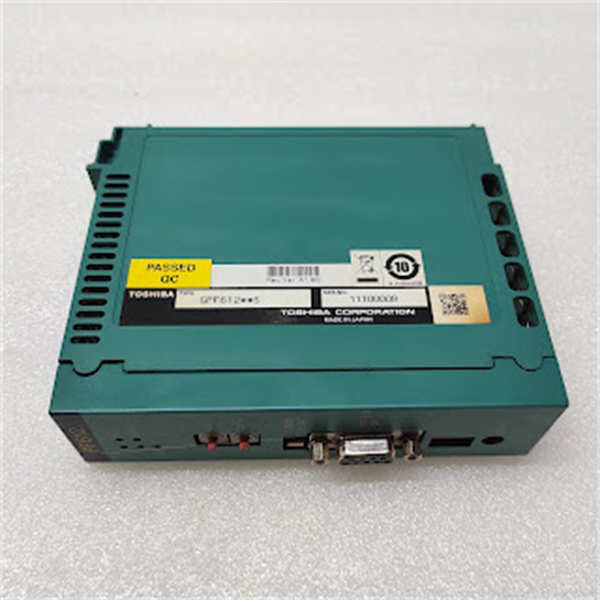
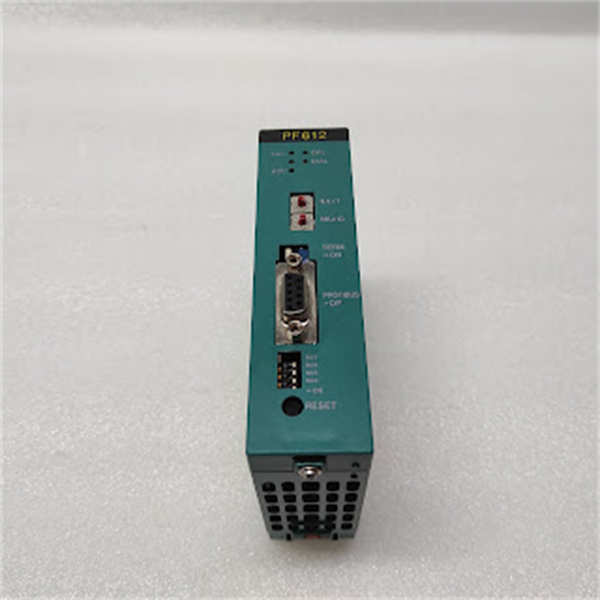
- Model: PF612
- Manufacturer: Toshiba International Corporation
- System Family: VF-S15e Series AC Variable Frequency Drives
- Rated Motor Power: 3.7 kW (5 HP) at 400 V AC
- Input Voltage: 3-phase 200–240 V AC
- Output Current: 9.5 A (continuous)
- Switching Devices: Integrated IGBT inverter bridge with built-in freewheeling diodes
- Cooling Method: Forced air via internal fan (heat sink mounted)
- Protection Features: Built-in short-circuit, overcurrent, and overtemperature detection
- Mounting Type: Screw-fixed onto VF-S15e main chassis with direct DC bus connection
- Physical Dimensions: Approx. 180 mm × 120 mm × 40 mm (L×W×H)
System Role and Downtime Impact
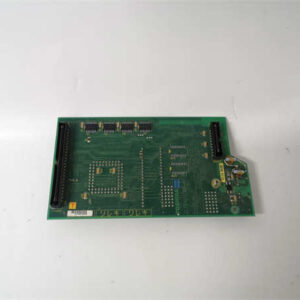
The Toshiba PF612 is not a standalone unit—it is the core power electronics assembly inside the VF-S15e adjustable speed drive. It converts rectified DC bus voltage into three-phase PWM output to control an AC induction motor. In industrial settings—such as water treatment plants, packaging lines, or HVAC systems—the drive often controls critical auxiliary equipment. If the PF612 fails due to IGBT short, gate driver damage, or capacitor degradation, the entire drive shuts down, stopping the connected motor immediately. Because the VF-S15e lacks modular redundancy, there is no bypass or limp-home mode. This can lead to unplanned downtime, production loss, or even safety implications if the driven equipment is part of a ventilation or cooling loop.
Reliability Analysis and Common Failure Modes
The PF612’s primary failure mechanisms stem from thermal stress and component aging. The most frequent cause of failure is IGBT thermal runaway due to degraded thermal paste between the module and heat sink, leading to overheating during sustained operation. Electrolytic capacitors on the DC bus lose capacitance over time, increasing ripple current stress on the IGBTs and triggering overcurrent faults. Additionally, the gate driver circuitry is vulnerable to voltage spikes from poor grounding or regenerative energy in high-inertia loads, which can silently degrade performance before catastrophic failure.
Key preventive measures include:
- Inspecting and reapplying thermal interface material during major maintenance outages
- Measuring DC bus capacitance annually using an ESR meter; replace if >20% below nominal
- Ensuring clean airflow through the drive cabinet and verifying fan operation
- Avoiding frequent start-stop cycles on high-inertia loads without proper braking resistors
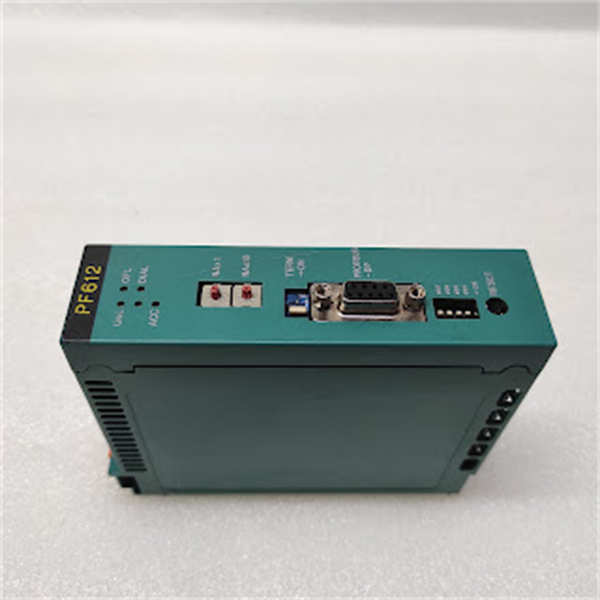
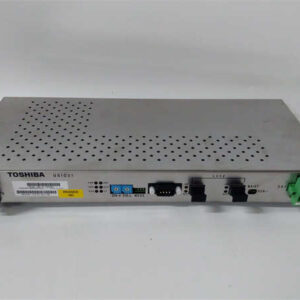
TOSHIBA PF612
Lifecycle Status and Migration Strategy
Toshiba discontinued the VF-S15e platform years ago, with the PF612 no longer listed in any active product catalog. Official technical support and genuine spare parts are unavailable. Continued use relies entirely on the secondary market, where units may be salvaged from scrapped equipment without functional validation—posing significant reliability risks.
Short-term risk mitigation includes:
- Securing tested PF612 modules from automation lifecycle specialists with burn-in reports
- Implementing board-level repair services capable of replacing IGBTs and capacitors using industrial-grade components
- Keeping one complete VF-S15e drive as a hot spare for rapid swap-out
For long-term reliability, the recommended path is to replace the entire VF-S15e drive with a modern equivalent. Toshiba’s current offering is the Toshiba VF-AS1 or VF-PS1 series, which offer improved efficiency, built-in EMC filters, and communication protocols like Modbus RTU or CANopen. Migration requires:
- Verifying motor compatibility (voltage, current, insulation class)
- Reconfiguring control wiring (start/stop, speed reference, fault reset)
- Updating parameter settings (acceleration time, torque boost, carrier frequency)
While the upfront cost exists, this upgrade eliminates obsolescence exposure, reduces energy consumption, and restores access to technical support—making it a prudent investment for any facility dependent on reliable motor control.