 Tel:
Tel:  Email:
  WhatsApp:
 Description
Technical Specifications (For Spare Part Verification)
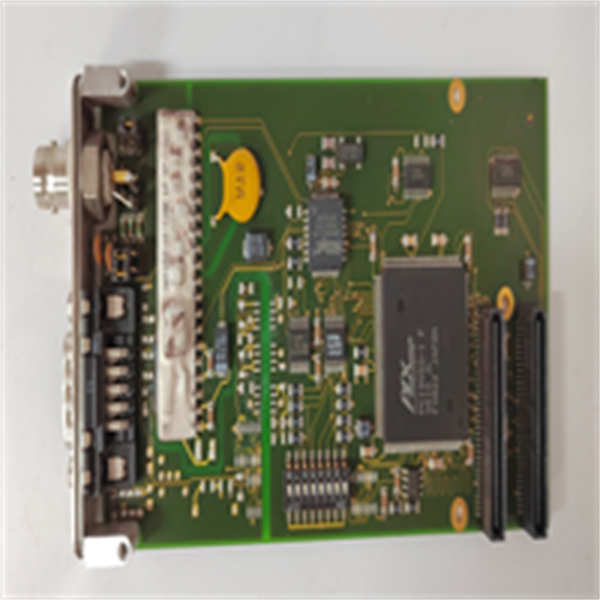
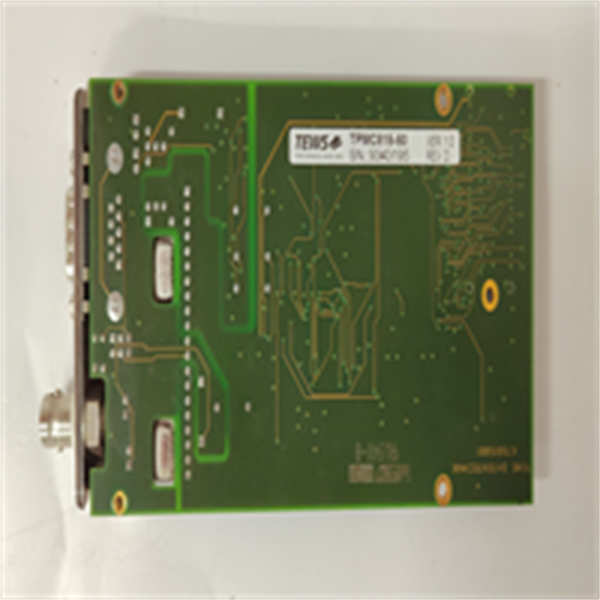
- Product Model: TPMC815-50
- Manufacturer: TEWS GmbH
- System Platform: PMC (PCI Mezzanine Card) per IEEE P1386.1 / VITA 20
- Module Type: 32-channel digital I/O (16 inputs + 16 outputs), optically isolated
- I/O Voltage Range: 5 to 60 V DC (field side), compatible with industrial sensor/actuator levels
- Isolation Voltage: 500 V RMS channel-to-channel and channel-to-system
- Output Drive Capability: 100 mA per channel (sink/source)
- Connector Type: Front-panel 68-pin SCSI-II (HD68)
- Bus Interface: 32-bit PCI (33 MHz), 3.3 V / 5 V tolerant
- Operating Temperature: -40°C to +85°C (conduction-cooled, ruggedized version)
- Conformance: Designed for MIL-STD-810 and MIL-STD-461 environments (depending on variant)
System Role and Downtime Impact
The TPMC815-50 is a mezzanine I/O module used in embedded computing systems where deterministic digital signaling is required—commonly found in defense test rigs, aerospace ground support equipment, railway signaling simulators, and industrial automation test benches. It mounts onto a carrier board (e.g., VME, CompactPCI, or VPX) that provides the main processor and system bus, while the TPMC815-50 handles real-time interaction with external devices such as limit switches, solenoids, relays, or interlock circuits.
Because it operates at the hardware abstraction layer, a failure in this module typically results in complete loss of digital I/O functionality for its assigned subsystem. In a hardware-in-the-loop (HIL) test system, this could invalidate an entire validation campaign. In a fielded control application (e.g., a legacy train control emulator), it may prevent safe startup or cause false trip conditions. Unlike software faults, hardware I/O failures are rarely recoverable without physical replacement, making spare availability critical for operational continuity.
Reliability Analysis and Common Failure Modes
The TPMC815-50 was engineered for high reliability in harsh environments, but after 10–15 years of service, several failure mechanisms become prevalent. The most common issue is degradation of the optical isolators, which can lead to signal delay drift or complete channel dropout—especially in high-cycle applications. The front-panel HD68 connector is another vulnerability; repeated mating cycles or vibration can cause pin wear, intermittent contact, or solder joint fatigue on the PCB.
Additionally, the module’s power regulation circuitry, while robust, relies on electrolytic capacitors that dry out over time. This can result in unstable I/O behavior under load or spontaneous resets during temperature transitions. Because the module lacks onboard self-diagnostics beyond basic PCI enumeration, faults often manifest only as system-level anomalies (e.g., “missing trigger” or “output not energizing”), complicating troubleshooting.
Maintenance best practices include: performing periodic loop-back tests using known-good signals; inspecting the HD68 connector for bent pins or corrosion; verifying isolation resistance (>100 MΩ) during PM; and ensuring the carrier board supplies clean, stable PCI power (within ±5% tolerance). Any spare module should be functionally validated on a representative carrier before being placed into inventory.
TEWS TPMC815-50
Lifecycle Status and Migration Strategy
TEWS GmbH discontinued the TPMC815-50 following its integration into MEN Mikro Elektronik, which shifted focus to newer standards like XMC (VITA 42) and FMC (FPGA Mezzanine Card). The module is no longer available through official channels, and firmware/driver support has been frozen. Continued use poses risks: diminishing spares pool, lack of manufacturer diagnostics, and incompatibility with modern OS kernels (e.g., Linux kernel >5.x may require custom drivers).
Short-term mitigation includes sourcing tested units from trusted surplus vendors and implementing a “burn-in” protocol (48-hour thermal cycling with I/O stress testing) for all incoming spares. Some users have successfully reverse-engineered the register map to develop open-source drivers, though this requires significant engineering effort.
For long-term sustainability, migration to a modern equivalent is recommended. MEN offers the M71x series of XMC digital I/O modules (e.g., M713), which provide similar channel counts with PCIe Gen2 interface, enhanced ESD protection, and active driver support. However, this transition requires replacing the carrier board (to one supporting XMC) and revalidating the entire I/O stack. Alternatively, FPGA-based FMC modules (e.g., from Abaco or Trenz) offer greater flexibility but demand custom logic development. A thorough cost-benefit analysis—weighing requalification effort against operational risk—is essential before proceeding.