 Tel:
Tel:  Email:
  WhatsApp:
 Description
Technical Specifications (For Spare Part Verification)
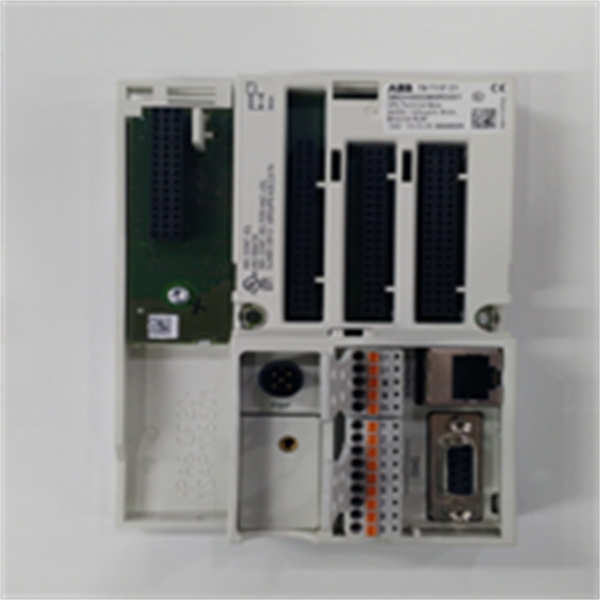
- Product Model: TB711F
- Manufacturer: ABB
- Order Code: 3BDH000365R0001
- System Family: ABB MasterPiece 200/400 (AC 800F) automation platform
- Mounting Type: DIN rail mounted terminal assembly
- Connector Interface: Screw-type terminals for field-side wiring (typically 24 VDC digital or 4–20 mA analog signals)
- Backplane Connection: Plugs into compatible I/O module (e.g., DI710, AI710) via standardized edge connector
- Channel Count: Matches associated I/O module (commonly 16 or 32 channels per TB711F unit)
- Shielding Support: Includes grounding point for cable shields to reduce EMI
- Mechanical Keying: Polarized design to prevent incorrect mating with non-compatible modules
- Environmental Rating: Industrial control cabinet use (0°C to +60°C typical)
System Role and Downtime Impact
The TB711F is a passive but mission-critical interface in ABB’s legacy AC 800F control systems, widely deployed in power plants, water treatment, and industrial facilities from the 1990s through early 2000s. It does not process signals but provides secure, organized termination for field wiring connected to digital or analog I/O modules. A faulty or damaged TB711F—due to loose terminals, cracked housing, or bent backplane pins—can cause intermittent signal loss, ground loops, or complete channel failure. In safety-related or regulatory-monitored loops (e.g., boiler flame detection or effluent flow monitoring), such failures may trigger alarms, force manual operation, or lead to unplanned shutdowns. Because these systems often lack full redundancy at the terminal level, a single TB711F fault can disable an entire I/O card’s functionality, directly impacting plant availability.
Reliability Analysis and Common Failure Modes
Although the TB711F contains no active electronics, its long-term reliability is vulnerable to mechanical and environmental stressors. The most common issues include terminal screw loosening from thermal cycling or vibration, leading to high-resistance connections and signal dropout. In humid or corrosive environments, oxidation of copper terminals or backplane contacts can degrade conductivity. Repeated insertion/removal during maintenance may wear or bend the edge connector fingers, causing poor mating with the I/O module. Additionally, improper cable strain relief can transfer mechanical load to the terminals, accelerating fatigue failure. For preventive maintenance, technicians should periodically inspect and re-torque all field terminals, verify secure DIN rail mounting, check for discoloration or arcing marks, ensure shield wires are properly grounded, and confirm that the unit fully seats onto the I/O module without resistance.
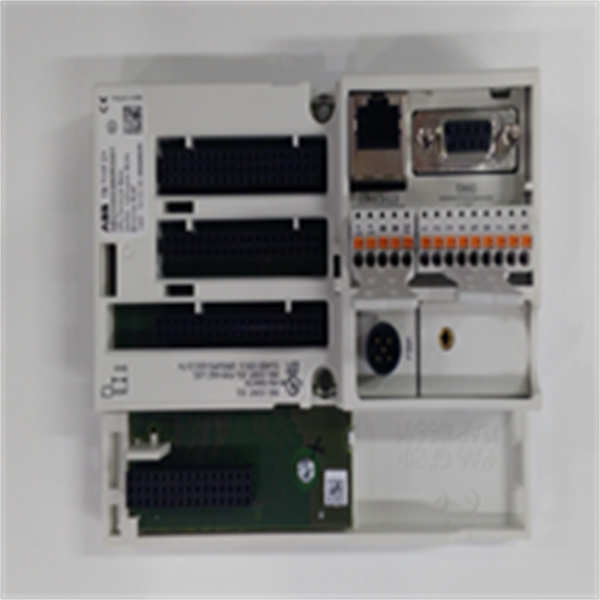
TB711F 3BDH000365R0001 ABB
Lifecycle Status and Migration Strategy
ABB has officially discontinued the TB711F (3BDH000365R0001) as part of the broader phase-out of the AC 800F (MasterPiece) platform. No direct replacements are offered, and technical documentation is archived. Continued reliance on this component poses growing operational risk: authentic spares are increasingly scarce, and unverified substitutes may compromise signal integrity or safety compliance. As a short-term measure, facilities can implement strict spares management, perform visual and continuity checks during outages, and maintain detailed wiring diagrams for rapid replacement. For long-term sustainability, ABB recommends migrating to the AC 800M or AC 500 platform, which offer modern I/O architectures with enhanced diagnostics, cybersecurity, and lifecycle support. This transition typically involves replacing I/O modules and terminal blocks as a set, updating control logic in Automation Builder or Control Builder M, and re-commissioning field devices. Given the age of AC 800F installations, initiating migration planning now—ideally during scheduled turnarounds—is critical to avoid forced outages due to terminal block unavailability.