 Tel:
Tel:  Email:
  WhatsApp:
 Description
Key Technical Specifications (For Spare Part Verification)
- Product Model: T9310-02
- Manufacturer: ICS Triplex / Schneider Electric (Triconex)
- System Compatibility: Tricon v10 and v11 mainframes (e.g., TCM 4351, TCM 4451)
- Output Channels: 16 isolated digital outputs
- Output Type: Dry contact relay (form C) – rated for 2 A @ 30 VDC or 250 VAC
- Redundancy Architecture: Fully triplicated – each output channel driven by three independent circuits with 2oo3 voting
- Diagnostic Coverage: >99% for dangerous failures (per original FMEDA)
- Response Time: <10 ms typical (from logic command to contact closure)
- Isolation: Channel-to-channel and channel-to-system per IEC 61508
- Mounting: Hot-swappable in Tricon chassis (requires T9300-series backplane)
- LED Indicators: Per-channel status (energized/de-energized), module OK, and fault indication
System Role and Downtime Impact
The T9310-02 serves as the final output stage in Triconex-based Safety Instrumented Systems (SIS), commonly used to command solenoid valves, motor starters, or alarm relays during emergency events. It receives trip commands from the Tricon main processor and actuates field devices in a fail-safe manner—typically de-energizing on demand to close an ESD valve or stop a pump. Because it directly interfaces with high-energy field circuits, its reliability is paramount. A failed T9310-02 can result in either a spurious trip (causing costly unplanned downtime) or, more severely, a failure to trip when required—posing significant process safety and environmental risks. In regulated industries, such a failure could violate compliance with IEC 61511 and trigger regulatory scrutiny.
Reliability Analysis and Common Failure Modes
Despite its robust TMR design, the T9310-02 is subject to predictable wear mechanisms due to its electromechanical and electronic components. The most common failure mode is relay contact degradation, including oxidation, pitting, or welding due to arcing during load switching—especially when driving inductive loads without proper suppression. Internal optocoupler aging can lead to signal transmission delays or open-circuit faults between voting channels. Additionally, terminal block screw loosening over time (due to vibration or thermal cycling) may cause intermittent connections, leading to erratic output behavior that may not be immediately flagged by diagnostics.
A key vulnerability lies in the mechanical life rating of the relays (typically 100,000–500,000 operations). In applications with frequent partial-stroke testing or nuisance trips, this limit may be reached sooner than expected. Units operated near their current or voltage limits show accelerated contact erosion.
Recommended preventive actions include:
- Conducting regular proof tests that verify both de-energize-on-trip and return-to-normal behavior
- Measuring contact resistance during maintenance windows to detect early degradation
- Ensuring proper snubber or flyback diodes are installed on inductive field loads
- Monitoring Triconex EDM logs for “output mismatch” or “voting disagreement” alarms
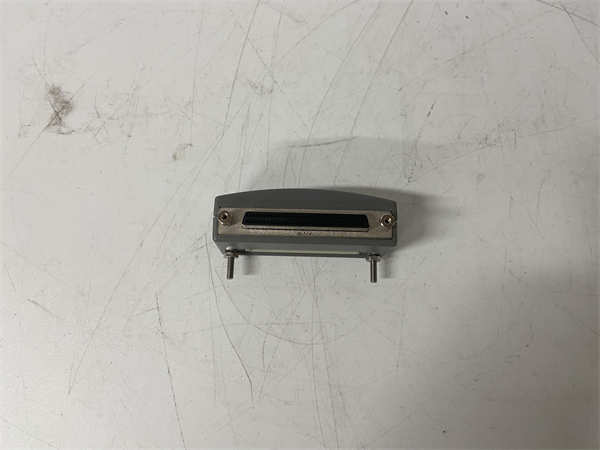
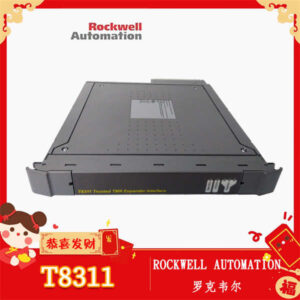
T9310-02 ICS TRIPLEX
Lifecycle Status and Migration Strategy
Schneider Electric has officially obsoleted the T9310-02 as part of the Tricon v10/v11 platform end-of-life roadmap. No new modules are manufactured, and factory repair services are no longer available. Continued reliance on this module increases exposure to supply chain disruption and functional safety audit findings.
Short-term mitigation includes:
- Securing multiple tested spares with matching hardware revisions and diagnostic baselines
- Validating hot-swap functionality and redundancy switchover in a test rack before storage
- Maintaining detailed records of channel usage and operational cycles to prioritize replacement
For long-term sustainability, Schneider Electric recommends migration to the Tricon CX or Tricon Elite platforms. The functional successor is the DO-T3216, a 16-channel TMR digital output module with enhanced diagnostics and solid-state options. Migration involves:
- Replacing the Tricon mainframe and I/O chassis
- Using terminal block adapters (e.g., TB-T3216) to retain existing field wiring
- Revalidating all SIF logic, response times, and proof test procedures
- Upgrading engineering tools to Triconex Safety Manager Studio
While requiring capital investment, this transition restores access to manufacturer support, cybersecurity updates, and extended lifecycle assurance—essential for facilities planning operation beyond 2030. A risk-based, phased migration approach is advised to balance safety, cost, and operational continuity.