 Tel:
Tel:  Email:
  WhatsApp:
 Description
Technical Specifications (For Spare Part Verification)
- Product Model: T8403CX
- Manufacturer: ICS Triplex / Schneider Electric
- System Platform: Triconex® Tricon (V10 and V11 controller generations)
- Module Type: TMR (Triple-Modular Redundant) analog input module
- Input Channels: 8 independent channels (each sampled by three redundant circuits)
- Supported Signal Types: 4–20 mA (standard), with optional support for 0–20 mA or 1–5 V (depending on configuration and terminal block)
- Input Impedance: ~250 Ω (for 4–20 mA)
- Resolution: 16-bit A/D conversion per lane
- Diagnostic Coverage: Continuous wire-break, short-circuit, signal drift, and cross-channel comparison per IEC 61508
- Redundancy Architecture: 2oo3 (two-out-of-three voting) with automatic fault masking and diagnostics
- Backplane Interface: Proprietary Tricon high-integrity TMR bus
- Isolation: Channel-to-channel and channel-to-system isolation (typically >500 V DC)
- SIL Certification: Certified for use in SIL 3 safety functions per IEC 61508 and IEC 61511 (TÜV-certified)
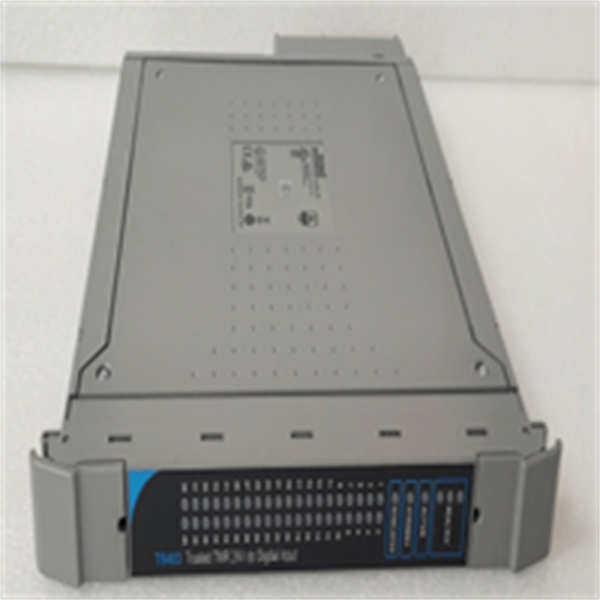
- Physical Form: Standard Tricon I/O module, front-panel LEDs for channel status, module OK, and fault indication; labeled “T8403CX” with revision code
System Role and Downtime Impact
The T8403CX is a mission-critical analog input interface within the Triconex® Safety Instrumented System (SIS), commonly deployed in high-hazard industries such as oil & gas, petrochemicals, LNG, and power generation. It reads analog signals from field transmitters—such as pressure, level, or temperature sensors—and delivers them to the Tricon main processors with guaranteed fault tolerance and diagnostic coverage.
In a typical Emergency Shutdown (ESD) or Burner Management System (BMS), the T8403CX might monitor reactor pressure or furnace temperature. If these values exceed safe limits, the SIS triggers a trip. Because the module uses TMR architecture, it ensures that even if one of its three internal processing lanes fails, the correct analog value is still reported—maintaining the required Probability of Failure on Demand (PFD) for SIL 3.
If the T8403CX fails—due to component drift, loss of redundancy, or communication error—the Tricon system will typically flag a module fault and may force affected safety loops into a safe state (e.g., full plant shutdown). Worse, an undetected failure (e.g., slow signal drift) could cause the SIS to miss a real hazardous condition, violating functional safety requirements. Given its role in preventing catastrophic events, unavailability of this module directly impacts regulatory compliance (OSHA PSM, EPA RMP), insurance validity, and operational license.
Reliability Analysis and Common Failure Modes
Despite its rugged design, the T8403CX is susceptible to long-term degradation mechanisms:
- Precision resistor and amplifier aging: Over time, the analog front-end components (e.g., instrumentation amplifiers, reference voltage sources) can drift due to thermal cycling, leading to inaccurate readings—even if the module appears “healthy.”
- Electrolytic capacitor degradation: Internal power filtering capacitors dry out after 10–15 years, causing noise on analog rails and potential A/D conversion errors.
- Input protection circuit fatigue: Repeated exposure to ESD or current surges (e.g., from loop-powered transmitters during maintenance) can degrade TVS diodes or fuse elements, reducing surge immunity.
- Backplane connector corrosion: In humid or corrosive environments (e.g., offshore platforms), oxidation on DIN-rail contacts can cause intermittent communication or power dropouts.
Best practices for reliability include:
- Performing annual loop calibration checks using certified mA simulators to verify accuracy across all three lanes.
- Monitoring Tricon diagnostic logs for “ANALOG FAULT”, “DIAGNOSTIC ERROR”, or “VOTER MISMATCH” entries.
- Ensuring proper shielding and grounding of field wiring to minimize EMI-induced noise.
- Maintaining cabinet environmental conditions within spec (temperature <60°C, humidity <80% RH non-condensing).
Any spare T8403CX must undergo full functional validation, including:
- 4-point mA calibration (4, 8, 12, 20 mA)
- Wire-break detection test
- Redundancy synchronization verification via Tricon diagnostic tools
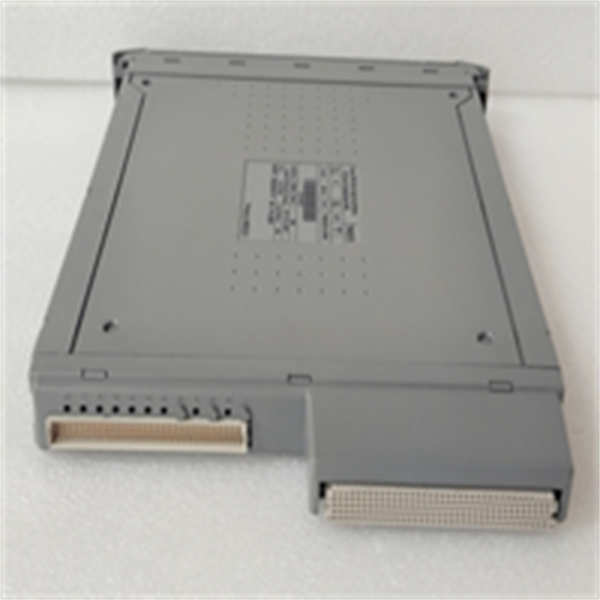
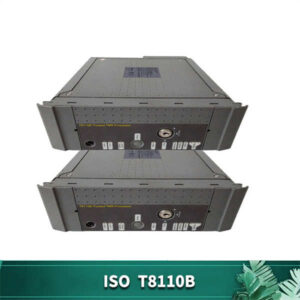
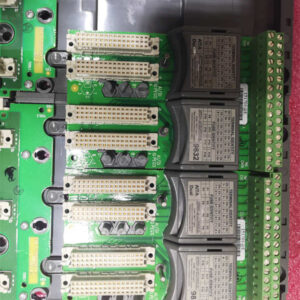
T8403CX ICS TRIPLEX
Lifecycle Status and Migration Strategy
Schneider Electric has officially discontinued the T8403CX as part of the end-of-life (EOL) roadmap for legacy Tricon V10/V11 hardware. While the Triconex platform remains supported, newer analog modules (e.g., T8403X in the TCM series) have replaced older designs. The T8403CX is no longer manufactured, and technical documentation is restricted to customers with active support contracts.
Continued reliance on this module carries substantial risk:
- Genuine spares are extremely scarce and often overpriced.
- Counterfeit or misrepresented units may lack proper TMR calibration or firmware.
- Firmware mismatches can cause compatibility issues with modern Triconex Enhanced Diagnostic Monitor (EDM) software.
Short-Term Mitigation
- Audit installed base and secure only traceable, tested units from authorized surplus vendors.
- Implement a 72-hour burn-in test under simulated field loads before accepting spares into inventory.
- Maintain backup configuration files (.app, .cfg) that include exact module calibration parameters.
Long-Term Migration Path
Schneider recommends migrating to the Triconex CX or Triconex eXtended Architecture (TXS) platforms, which support the modern T8403X analog input module. This newer version offers:
- Enhanced cybersecurity (IEC 62443 compliant)
- Improved diagnostics and remote monitoring
- Longer lifecycle commitment (support beyond 2035)
Migration requires re-engineering the safety application in Triconex Application Suite (TAS) but preserves the original logic structure. Schneider provides migration services—including FAT, site cutover planning, and regulatory documentation—to ensure seamless transition.
For facilities with operational life beyond 2030, this upgrade is essential to maintain functional safety integrity, comply with evolving standards, and eliminate dependence on obsolete hardware. Proactive planning now prevents forced obsolescence during a crisis.