 Tel:
Tel:  Email:
  WhatsApp:
 Description
Key Technical Specifications (For Spare Part Verification)
- Model: S83-1003-01
- Manufacturer: STEC Inc.
- Product Series: S83 Analog Mass Flow Controller
- Gas Calibration: Typically N₂ or Ar (must match actual process gas; not universal)
- Full-Scale Flow Rate: 100 sccm (standard cubic centimeters per minute)
- Control Range: 2–100% of full scale (2–100 sccm)
- Input Signal: 0–5 V DC (setpoint)
- Output Signal: 0–5 V DC (flow readback)
- Power Supply: ±15 V DC (dual rail)
- Accuracy: ±1% of full scale (typical for era)
- Electrical Connector: 15-pin D-sub (standard for S83 series)
- Sealing Material: Typically Viton or metal gaskets (depends on revision)
System Role and Downtime Impact
The STEC S83-1003-01 is commonly integrated into legacy semiconductor processing equipment installed in the 1990s and early 2000s, particularly in chemical vapor deposition (CVD), rapid thermal processing (RTP), and furnace systems. It functions as a closed-loop regulator that maintains precise gas flow based on an analog voltage command from the tool’s main controller.
Because semiconductor processes are highly sensitive to gas stoichiometry, even minor drift or instability in the MFC can result in film thickness non-uniformity, poor step coverage, or particle generation—leading to wafer yield loss. If the MFC fails completely (e.g., valve stuck closed), the tool halts with a process alarm. In high-utilization fabs, this can idle a multi-million-dollar tool for hours while a verified replacement is sourced and installed, directly impacting production throughput and delivery schedules.
Reliability Analysis and Common Failure Modes
The S83 series, while robust for its time, exhibits predictable aging issues due to its analog electronics and mechanical design. The most common failure mode is valve contamination or sticking, caused by particulate ingress or reaction byproducts accumulating on the bypass or control valve seat—especially in processes involving silane or other reactive precursors without adequate filtration.
A second frequent issue is sensor drift due to degradation of the thermal sensing elements or contamination of the capillary bypass. This manifests as inaccurate flow readback or slow response to setpoint changes. Additionally, the analog driver circuitry (particularly the op-amps and power transistors on the ±15 V rails) is susceptible to failure after prolonged thermal stress, leading to output saturation (e.g., 5 V fixed) or no response.
Preventive maintenance best practices include:
- Performing periodic flow verification using a calibrated bubble flow meter or portable MFC calibrator
- Ensuring upstream filters (0.003 µm for critical processes) are replaced per PM schedule
- Inspecting electrical connectors for corrosion or bent pins, especially in humid environments
- Avoiding dry-purging with incompatible gases that may degrade internal seals
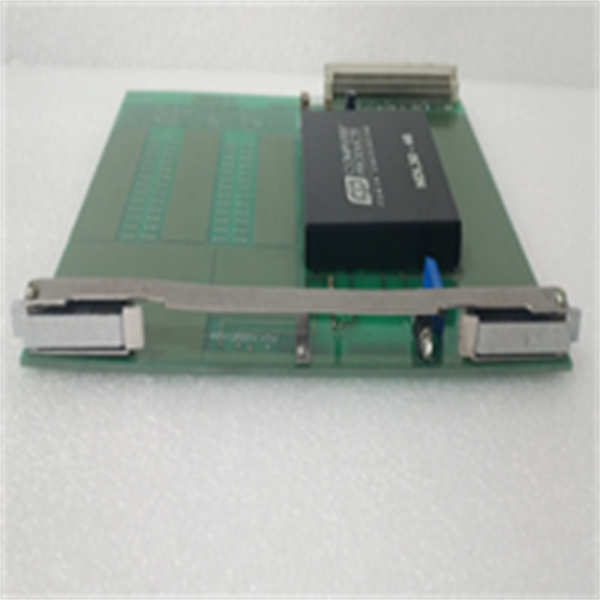
STEC S83-1003-01
Lifecycle Status and Migration Strategy
STEC has long since superseded the S83 analog series with digital models (e.g., SEC-Z500, F-PLUS series) featuring RS485, EtherNet/IP, or DeviceNet communication, self-diagnostics, and improved accuracy. The S83-1003-01 is no longer manufactured, and official support is limited. Continued use carries significant risk: spare units are scarce, recalibration services are declining, and untested inventory may fail shortly after installation.
As a temporary measure, qualified vendors offer refurbished and recalibrated S83 units with performance certificates. Some facilities also maintain in-house calibration capabilities to extend service life.
For a sustainable solution, migration to a modern digital MFC is recommended. A direct functional upgrade path is the STEC SEC-Z512 or F-PLUS FZ-1003 series, which offer:
- Same 100 sccm N₂ range and similar form factor
- Digital communication (RS485 Modbus or EtherNet/IP) for enhanced diagnostics
- Improved accuracy (±0.5% FS) and faster response
However, migration requires:
- Updating the tool’s I/O interface (analog → digital) via PLC or controller modification
- Requalifying the process recipe due to potential flow dynamics differences
- Installing new mounting hardware or adapters if faceplate dimensions differ
While migration involves engineering effort, it eliminates obsolescence risk, improves process control, and aligns with fab-wide digitalization initiatives. Until then, maintaining a minimum of two calibrated spares is strongly advised for critical tools.