 Tel:
Tel:  Email:
  WhatsApp:
 Description
Technical Specifications (For Spare Parts Verification)
- Product Model: SIEGER 05701-A-0512
- Manufacturer: Honeywell (Sieger heritage)
- System Platform: TDC 2000 (Total Distributed Control 2000)
- Input Channels: 16 differential, isolated analog inputs
- Signal Range: 4–20 mA (standard), with optional 1–5 V or 0–10 V via jumper settings
- Isolation Voltage: 500 V RMS channel-to-channel and channel-to-ground
- Accuracy: ±0.1% of full scale at 25°C
- Update Rate: ~100 ms per channel (system-dependent)
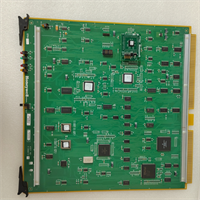
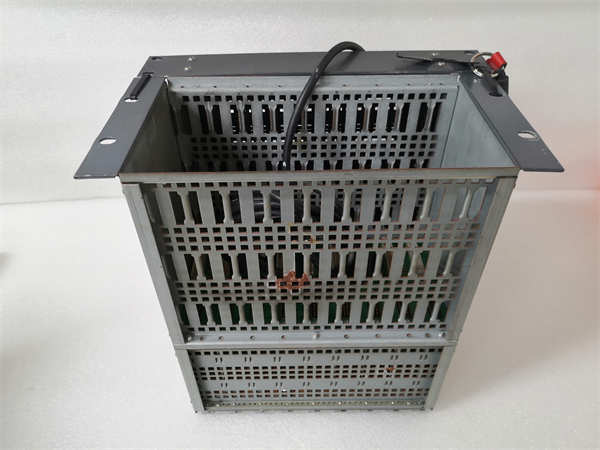
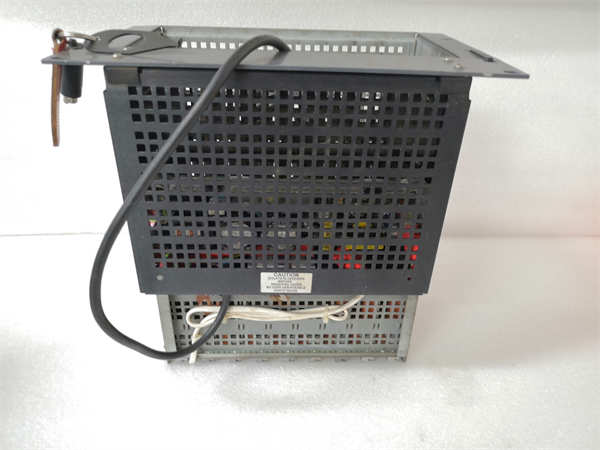
- Physical Form: Plug-in card for TDC 2000 I/O chassis (typically mounted in field junction boxes)
- Diagnostic Indicators: LED status for power, fault, and communication activity
System Role and Downtime Impact
The SIEGER 05701-A-0512 serves as a foundational analog input interface in TDC 2000 systems, commonly deployed in refineries, chemical plants, and power generation facilities installed between the 1980s and early 2000s. It directly acquires critical process signals from field transmitters and delivers them to the TDC 2000 controller for regulatory or safety logic execution. A failure in this module—whether due to component degradation or communication loss—typically results in invalid or frozen input values, which can trigger false alarms, force manual mode operation, or, in worst cases, initiate unplanned shutdowns of entire process units. Given its role in safety-critical loops (e.g., boiler drum level, reactor temperature), its reliability directly impacts plant availability and operational safety.
Reliability Analysis and Common Failure Modes
Despite its age, many SIEGER 05701-A-0512 modules remain in service due to the long asset life of heavy industrial facilities. However, several inherent vulnerabilities contribute to their gradual failure:
- Electrolytic capacitor aging: Power supply and filtering capacitors on the PCB degrade over time, leading to voltage instability and intermittent faults.
- Connector and edge-finger corrosion: Repeated thermal cycling and exposure to humid or corrosive atmospheres cause oxidation on backplane contacts, resulting in communication dropouts.
- Isolation barrier breakdown: The opto-isolators or isolation amplifiers may fail after decades of high common-mode voltage stress, compromising signal integrity and safety.
- Firmware or configuration loss: Though primarily hardware-based, some variants rely on battery-backed RAM; battery leakage can damage traces and erase calibration data.
Preventive maintenance should focus on visual inspection for bulging capacitors, cleaning edge connectors with contact enhancer, verifying grounding integrity, and performing periodic loop calibration checks. Thermal imaging during operation can also reveal abnormal heating indicative of internal stress.
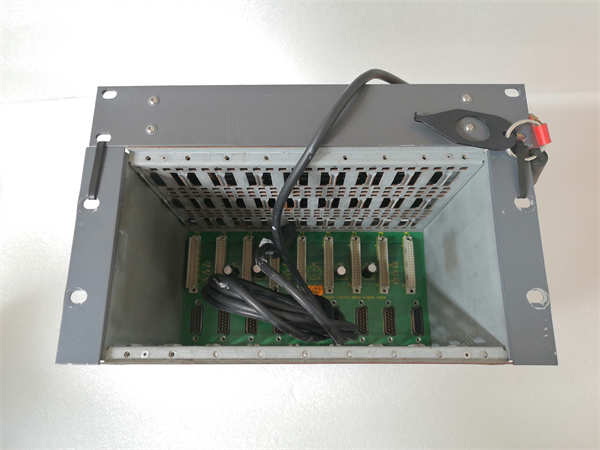
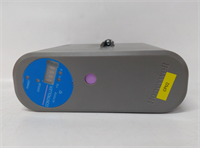
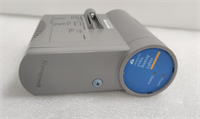
SIEGER 05701-A-0512
Lifecycle Status and Migration Strategy
Honeywell officially discontinued the TDC 2000 platform—including the SIEGER 05701-A-0512—over two decades ago, with no factory repair or replacement services available. Continued use carries significant risk: spare parts are scarce, counterfeit units exist in the gray market, and technical documentation is increasingly difficult to source.
As an interim measure, operators often maintain a strategic spares inventory or engage specialized third-party vendors capable of board-level repair and functional retest. However, these are stopgap solutions.
The recommended migration path is a phased upgrade to Honeywell’s Experion PKS platform. Specifically, the Experion R5x0 series with FTE (Fault Tolerant Ethernet) and I/O solutions like the C300 controller paired with Series 300 I/O provides a modern, supported alternative. This transition typically requires:
- Re-engineering of I/O wiring (though terminal blocks can often be reused)
- Reconfiguration of control strategies in Experion Studio
- Integration planning to ensure coexistence during cutover
For sites not ready for full migration, virtualization or emulation of TDC 2000 controllers is emerging as a niche option—but I/O hardware like the 05701-A-0512 remains irreplaceable without physical substitution. Proactive planning is essential to avoid forced outages.