 Tel:
Tel:  Email:
  WhatsApp:
 Description
Product Introduction
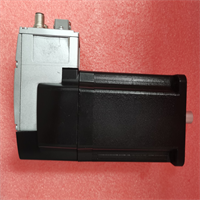
Space constraints on packaging machinery often force engineers to cram separate drives and motors into tight panels, creating a wiring nightmare. The Schneider ILS1B853S1456 solves this by integrating the Lexium servo drive directly onto the rear of the motor, slashing cabinet footprint by up to 40%. This specific configuration runs on 24 VDC, making it ideal for mobile equipment or safety-extra-low-voltage (SELV) applications where high-voltage AC is prohibited.Finding genuine replacements for this series requires verifying the exact suffix, as minor changes in winding or encoder type render the unit incompatible with existing motion profiles. Our stock includes full traceability to Schneider factories, ensuring the firmware matches the original deployment specs. While some integrators migrate to Ethernet-based solutions, the reliability of this 24 VDC integrated platform keeps it in high demand for labelers, pick-and-place units, and small conveyor systems.
Key Technical Specifications
| Parameter | Value |
|---|---|
| Manufacturer | Schneider Electric |
| Product Line | Lexium Integrated Servo |
| Model Series | ILS (Integrated Low Voltage) |
| Supply Voltage | 24 VDC (+/- 10%) |
| Rated Power | Approx. 100–200 W (Application dependent) |
| Motor Type | Brushless Servo (BLDC) |
| Encoder Type | Absolute Multi-turn (No battery required) |
| Communication | Modbus RTU / CANopen (Configurable) |
| Protection Class | IP65 (Shaft seal included) |
| Flange Size | NEMA 23 / 57 mm Frame |
| Operating Temp | 0 to +40 °C (Derated above 40 °C) |
| Mounting | Any orientation (Thermal derating applies) |
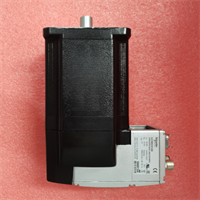
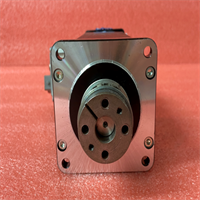
ILS1B853S1456 SCHNEIDER
Application Scenarios & Pain Points
A pharmaceutical fill-finish line halted production when a capping station’s torque control drifted, causing loose caps on 500 vials. The root cause wasn’t the logic, but a failing integrated drive inside the ILS motor that couldn’t maintain consistent current regulation under load. Swapping the unit restored precise torque control immediately, but the downtime cost $8,000 per hour. This scenario highlights why having a verified spare for these integrated units is critical—they are the single point of failure for that axis.
- Why do packaging OEMs prefer this 24 VDC integrated design? It eliminates the need for high-voltage electricians during installation, allowing mechanical technicians to wire the entire machine using standard low-voltage practices.
- In robotic arm applications, reducing cable clutter between the cabinet and the joint is vital. Each meter of cable saved reduces inertia and potential failure points; this unit removes the external drive cabinet entirely for smaller axes.
- Mobile AGVs (Automated Guided Vehicles) operating in warehouses rely on 24 VDC battery power. Connecting a 400 VAC servo would require heavy inverters, whereas the ILS1B853S1456 connects directly to the vehicle’s main bus.
- Does your labeling machine suffer from registration mark errors at high speeds? The absolute encoder in this model retains position data even after power loss, eliminating the need for homing cycles that slow down throughput.
Case Study:
A food processing plant in Ohio upgraded their carton erector machines to handle new box sizes. The legacy stepper motors lacked the torque for the heavier corrugated material, stalling frequently. They replaced three axes per machine with the Schneider ILS1B853S1456 units. The integrated nature meant they didn’t need to expand the existing electrical cabinets. The project manager noted that the “absolute encoder feature alone saved us 15 minutes of startup time every morning” since the machines no longer needed to home out after nightly shutdowns.Installation Pitfalls Guide (“Lessons Learned” Voice)Integrating drive and motor sounds simple until you hit the first snag. Here is what actually trips people up in the field:
- Firmware Version Mismatch — Newer batches of ILS motors sometimes ship with updated firmware that behaves differently with old PLC libraries. ❗ Always record the firmware version from the old unit before swapping. If the new one is higher, you might need to update your PLC function blocks.
- DIP Switch / Jumper Misconfiguration — These units often have rotary switches or DIP settings for node addressing (CANopen ID) or termination resistors. Factory defaults rarely match your site’s network map. Take a photo of the switch settings. Then take another one. Do this before you remove the old motor.
- Terminal / Wiring Incompatibility — The connector pinout for power vs. communication can vary between revisions. Some use a single hybrid cable; others split them. Cross-check the wiring diagram on the motor label against your harness, especially if you are reusing old cables.
- Power Supply Undersizing — A 24 VDC servo can draw significant peak current during acceleration. If your 24 VDC supply is already loaded with PLCs and sensors, adding this motor might cause voltage dips that reset the whole system. Calculate the full rack load with 20% headroom.
- ESD Damage — The communication ports on these integrated drives are sensitive. Skip the wrist strap once, and a static discharge can fry the CAN/Modbus interface while the motor still spins. You won’t know until you try to command it. Ground yourself on the machine frame before plugging in the comms cable.