 Tel:
Tel:  Email:
  WhatsApp:
 Description
Key Technical Specifications (For Spare Verification)
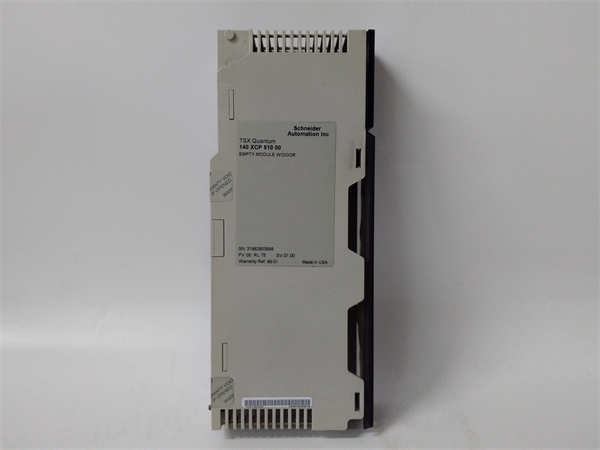
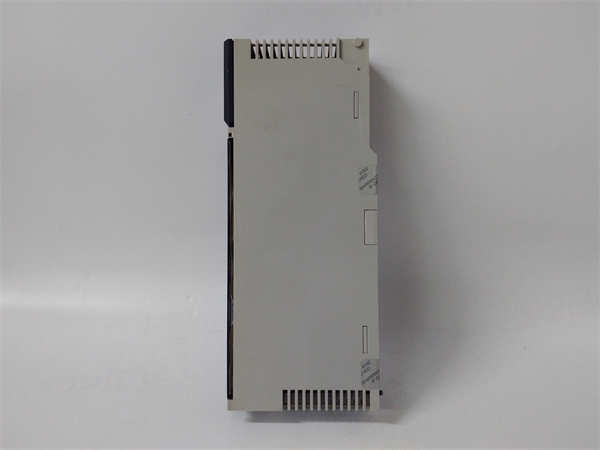
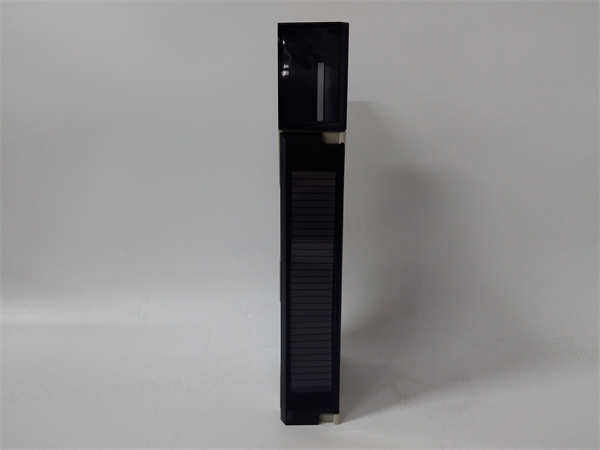
- Product Model: 140XCP51000
- Manufacturer: Schneider Electric
- Platform: Modicon Quantum (legacy PAC platform, successor to Modicon 984)
- Module Type: Central Processing Unit (CPU) / Communication Processor
- Processor: Motorola 68040-class (32-bit)
- Clock Speed: ~25 MHz
- User Memory: ~768 KB (for logic, data, and configuration)
- Communication Ports:
- 1 × Modbus Plus (MB+) port (via optional adapter or built-in, depending on variant)
- 1 × RS-232/RS-485 serial port (for programming/debug)
- Supports Quantum Remote I/O (RIO) and distributed I/O networks
- Redundancy: Supports hot-standby with paired 140XCP51000 in redundant chassis
- Backplane Compatibility: Standard Quantum I/O backplane (10-slot or 16-slot)
- Programming Software: Concept or Unity Pro (legacy versions only)
- Firmware: Must match project firmware version; mismatch prevents download or causes runtime faults
- Power Consumption: ~5 V @ 1.5 A (approx. 7.5 W)
-

Schneider 140XCP51000
System Role and Downtime Impact
The 140XCP51000 serves as the brain of a Modicon Quantum system—commonly deployed in water/wastewater plants, power substations, mining operations, and legacy manufacturing lines. It runs ladder logic, function block diagrams, and sequential control programs while coordinating with local and remote I/O racks.
In non-redundant configurations, failure of this CPU results in immediate loss of all automated control, forcing manual operation or complete process shutdown. Even in redundant setups, if the standby unit is degraded, mismatched, or unavailable, failover may not occur reliably—especially given aging firmware and hardware inconsistencies.
Because Quantum systems often control safety- or environment-critical processes (e.g., pump stations, chemical dosing), CPU failure can trigger regulatory reporting events or environmental incidents.
Reliability Analysis and Common Failure Modes
Despite robust industrial design, units now exceed 15–25 years of service life. Common failure modes include:
- Flash memory wear-out → corrupted program or inability to retain configuration after power cycle
- Capacitor aging on internal power regulation circuits → voltage instability or boot failure
- Backplane connector fatigue → intermittent communication with I/O or co-processors
- Battery-backed RAM degradation → loss of retentive data (e.g., counters, timers)
- Firmware corruption due to unclean shutdowns or EMI in electrically noisy environments
A critical risk is firmware version drift: over decades of patching, many sites operate with undocumented or mismatched revisions, making spare validation difficult.
Preventive Maintenance Recommendations:
- Archive full application (including firmware version) in offline, version-controlled storage
- Replace onboard lithium battery every 5–7 years (even if voltage reads normal)
- Perform annual “cold start” tests to verify program reload integrity
- Keep at least one matched, tested spare pair (same firmware, same hardware revision)
- Monitor CPU scan time trends—sudden increases may indicate memory or thermal stress
-
Schneider 140XCP51000
Lifecycle Status and Migration Strategy
Schneider Electric officially recommends migrating from Modicon Quantum to the Modicon M580 ePAC, which offers:
- Native Ethernet/IP and Modbus TCP
- Open architecture (IEC 61131-3 + OPC UA)
- Cybersecurity features (secure boot, role-based access)
- Virtualization and cloud integration via EcoStruxure
Migration Paths:
- Direct Replacement: Use M580 with Quantum I/O Adapter Modules (e.g., 140CRA31200) to reuse existing field wiring during phased transition
- Full Modernization: Replace CPU, I/O, and engineering station with M580 and EcoStruxure Engineering
- Hybrid Approach: Integrate Quantum as a remote station under M580 supervision via Modbus TCP gateway