 Tel:
Tel:  Email:
  WhatsApp:
 Description
Technical Specifications (For Spare Part Verification)
- Product Model: VEG20400
- Manufacturer: SCHENCK Process GmbH
- Product Family: VEG Series Weigh Feeder Controllers
- Input Signals: Load cell (mV/V), tachometer or encoder (frequency or pulse)
- Output Signals: 0–10 V DC or 4–20 mA (for drive speed reference)
- Display: 6-digit LED indicator for rate, total, and status
- Control Mode: PI-based speed regulation with manual/auto switch
- Power Supply: 115/230 V AC ±10%, 50/60 Hz
- Enclosure Rating: Typically IP20 (for panel mounting); field versions may include IP54 housings
- Communication: Analog only – no digital bus (e.g., no Profibus, Modbus, or Ethernet)
- Calibration Method: Potentiometer-based span/zero adjustment with mechanical test weights
- Operating Temperature: 0°C to +50°C
System Role and Downtime Impact
The SCHENCK VEG20400 is typically the central control unit in legacy gravimetric feeding systems used in power plant coal injection, cement raw meal blending, or chemical additive dosing. It continuously calculates instantaneous mass flow by combining load cell (weight) and belt speed signals, then adjusts the feeder drive to maintain a setpoint. Because these systems often operate without redundancy, a VEG20400 failure immediately degrades feeding accuracy—leading to off-spec product, combustion instability, or even kiln or boiler trips. In a cement plant, for example, inconsistent limestone feed can cause clinker quality deviations requiring hours of corrective action. Recovery is further delayed by the scarcity of verified replacements, making this module a high-impact single point of failure in continuous-process environments.
Reliability Analysis and Common Failure Modes
The VEG20400, designed in the 1980s–1990s, relies heavily on analog circuitry and mechanical potentiometers, which are prone to drift and wear. The most common failure mode is load cell amplifier drift due to aging operational amplifiers or capacitor leakage, causing false high/low flow readings. Potentiometers used for calibration often develop contact noise or open circuits after years of infrequent adjustment, leading to erratic setpoint behavior. Power supply components—particularly electrolytic capacitors—dry out over time, resulting in voltage ripple that affects analog-to-digital conversion stability. Environmental factors like dust ingress (in non-sealed panels) or vibration from nearby machinery accelerate connector loosening and solder joint fatigue. As preventive maintenance, operators should perform monthly zero/span checks using test chains or calibration weights, inspect for bulging capacitors during outages, and ensure clean, stable power with surge protection. Keeping a pre-calibrated spare on-site significantly reduces recovery time.
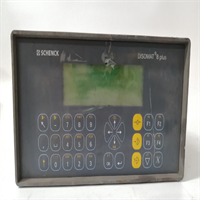
SCHENCK VEG20400
Lifecycle Status and Migration Strategy
SCHENCK officially discontinued the VEG20400 decades ago, replacing it with fully digital controllers like the DISOCONT® T or MFC series, which offer digital communication, self-diagnostics, and remote configuration. No direct drop-in replacement exists; upgrading requires new terminal wiring, updated drive interfaces, and re-commissioning of the entire feeder loop. In the short term, many plants extend life through board-level refurbishment—replacing all electrolytic capacitors, cleaning potentiometer tracks, and recalibrating against certified standards. Some third-party vendors offer “VEG20400 emulator” modules that mimic analog outputs while adding Modbus RTU for basic monitoring. However, for long-term reliability and compliance with modern process safety standards (e.g., IEC 61511), a full migration to a current SCHENCK digital platform is strongly recommended. This typically involves a feasibility study, followed by phased replacement during scheduled shutdowns, preserving the existing mechanical feeder while modernizing the control electronics. Strategic stockpiling of tested VEG20400 units remains a prudent interim measure for critical lines.